Khyber Pakhtunkhwa, or KP, will remain where it is. If you look at the map of Pakistan, the province will remain Khyber Pakhtunkhwa. It will not move away from Afghanistan, nor will it move away from Punjab. It is not going to change its geographical position or become a province bordering India. The province will remain where it is, and the system will remain in place. People come and go, faces change, and policies change, but the province and its people remain.
The real question is what policies are being pursued, what direction the province is being taken in, and whether the people’s problems are being addressed. When we look at the present situation in Khyber Pakhtunkhwa, particularly the political deadlock, the security crisis and the unfulfilled promises made to the people of the tribal districts, we see a serious gap between what was promised and what has been delivered.
During negotiations between the government and the opposition, many issues were reportedly settled, with the parties reaching agreement on around 90 to 95 percent of the matters under discussion. However, the deadlock remained over security, particularly the question of military operations in Khyber Pakhtunkhwa. The provincial government and the federal government appear to have different approaches to these issues, and this difference is harmful.
We do not see the same kind of disconnect in Balochistan to the extent that we see it here. This is a matter that has been discussed repeatedly. When the chief minister announces a 100-day plan, it naturally raises the question of whether he intends to remain in office and what he plans to achieve during that period. But restoring peace and security must be at the centre of any such plan. Without security, how can the government deliver on its other commitments?
The governor has now called a security meeting and received briefings from the chief secretary and the inspector general of police. Holding such a meeting is a good step, but the question is why it was not done earlier. Were the security problems not present before? Have attacks in the province only become serious in recent days? The timing matters, and the public has a right to ask why these concerns are receiving attention now.
The governor represents the federal government in the province, but he is not the chief executive of Khyber Pakhtunkhwa. There may be constitutional provisions that allow him to seek briefings on certain matters, but coordination should have been taking place consistently. He should have been monitoring the situation and raising security concerns well before the present circumstances developed.
At the same time, the chief minister has called a cabinet meeting, and various matters on its agenda have become public. This has created an impression that the province is heading towards a confrontation between the provincial and federal governments, with talk of an emergency or governor’s rule adding to the uncertainty. Such impressions are dangerous when people are already worried about their security and future.
The timing of these developments also coincides with the Pakistan Tehreek-e-Insaf’s long march. The chief minister announced September 27 as the date for the march, but it was postponed, and October 4 was subsequently announced. The way the march began on October 4 was, in some respects, a relief for the party. There was a sizeable gathering in Kohat, and there is still a possibility that participation may increase as the march moves forward. However, the crowds expected from the southern districts, including Waziristan, Kurram, Bannu, Lakki Marwat, Dera Ismail Khan and Tank, did not materialize on the scale anticipated.
The gatherings in Lakki Marwat and Karak were not particularly large. Former chief minister Ali Amin Gandapur also turned back at Yarak Interchange, saying Section 144 had been imposed and roads had been closed to him and his supporters. He argued that, having served as chief minister himself, he knew how such restrictions were enforced. He returned without a clear indication of what his next course of action would be.
Although a substantial gathering was seen in Kohat, uncertainty remains over the march’s route and ultimate destination. It has been suggested that participants may spend the night in Matani, move towards Khyber district and then return to Peshawar before proceeding towards Nowshera or Swabi. Other routes through Chitral, Malakand and Swat have also been mentioned. These changing announcements make it difficult to determine the actual strategy behind the march.
On one side, the political rhetoric has become increasingly confrontational. The governor has issued strong statements, while the provincial government has responded with its own warnings and challenges. There has been talk of governor’s rule and emergency measures, while Swabi has been described as a red line that should not be crossed. The question is whether this exchange of harsh statements is helping anyone.
The people are caught in the middle. Students are uncertain about their future, families are worried about their safety, and the public is watching political leaders trade accusations while serious problems remain unresolved. Attacks have occurred in Dera Ismail Khan and Bannu, the situation in Waziristan remains concerning, and the Kohat region has also witnessed serious security incidents. The situation in the upper and central districts, including areas around Peshawar, cannot be ignored either.
There are persistent concerns that the Counter Terrorism Department is not receiving the attention and resources it requires. Questions have also been raised about whether the police have the necessary equipment and whether the provincial government is providing sufficient funds. These are not new problems, and they cannot be addressed through statements alone.
The governor should have been coordinating with the relevant authorities and monitoring these matters consistently. If the security situation is deteriorating, the response must be sustained rather than reactive. Calling one meeting after concerns have intensified may be useful, but the province needs a continuing mechanism for coordination, oversight and action.
The chief minister, meanwhile, is under considerable political pressure. The long march has become a test of the party’s ability to mobilize supporters and demonstrate political strength. The initial gathering in Kohat was significant, but it remains to be seen whether the march will maintain momentum as it proceeds towards other districts.
The distinction between the so-called test match and the T20 match has also raised questions. If the current phase is only a preliminary exercise, what is supposed to happen next? Does the party intend to move towards Punjab and Islamabad? Will roads be blocked, and will the confrontation intensify? These questions remain unanswered.
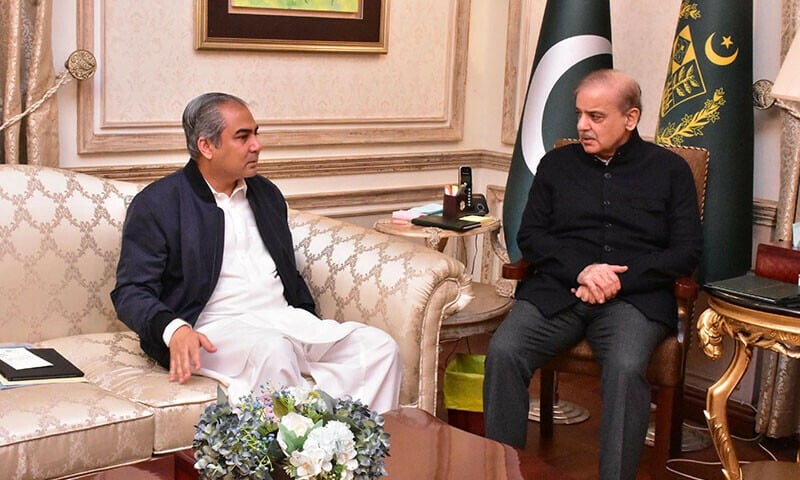
There have also been reports of backdoor contacts between political representatives, including claims that Barrister Gohar met Mohsin Naqvi on several occasions. Such contacts may indicate that a channel for dialogue remains open. If the parties are communicating, they should use that opportunity to prevent the situation from deteriorating.
Pakistan is facing serious challenges, and the region is experiencing considerable instability. Both Khyber Pakhtunkhwa and Balochistan are confronting grave security problems. The country cannot afford further political instability at a time when the security situation in these two provinces is already so difficult.
On security matters, political parties and governments must agree on a common line. That does not mean that every political difference has to disappear. It means that the lives and security of citizens must be placed above partisan interests.
Negotiations require compromise. In Pakhtun society, even communities with long histories of enmity can eventually reach an agreement when both sides are prepared to step back, forgive certain grievances and accept the principle of give and take. Political parties should demonstrate the same maturity. They cannot expect negotiations to succeed if neither side is willing to reconsider its position.
Egos must be set aside, and the national interest must take precedence. Khyber Pakhtunkhwa is part of Pakistan, and its people are citizens of the same country. The provincial government, the federal government, the president and the prime minister are not working for separate countries. When we talk about the state of Pakistan, we are talking about all of Pakistan.
If there is stability in Khyber Pakhtunkhwa and Balochistan, it will contribute to stability across the country. If these provinces remain caught in a cycle of insecurity and political confrontation, the consequences will extend far beyond their borders.
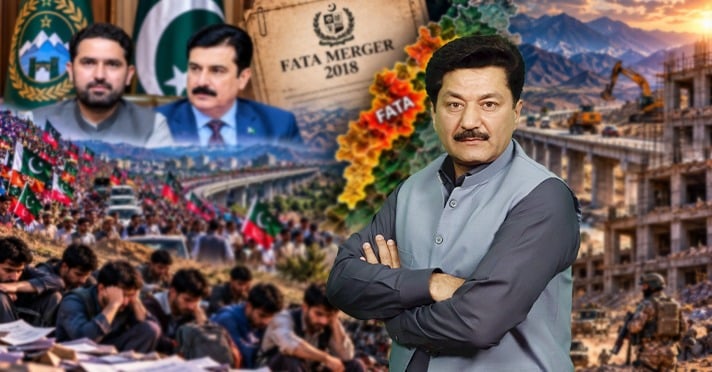
The situation in the tribal districts is another major issue that cannot be separated from the wider security crisis. When the former Federally Administered Tribal Areas were merged into Khyber Pakhtunkhwa around eight years ago, extensive promises were made to the people. They were told that they would become part of the mainstream and enjoy the same rights, facilities and development opportunities as people in the settled districts.
The promise was that schools, colleges, hospitals, roads and other infrastructure would be developed. The people were told that they would receive the opportunities available to citizens elsewhere in the country because they, too, were Pakistanis and deserved equal treatment.
The people of the tribal districts have made enormous sacrifices for Pakistan. For generations, they have helped protect the country and its borders, often without the resources, recognition or facilities available to people in other areas. Their contribution to the country cannot be overlooked, and their sacrifices should have been followed by meaningful investment in their future.
Yet the promises made at the time of the merger have not been fulfilled. It would be unfair to place the entire responsibility on the provincial government, because the federal government has also failed to deliver on its commitments. The other provinces had agreed to contribute to the tribal districts through a three-percent share under the National Finance Commission framework, but that promised allocation has not materialized as expected.
These areas were previously administered by the federal government. Following the merger, the geographical and administrative responsibilities of Khyber Pakhtunkhwa expanded, but the necessary resources did not follow at the required level. The province was expected to take responsibility for a much larger area without receiving the full financial support needed to meet the resulting demands.
The problem is not limited to the absence of schools, hospitals, colleges or roads. It concerns the future of an entire generation. Young people in the tribal districts continue to face a lack of educational opportunities, vocational training and employment. When young people have no realistic path towards a better life, they become vulnerable to exploitation by those who offer money, power or a false sense of purpose.
This is one of the circumstances that terrorist groups exploit. A group may approach an unemployed young man, offer him a gun, promise him a monthly payment of Rs15,000 and provide him with a motorcycle. It may then tell him that he can exercise control over a particular area, collect extortion money and take part in criminal activities. By offering financial incentives and the illusion of authority, these groups seek to turn vulnerable individuals into instruments of violence.
Poverty, unemployment and the absence of educational opportunities do not automatically lead a person towards terrorism, but they create vulnerabilities that criminal and terrorist networks can exploit. That is why development and security must be addressed together. If we want to prevent recruitment by terrorist organizations, we must provide young people with education, skills, employment and a credible stake in society.
This is not the responsibility of one government or one department alone. It requires coordinated efforts by the federal government, the provincial government and the relevant state institutions. Security operations are necessary to protect citizens and disrupt terrorist networks, but lasting stability also requires addressing the conditions that make recruitment and exploitation easier.
The condition of the police in the tribal districts is another important concern. The police force was expanded by incorporating personnel from the former Khasadar and Levies forces. However, incorporating personnel into the police structure does not automatically provide them with the same facilities, resources, training and service conditions available to police personnel in the settled districts.
Personnel who previously served in the Khasadar and Levies forces have taken on policing responsibilities, including positions such as station house officers and deputy superintendents of police. Yet questions remain about whether they receive equivalent benefits, facilities and institutional support.
The risks they face are considerable. Police officers, traffic police personnel and customs officials have been targeted in Bannu, Lakki Marwat, Tank and other areas, whether in uniform or out of uniform. In the tribal districts, personnel often operate in communities where their identities, villages and family backgrounds are known. This can expose them to additional threats and make their work particularly dangerous.
If the state expects these officers to protect the public under such conditions, it must ensure that they have the equipment, training, compensation and institutional support necessary to perform their duties. The same standard of attention must be applied to police personnel in the tribal districts as to those serving in settled areas.
The broader question is whether the government views the merged districts as an integral part of Khyber Pakhtunkhwa or continues to treat them as a separate administrative category. Critics of the merger point to the condition of the former tribal areas as evidence that integration has not delivered the promised benefits.
Separate budgetary arrangements for the merged districts and other areas may be necessary for administrative purposes, but they must not become a reason for unequal treatment or neglect. The people should not have to keep proving that their needs deserve attention simply because their districts were once administered under a different system.
The old distinction between the tribal belt and the settled districts must give way to a more inclusive approach. The merger increased the province’s responsibilities and brought its administrative boundaries directly alongside Afghanistan. This has implications not only for development but also for border management, law enforcement and national security.
The federal government, federal institutions and provincial government all share responsibility for the situation. No single administration can claim that the challenges belong entirely to someone else. The provincial government must use its available resources effectively, while the federal government must honor its financial and administrative commitments.
Ultimately, the future of Khyber Pakhtunkhwa depends on the ability of political leaders to move beyond confrontation and focus on the needs of the people. Security cannot be restored through political statements alone, and development cannot take place without adequate resources and effective governance.
The people of the tribal districts were promised equal rights, opportunities and facilities when their areas were merged into Khyber Pakhtunkhwa. Those promises must now be translated into visible results. Schools need teachers and facilities, hospitals need staff and equipment, roads need to connect communities, police personnel need proper support, and young people need opportunities to build their futures.
Political leaders must understand that the people cannot wait indefinitely while governments argue over authority, funding and political survival. The province needs cooperation rather than confrontation, sustained counterterrorism efforts rather than reactive meetings, and genuine development rather than promises repeated at every political turning point.
The state must treat the security and development of Khyber Pakhtunkhwa as a national responsibility. Only through a combination of political stability, effective law enforcement, adequate resources and equal opportunities can the province move towards lasting peace.