
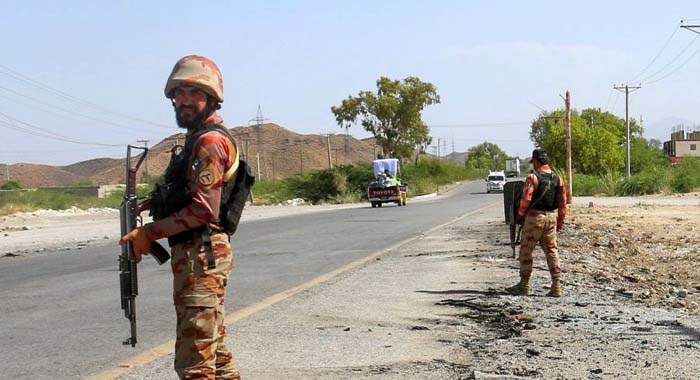
Security forces successfully foiled an attempt by Fitna al-Hindustan (FAH) operatives to establish an illegal checkpoint near Zakir Hotel in the Paringabad area of Mastung, during a routine surveillance operation, resulting in the neutralization of two operatives and the recovery of a vehicle used by the group.
According to preliminary information, security personnel conducting routine surveillance in the vicinity of Paringabad, Mastung, observed suspicious movement by a group of FAH operatives attempting to establish an unauthorized checkpoint near Zakir Hotel. The activity posed an immediate threat to commuters and the safe movement of traffic along the N-25 National Highway, a vital transportation artery connecting important areas of Balochistan.
Acting swiftly on the developing threat, security personnel launched an immediate response against the FAH operatives. The timely intervention disrupted the attempted checkpoint and enabled the restoration of normal traffic movement on the N-25.
During the ensuing engagement, the FAH operatives attempted to escape the area using a snatched vehicle, fleeing toward nearby orchards in an effort to evade the pursuing security personnel. Security forces maintained pursuit and successfully tracked the fleeing operatives into the surrounding area.
The pursuit culminated in a targeted engagement in which two FAH operatives were neutralized. The vehicle used by the operatives was subsequently recovered, while the surrounding area was thoroughly secured to ensure the safety of civilians and road users.
The successful operation prevented the establishment of an illegal checkpoint on a major national highway and disrupted an attempt to interfere with the movement of civilian traffic. The timely action by security forces also ensured that the situation was brought under control without allowing the threat to escalate or spread to adjoining areas.
The incident highlights the importance of sustained surveillance and rapid-response capabilities in countering attempts by FAH elements to disrupt public movement, intimidate civilians, and create temporary positions along strategically important routes.



