
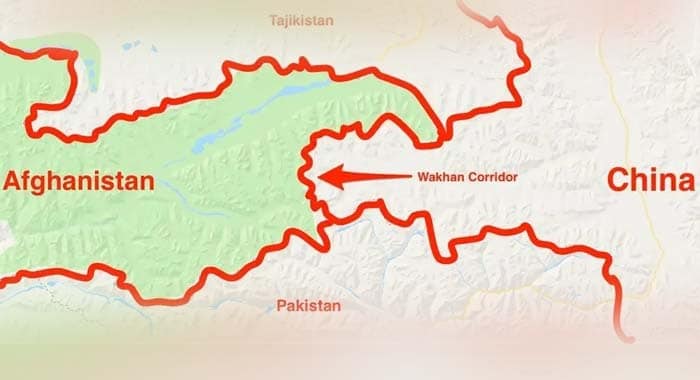
The rapidly deteriorating security situation in Afghanistan’s northeastern Badakhshan province is emerging as a significant strategic concern for China, with growing implications for the security of its Xinjiang frontier, the proposed Wakhan Corridor connectivity project, the safety of Chinese nationals and commercial interests, and Beijing’s broader engagement with Afghanistan under the Belt and Road framework.
Once regarded as a relatively peripheral security concern, Badakhshan is increasingly developing into a contested and volatile environment along Afghanistan’s shortest land frontier with China. Sustained armed activity by anti-Taliban groups, attacks by Islamic State Khorasan Province (ISKP), internal Taliban tensions, ethnic and resource-related disputes, and the potential presence or re-emergence of Uyghur militant networks have combined to create a security environment that could have consequences well beyond the province itself.
Since mid-July 2026, Badakhshan has witnessed sustained armed operations by groups including the Afghanistan Freedom Front (AFF) and the newly active Sipahiyan-e Mihan. The intensity of the fighting marks a notable deterioration in the security environment and challenges the Taliban’s ability to maintain uncontested control in a strategically sensitive province.
Among the most significant developments was the temporary seizure of the Yaftal-e Payeen district centre, reportedly representing the first loss of a district headquarters by the Taliban since their return to power in 2021. The development was followed by multi-day fighting in Zebak district, with significant casualties reportedly sustained during the clashes.
The emergence of sustained armed resistance in multiple locations is particularly significant because Badakhshan occupies a sensitive geographic position bordering China, Tajikistan and Pakistan. Any prolonged weakening of government control in the province could create additional opportunities for armed groups, criminal networks and extremist organizations to exploit remote mountainous terrain and establish operational or logistical footholds.
The security picture has been further complicated by the continued activity of ISKP, which has demonstrated its ability to conduct high-profile attacks despite the Taliban’s repeated claims of having contained the group.
The assassination of Badakhshan’s director of information and culture underscores the ability of ISKP to penetrate or operate within areas under Taliban control. While anti-Taliban groups and ISKP have different ideological and operational objectives, their simultaneous activity increases the complexity of the security environment and places additional pressure on Taliban security structures.
The possibility that extremist organizations could exploit the disorder created by anti-Taliban resistance is of particular concern for China because Badakhshan’s remote valleys and difficult terrain provide potential operating space for groups seeking to evade sustained security pressure.
The deteriorating situation is not solely the result of external armed opposition. Internal Taliban tensions are also contributing to instability. Disputes surrounding gold-mining operations, the disarmament of local commanders, and the deployment of predominantly Pashtun reinforcements into the predominantly Tajik Badakhshan province have reportedly aggravated local tensions.
These developments have the potential to deepen mistrust between local communities and Taliban authorities, particularly where questions of political representation, resource control and security deployments intersect. The combination of ethnic sensitivities, competition over valuable mineral resources, and disagreements within the Taliban security structure could make the province increasingly difficult to govern through conventional security measures alone.
The deterioration of security comes at a particularly sensitive moment for the proposed Wakhan Corridor road project, which the Taliban authorities have been advancing as a potential route for future regional connectivity. Afghan authorities have reported substantial progress on the approximately 120-kilometre route, with gravel work on sections reportedly reaching 70–75 percent completion by mid-2026 and preliminary construction extending toward the border area.
The proposed route has long been viewed as a potential alternative or complementary artery to the China-Pakistan Economic Corridor (CPEC). If fully developed and rendered operational, the Wakhan route could provide China with a direct overland connection to Afghanistan, potentially facilitating access to Afghan mineral resources and creating an additional avenue toward Central Asian markets.
For Beijing, such connectivity could theoretically diversify regional trade routes and reduce dependence on more vulnerable transportation corridors. However, the current security trajectory in Badakhshan presents a serious challenge to that ambition.
A sustained presence of armed opposition groups or extremist organizations in the high-altitude valleys could make construction, commercial transportation, border management and future trade operations significantly more difficult and expensive. Security requirements could increase operating costs to a point at which the economic viability of the corridor itself becomes questionable.
Despite the strategic potential of the Wakhan Corridor, Beijing has so far demonstrated considerable caution regarding its formal economic opening. China has not opened formal customs facilities or committed major capital to the corridor, with security guarantees remaining a prerequisite for meaningful expansion of commercial activity.
This cautious approach reflects a broader Chinese principle in Afghanistan: security before connectivity and investment. The worsening security environment in Badakhshan therefore risks reinforcing Beijing’s existing reluctance. Rather than accelerating economic integration, instability could delay the corridor’s operationalization indefinitely and potentially leave the project underdeveloped despite physical progress on the Afghan side.
The reported establishment of Cenling County in early 2026 along the Chinese side of the frontier appears to represent a preparatory administrative step potentially linked to eventual cross-border connectivity. However, administrative preparations alone cannot overcome the security and governance challenges emerging on the Afghan side of the border.
Perhaps the most sensitive dimension of the Badakhshan security situation for China is the province’s historical association with Uyghur militants linked to the East Turkestan Islamic Movement (ETIM), also known as the Turkistan Islamic Party (TIP). For years, Badakhshan served as an important rear area for Uyghur fighters operating near China’s frontier. Following increased pressure from Beijing after 2021, the Taliban reportedly relocated many of these fighters toward southern parts of Afghanistan.
However, the relocation does not necessarily eliminate the underlying threat. Residual networks, reports of limited returns or redeployments, and the availability of remote and weakly governed spaces could provide opportunities for militants to re-establish themselves in or around Badakhshan.
An additional concern is the reported attraction of some Uyghur fighters to ISKP. There have been indications that Uyghur militants have been courted by the organization and, in some cases, have defected to its ranks.
This development is particularly troubling for Beijing because ISKP has explicitly incorporated anti-China messaging and Uyghur grievances into portions of its propaganda and recruitment efforts. The organization has also claimed attacks involving Chinese nationals and interests.
If the current instability in Badakhshan were to develop into durable areas beyond effective government control, the convergence of residual ETIM/TIP networks and ISKP-linked Uyghur cadres could create a particularly serious security challenge for China. Such a development would place an extremist threat in close proximity to the Xinjiang frontier, precisely the scenario Beijing has sought to prevent through its engagement with the Taliban since 2021.
China’s concerns are not limited to future infrastructure projects. Chinese economic interests are already present in Badakhshan. Multiple Chinese companies have been involved in gold-extraction activities in districts including Shahr-e Buzurg and Raghistan, in some cases operating alongside or in proximity to Taliban-linked networks.
Preliminary surveys for potential hydropower projects, including a proposed dam in Jurm district involving Chinese participation, have also reportedly taken place. These activities form part of a broader Chinese interest in Afghanistan’s substantial but largely underdeveloped mineral resources. However, the security environment presents a significant contradiction: the same territory that offers valuable mineral opportunities also exposes Chinese companies, personnel and investments to serious security risks.
The risks are not theoretical. Badakhshan has previously served as a launch point for cross-border attacks into Tajikistan, including incidents that reportedly resulted in the deaths of Chinese workers involved in China Road and Bridge Corporation projects and gold-mining activities. Such incidents have already prompted evacuation advisories and increased Chinese demands for stronger security measures.
Any further deterioration could therefore have immediate consequences for Chinese personnel operating in Afghanistan and neighboring areas. The potential consequences extend beyond individual security incidents. Continued instability could deter Chinese companies from expanding their operations, increase insurance and security costs, delay infrastructure projects, and undermine investor confidence in Afghanistan as a reliable destination for long-term Chinese capital.
The situation in Badakhshan also carries implications for China’s broader regional connectivity ambitions. Afghanistan occupies a potentially important geographic position between China, Pakistan, Central Asia and South Asia. A stable Afghanistan could theoretically provide new transportation, energy and mineral corridors connecting these markets.
However, instability along the Wakhan Corridor threatens to transform what Beijing views as a potential strategic opportunity into a security liability. For China, the objective is therefore not simply to construct a road. The viability of any corridor depends on the existence of secure territory, predictable border management, reliable local authorities, protected commercial routes and the absence of extremist sanctuaries.
Without these conditions, physical infrastructure alone cannot guarantee connectivity.
The developments in Badakhshan also represent an important test of the Taliban’s ability and willingness to provide the security guarantees that have supported China’s pragmatic engagement with Afghanistan since 2021. The Taliban retain overall control of Afghanistan and have demonstrated an ability to suppress particular armed groups and restore control over specific areas following periods of fighting. Nevertheless, the situation in Badakhshan is qualitatively different because several sources of instability are converging simultaneously.
Ethnic resistance, resource competition, internal Taliban friction, anti-Taliban armed activity and extremist infiltration are interacting within a province that directly borders China. This convergence could expose limitations in the Taliban’s ability to provide sustained security in Afghanistan’s remote periphery.
For Beijing, the stakes are therefore considerably higher than the immediate security of a single Afghan province.
A chronically unstable Badakhshan could:
- Increase security risks along China’s Xinjiang frontier;
- Delay or undermine the Wakhan Corridor project;
- Increase the cost of protecting Chinese nationals and businesses;
- Discourage additional Chinese investment in Afghan mining and infrastructure;
- Create opportunities for anti-China extremist organizations to establish footholds;
- Complicate China’s relations with the Taliban;
- Undermine the prospects of Afghanistan becoming a reliable component of regional connectivity; and
- Place additional pressure on China to provide diplomatic, economic or security support aimed at stabilizing the region.
China has consistently pursued a security-first approach toward Afghanistan, seeking assurances that Afghan territory will not be used against Chinese interests or to support groups hostile to China. The trajectory in Badakhshan suggests that this policy is now facing one of its most serious tests since the Taliban returned to power.
The deteriorating security environment in Badakhshan should therefore be viewed as a strategic warning rather than an isolated provincial security problem. The province sits at the intersection of several Chinese priorities: border security, counterterrorism, regional connectivity, mineral access and the protection of Chinese citizens and investments.
The future of the Wakhan Corridor will depend not merely on the completion of roads and border infrastructure, but on whether the Taliban can establish sufficiently durable security and governance across the province to make commercial activity viable. Likewise, China’s willingness to deepen its economic engagement with Afghanistan will remain closely tied to the Taliban’s ability to prevent Afghan territory—particularly remote areas bordering China—from becoming a sanctuary for groups capable of threatening Chinese interests.
Unless there is a decisive improvement in local security, stronger control over contested areas, and effective prevention of militant groups from establishing durable sanctuaries, the strategic promise of the Wakhan Corridor and the broader China-Afghanistan economic relationship could remain constrained by the very instability that regional connectivity is intended to overcome.
For Beijing, Badakhshan is no longer a peripheral concern. It is increasingly a direct test of the security architecture underpinning China’s engagement with Afghanistan—and of the Taliban’s ability to deliver the stability required to protect China’s frontier, investments and long-term strategic interests.



