
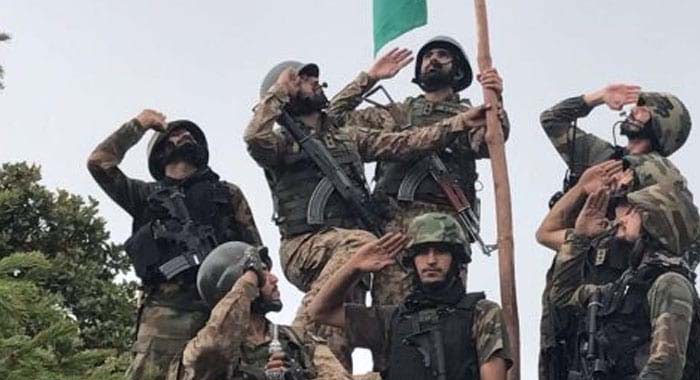
Security sources report that ongoing counterterrorism operations under Radd-ul-Fitna 3 have resulted in the elimination of more than 75 terrorists across Balochistan during August 2026 through August 12, as security forces continue what officials describe as a systematic campaign against foreign-backed militant networks operating in the province.
According to a security-source assessment, counterterrorism operations conducted between August 1 and August 12 targeted militant hideouts, operational networks, commanders and logistical infrastructure across multiple districts of Balochistan.
The reported operations span Kharan, Quetta, Harnai, Washuk, Mastung, Nushki, Panjgur, Kech, Bolan, Awaran, Sibi, Khuzdar and Surab, reflecting the broad geographical scope of the ongoing security campaign.
Security sources have provided the following date-wise breakdown of reported casualties:
- August 1 — 3: Kharan
- August 3 — 7: Quetta and Harnai
- August 5–6 — 12: Washuk and Mastung
- August 7 — Multiple: Operations in Washuk, Mastung and Nushki
- August 8 — 12: Panjgur, Kharan and Kech, including high-value commander Wazir
- August 9 — 15: Mastung, Bolan, Washuk, Awaran, Sibi, Khuzdar, Harnai and Nushki
- August 10 — 5: Panjgur
- August 12 — 22: Surab, following an explosion at an alleged IED manufacturing facility
Based on the security-source assessment, more than 75 terrorists have reportedly been eliminated so far, with operations continuing in various parts of the province. Among the reported high-value targets was Commander Wazir, who was reportedly eliminated during an operation in Panjgur on August 8.
The reported death of the commander represents a significant development in the ongoing campaign, particularly if independently confirmed, given the potential role of senior commanders in coordinating militant networks, recruitment, logistics and attacks.
Security sources have also indicated that other important figures and operatives were targeted during the recent operations.
One of the most significant developments reportedly occurred on August 12 in Surab, where an explosion at an alleged IED manufacturing facility resulted in the deaths of 22 terrorists, according to security sources. The incident is being described as a major blow to militant logistical infrastructure, as facilities used to manufacture or assemble improvised explosive devices can serve as critical components of attack networks. The reported destruction of such infrastructure could disrupt the ability of militant groups to prepare explosives and sustain attacks against security forces and civilians.
The geographical distribution of the reported operations indicates a sustained counterterrorism effort rather than isolated security actions. From Kharan and Washuk in the west to Panjgur, Kech and Awaran in the south, and Mastung, Nushki, Harnai, Sibi and Khuzdar in other parts of the province, security forces have reportedly conducted operations against militant elements and their support infrastructure.
The continuing operations suggest an effort to disrupt militant networks at multiple levels, including field operatives, commanders, hideouts and logistical facilities. Security sources describe the ongoing campaign as part of efforts to dismantle what they characterize as foreign-backed militant networks operating in Balochistan.
According to the assessment, the operations are aimed at systematically disrupting these networks rather than merely responding to individual attacks. The reported targeting of commanders and infrastructure, alongside operations against suspected militant concentrations, indicates an emphasis on degrading the organizational and logistical capabilities of armed groups operating across the province.
The security situation remains under active assessment, with counterterrorism operations reportedly continuing across Balochistan. Security sources have indicated that the campaign will remain focused on identifying and dismantling militant networks, disrupting their logistical infrastructure and targeting individuals involved in planning or executing attacks.
The reported figures cover the period from August 1 through August 12, 2026, and may change as further operations are conducted and casualty figures are verified.



