
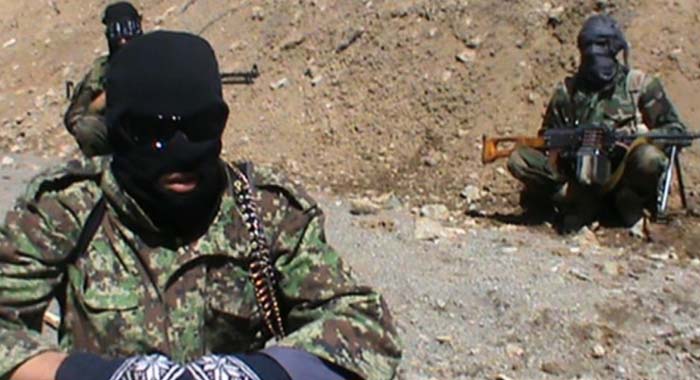
The security situation in Afghanistan remains a significant concern for regional and international security, with a new United Nations Security Council monitoring report warning that the Taliban have been unable to fully suppress the terrorist threat despite sustained operations against Islamic State Khorasan Province (ISIS-K) and efforts to contain other militant organizations operating from or within Afghanistan.
The 38th report of the Analytical Support and Sanctions Monitoring Team, issued as a Security Council document on August 10, provides a comprehensive assessment of the evolving terrorist threat posed by ISIS, Al-Qaida and associated groups. Based largely on information and assessments provided by UN Member States, the report covers developments through June 9 and concludes that the overall terrorist threat in South Asia intensified during the reporting period.
According to the monitoring team, numerous terrorist organizations continue to retain operational capabilities in Afghanistan despite Taliban military and security operations aimed at disrupting their activities.
The report concludes that the Taliban authorities have not been able to resolve the broader terrorist threat confronting the country, stating that “the authorities were unable to suppress the terrorist problem.”
While Taliban forces have undertaken operations against ISIS-K and attempted to restrict the activities of other militant groups, the monitoring team assessed that Afghanistan continues to provide an environment in which multiple terrorist organizations can maintain personnel, networks, training capabilities and operational capacity.
The findings reinforce concerns that the security situation inside Afghanistan has consequences extending well beyond the country’s borders, particularly for neighboring states and countries across Central Asia.
The report identifies ISIS-K as the most significant terrorist threat to both the Taliban authorities and the wider region. Taliban and Pakistani counterterrorism operations have reportedly inflicted substantial setbacks on ISIS-K and reduced some of its operational capabilities. Nevertheless, the monitoring team assessed that the group has demonstrated resilience and is rebuilding its organizational strength.
According to the report, ISIS-K has regained the capacity to conduct occasional high-profile attacks capable of producing significant casualties, despite a decline in the frequency of attacks inside Afghanistan. The monitoring team further reported that while ISIS-K activity inside Afghanistan decreased during the reporting period, attacks and militant activity associated with the group increased in Pakistan, highlighting the cross-border nature of the threat.
Taliban security operations, particularly in northern Afghanistan and major urban centers such as Kabul, have reportedly reduced certain ISIS-K capabilities. However, the group has adapted its operational posture. Regional governments reportedly informed the monitoring team that ISIS-K possesses increasingly sophisticated tactical equipment, including drones, night-vision equipment and thermal imaging devices.
Members of the group have also reportedly received training in urban warfare and drone operations, potentially enhancing its ability to conduct attacks in complex urban environments and against hardened or protected targets.
The report further indicates that ISIS-K has increasingly shifted elements of its activities toward northern Afghanistan, while dispersing training activities across areas along the Afghanistan-Pakistan border. The organization also reportedly maintains a presence in areas surrounding Kabul, underscoring the continuing challenge faced by Taliban security forces in preventing the group from rebuilding its networks.
The UN monitoring report points to several attacks as examples of the continuing terrorist threat. Among the incidents cited is the January 19 suicide bombing at a Chinese restaurant in central Kabul, an attack claimed by ISIS-K that reportedly killed 12 people and wounded 15 others. The report also refers to a shooting outside a Shiite shrine in Herat on April 10, which reportedly killed at least 11 people and wounded another 11.
No group claimed responsibility for the Herat attack, and the monitoring team did not attribute the incident to ISIS-K. However, the report noted ISIS-K’s established history of attacks against Afghanistan’s Hazara Shiite community, which has repeatedly been targeted by the organization.
The UN assessment underscores that the terrorist threat emanating from Afghanistan cannot be viewed solely as an internal Afghan security issue. The continued presence and regeneration of terrorist networks, combined with cross-border movement, training activities and access to increasingly advanced tactical equipment, pose potential security risks to Pakistan, Central Asian states and other countries in the wider region.
The monitoring team’s assessment suggests that military operations against ISIS-K have degraded elements of the organization but have not eliminated its ability to reorganize, recruit, train operatives and conduct high-impact attacks. The group’s reported ability to shift its operational footprint, particularly toward northern Afghanistan and border areas, further complicates regional counterterrorism efforts.
The findings of the latest monitoring report are likely to reinforce longstanding international concerns regarding Afghanistan’s position within the regional terrorist landscape. The report’s assessment that Afghanistan continues to pose an “enduring threat” to neighboring countries and Central Asia highlights the need for sustained international monitoring, intelligence cooperation and coordinated counterterrorism measures.
At the same time, the continuing presence of multiple terrorist organizations demonstrates the difficulty of relying solely on domestic security operations to address the threat. Effective regional counterterrorism efforts require cooperation among neighboring states, information sharing, border security and continued international engagement.
The latest UN Security Council monitoring assessment presents a sobering picture of Afghanistan’s evolving security environment. While Taliban operations have reportedly weakened ISIS-K in several areas and reduced the group’s ability to conduct frequent attacks inside Afghanistan, the organization remains capable of regeneration and high-casualty operations.
The persistence of ISIS-K and other terrorist groups, their reported access to modern equipment and specialized training, and their ability to operate across Afghanistan’s northern and border regions demonstrate that the underlying terrorist threat remains unresolved.
The report therefore serves as a renewed warning that Afghanistan continues to present a significant and enduring terrorism-related security challenge for neighboring countries and Central Asia, requiring sustained vigilance, regional coordination and international counterterrorism cooperation.



