
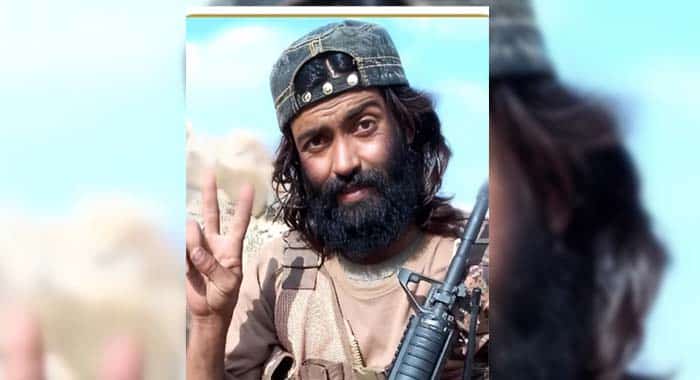
The case of Abdul Wadood Satakzai, also known as Shehak, from Machh in Balochistan’s Kachhi district has emerged as a contentious example in the continuing debate over militancy, missing-person claims and the political response to violence in the province.
According to the information provided, Satakzai was employed as a clerk with the Balochistan Minerals Coal Company before he was reported to have become involved with the banned militant organization Balochistan Liberation Army (BLA). He was reportedly killed in February 2024 during militant activity.
Following his death, the BLA reportedly described Satakzai as a commander and member of its Majeed Brigade, identifying him as a suicide operative.
The development raised questions because, prior to the militant organization’s claims regarding his affiliation, Satakzai had reportedly been considered missing. His disappearance had become the subject of protests and sit-ins by activists associated with the Baloch Yakjehti Committee (BYC), with allegations directed at Pakistani state institutions over his whereabouts.
The subsequent claims regarding his alleged affiliation with the BLA and Majeed Brigade fundamentally altered the narrative surrounding his disappearance and generated questions about how different actors responded to the information that emerged after his death.
According to the supplied account, activists associated with the BYC had previously organized protests and demonstrations concerning Satakzai’s disappearance and had raised allegations against state institutions. However, after the BLA publicly identified him as a commander and described him as a member of the Majeed Brigade, the issue reportedly received considerably less attention from the same activist circles.
The case has consequently become part of a broader argument concerning what critics describe as selective responses to violence and alleged militancy in Balochistan. The central question raised by the case is whether allegations of enforced disappearance and concerns over missing persons should be examined independently and consistently, regardless of whether an individual is later alleged or proven to have been associated with a militant organization.
The information provided further alleges that Satakzai was involved in multiple acts of terrorism before his death and that the BLA’s identification of him as a Majeed Brigade operative provided additional context regarding his alleged activities. These allegations, however, should be distinguished from findings established through an independent judicial process.
The broader issue remains significant: when an individual previously presented publicly as a missing person is subsequently claimed by an armed organization as one of its operatives, the development warrants careful scrutiny, verification and transparent documentation. Such cases also demonstrate the complexity of distinguishing between legitimate missing-person concerns and individuals who may subsequently be identified as participants in violent organizations.
The case has also prompted criticism of the response attributed to the BYC and its leadership. According to the supplied information, Gulzadi, described in the material as Satakzai’s sister and a central BYC figure, has been associated with the campaign concerning his disappearance. The material further alleges that a woman identified as Bebo, described as a BYC leader, received Satakzai’s body following his death.
These claims have been cited by critics as evidence of what they characterize as an inconsistent response to individuals alleged to have participated in violence. The criticism is essentially that when allegations concern state action against suspected militants, human-rights concerns receive extensive public attention, whereas the suffering of civilians allegedly targeted by militant organizations receives comparatively limited condemnation.
Balochistan has experienced prolonged violence involving militant organizations, security forces and other armed actors. For civilians, the consequences have included loss of life, insecurity, displacement and disruption of normal economic and social activity. Critics of activist groups argue that condemnation of violence should not depend on the identity of the perpetrator or the political circumstances surrounding an incident. From this perspective, the killing of an innocent civilian should receive the same moral and humanitarian condemnation whether the alleged perpetrator is a militant organization or a state actor.
The supplied material specifically criticizes what it describes as the absence of strong public condemnation by the BYC and figures such as Akhtar Mengal following attacks attributed to militants, while accusing the same actors of publicly highlighting human-rights concerns whenever security forces conduct operations against militant groups.
These are political criticisms and allegations, rather than independently established findings.
The controversy surrounding Satakzai highlights a broader debate over accountability in Balochistan. Human-rights concerns, allegations of enforced disappearances and questions surrounding the conduct of security forces remain matters of public debate. At the same time, militant violence against civilians and security personnel represents another serious dimension of the province’s security crisis. A credible approach to human rights requires that both dimensions be addressed consistently.
If an individual is genuinely missing, the circumstances surrounding the disappearance should be investigated and the family should receive appropriate information through lawful channels. If credible evidence subsequently establishes that the individual joined an armed organization and participated in attacks, those allegations should likewise be investigated through appropriate legal mechanisms. Similarly, civilian victims of militant violence deserve recognition, justice and public solidarity regardless of their political affiliation, ethnicity or geographic background.
The supplied account argues that a pattern of selective outrage has emerged in which some political and activist actors respond forcefully to security operations but remain comparatively silent following militant attacks. It specifically criticizes what it describes as the tendency of certain activists and political figures to raise human-rights concerns following security-force operations while failing to issue equally prominent condemnation when civilians are allegedly killed by militant organizations. According to this criticism, the issue becomes particularly visible when militant organizations themselves claim responsibility for individuals previously highlighted as missing. The Satakzai case is therefore presented as a test of whether human-rights advocacy can maintain credibility while addressing allegations against all sides.
The supplied material also criticizes Akhtar Mengal and other political figures for what it characterizes as inconsistent responses to militant violence. It alleges that political and activist circles remain highly vocal when security forces conduct operations against suspected militants but become less visible when civilians are targeted by armed groups. These assertions should be assessed against independently verifiable statements and actions by the individuals concerned. Nevertheless, the underlying issue remains important for public debate: political leadership carries a responsibility to condemn violence against civilians consistently, regardless of who commits it.
The reported trajectory of Abdul Wadood Satakzai from an employee of a mining company, to a reported missing person whose disappearance became the subject of protests, and subsequently to an individual reportedly claimed by the BLA as a Majeed Brigade operative raises significant questions that merit independent scrutiny. The case should not be reduced solely to political slogans from either side. Instead, the circumstances surrounding his disappearance, his reported association with the BLA, the militant organization’s claims regarding his role, and the subsequent responses of political and activist groups should all be examined against verifiable evidence.
At the same time, any legitimate concerns regarding missing persons or alleged abuses must continue to be addressed through lawful and transparent mechanisms. The broader lesson is clear: the condemnation of violence cannot be selective. If militant organizations are responsible for attacks on innocent civilians, those attacks deserve unequivocal condemnation. If state institutions are accused of unlawful conduct, those allegations also deserve credible investigation.
For Balochistan to move towards lasting peace, accountability and stability, human rights must remain universal rather than political and the suffering of civilians must never become secondary to competing narratives.



