
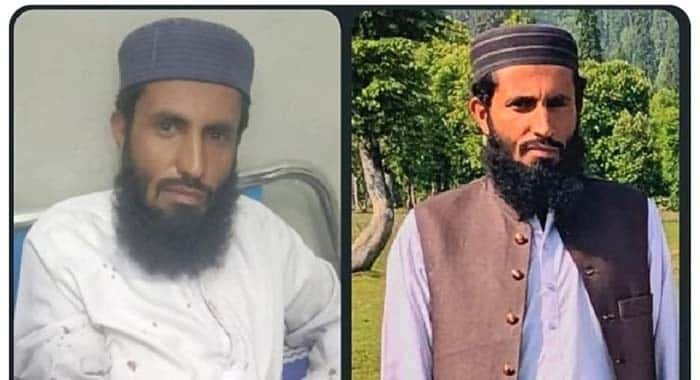
The troubling pattern of attacks targeting religious figures in Khyber Pakhtunkhwa continued as two religious scholars were injured in a shooting incident in Kohat, following a series of recent targeted attacks on ulema in southern districts of the province.
According to sources, Maulana Abdullah and Maulana Samad were returning to their village after attending a religious gathering when unidentified attackers opened fire on them on Sheikhan Road in Kohat.
Both scholars sustained injuries in the attack and were immediately shifted to a nearby hospital for medical treatment. Further details regarding their condition were not immediately available.
The attack comes amid growing concerns over the security of religious scholars and community figures in parts of Khyber Pakhtunkhwa, particularly after a number of recent incidents in which religious and tribal personalities were deliberately targeted.
Sources said Maulana Abdullah is a close relative of Maulana Ahmad-ur-Rehman, a prominent Jamiat Ulema-e-Islam-Fazl leader from Lachi tehsil of Kohat.
No group has so far claimed responsibility for the latest attack. However, security experts cited by local sources suspect that the incident could be linked to ISKP, which has previously targeted religious scholars and particularly figures associated with JUI-F in Khyber Pakhtunkhwa.
The circumstances of the shooting and the identities and motives of the attackers remain under investigation.
Recent Attacks Raise Concern
The Kohat incident follows two recent attacks targeting religious figures in South Waziristan.
On August 3, prominent peace-oriented religious and tribal leader Mufti Jan Amir was martyred in an explosion in Wana Bazaar. Just two days earlier, on August 1, JUI-F leader Maulana Ismail was targeted and martyred in the Azam Warsak area of South Waziristan.
ISKP subsequently claimed responsibility for the attack on Maulana Ismail.
The latest shooting in Kohat has therefore renewed concerns over a possible broader campaign targeting religious personalities, particularly those who possess influence within local communities or are associated with religious and political organizations.
Such attacks can have consequences beyond the immediate victims, as targeting religious scholars can create fear among communities, disrupt religious and social activities and attempt to silence influential voices capable of mobilizing public opinion against terrorism.
Security and law-enforcement agencies are expected to investigate the latest incident from multiple angles, including the possible involvement of terrorist networks, while efforts to identify and apprehend those responsible for the attack continue.
The repeated targeting of religious and tribal figures across southern Khyber Pakhtunkhwa also highlights the continuing security challenge faced by communities in areas where terrorist groups seek to intimidate local populations and eliminate voices opposed to extremist violence.



