
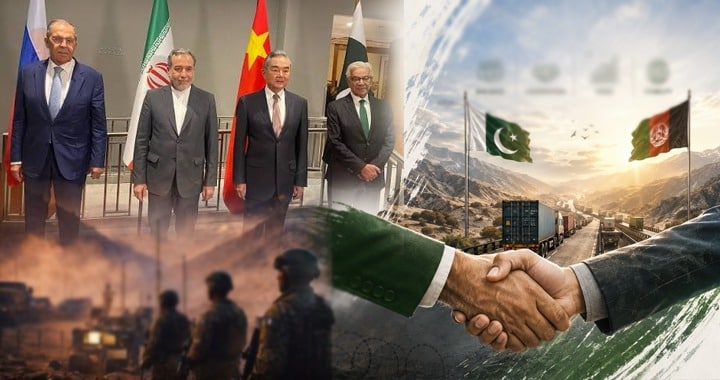
The nature of terrorism in South Asia has changed significantly over the years. What was once viewed primarily as an internal security challenge for individual states has increasingly become a regional issue involving cross-border networks, transnational financing, extremist propaganda, and shared security concerns.
For Pakistan, this reality has placed regional security cooperation at the center of its counterterrorism approach. Located at the crossroads of South Asia, Central Asia, and the Middle East, Pakistan faces security challenges that are directly influenced by developments beyond its borders. The country’s experience demonstrates that terrorism cannot be addressed effectively through domestic measures alone when extremist networks operate across geographical boundaries.
Afghanistan remains a key factor in this regional security environment. Pakistan has consistently maintained that terrorist organizations responsible for attacks inside the country operate from sanctuaries across the border and has repeatedly called for effective action against such groups. Islamabad has emphasized that preventing the use of any country’s territory for terrorism is essential for regional peace and stability.
At the same time, Afghanistan’s own security challenges continue to affect neighboring states. The presence of extremist organizations, economic difficulties, humanitarian pressures, and unresolved political questions have created concerns among countries surrounding Afghanistan.
Beyond Afghanistan, regional powers have significant interests in stability. China, Iran, Central Asian states, Russia, and Gulf countries all monitor developments closely because instability can affect trade routes, energy projects, migration patterns, and security conditions.
Pakistan’s geographic position gives it a central role in regional connectivity initiatives. Projects involving trade corridors, infrastructure development, and energy cooperation require a stable security environment. Consequently, counterterrorism is not only a security priority but also an economic necessity.
International cooperation has therefore become increasingly important. Intelligence sharing, border management, financial monitoring, and coordinated action against extremist networks are essential components of any successful regional strategy.
Pakistan has repeatedly emphasized that terrorism is a shared global challenge. The country has highlighted its own sacrifices in the fight against terrorism, including significant losses among security personnel and civilians, while calling for greater international cooperation to prevent extremist organizations from rebuilding their capabilities.
The future of regional security will depend heavily on whether countries can move beyond short-term disagreements and focus on common threats. Terrorist organizations often exploit political tensions, weak coordination, and security gaps. Greater cooperation can reduce these opportunities.
Technology will also shape future regional security. Improved surveillance, intelligence systems, border monitoring, and information sharing can enhance states’ ability to prevent attacks before they occur.
However, security cooperation must also be supported by broader efforts addressing economic and social vulnerabilities. Terrorist organizations frequently exploit unemployment, instability, and weak governance to recruit supporters. Long-term stability therefore requires both security measures and development strategies.
For Pakistan, the objective remains achieving a secure environment where economic growth, regional connectivity, and peaceful relations with neighboring countries can progress together. This requires continued investment in security institutions while maintaining diplomatic engagement with regional and international partners.
The future of counterterrorism in South Asia will not be determined by one country alone. Terror networks operate across borders, and their defeat requires cooperation that extends beyond borders as well. Regional security will ultimately depend on collective responsibility, shared intelligence, and a common commitment to preventing extremist organizations from threatening peace and stability.
As the security environment continues to evolve, Pakistan’s experience demonstrates that counterterrorism is no longer only a national mission. It has become a regional and global responsibility requiring sustained cooperation, strategic patience, and coordinated action.



