
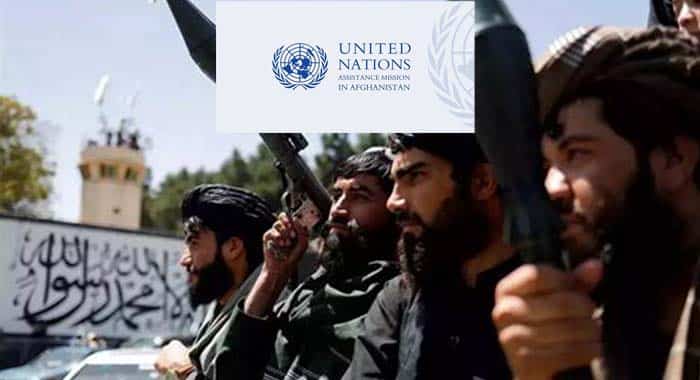
The United Nations Assistance Mission in Afghanistan (UNAMA) has raised serious concerns over alleged human rights violations in Afghanistan, reporting that the Taliban authorities carried out arbitrary detentions, public punishments, and continued restrictions on journalists, women, former Afghan security personnel, and media organizations during the second quarter of 2026.
According to UNAMA’s latest quarterly report, between 1 April and 30 June 2026, Taliban officials, particularly those affiliated with the Ministry for the Propagation of Virtue and Prevention of Vice, reportedly detained at least 389 individuals arbitrarily, while 65 additional people were subjected to alleged mistreatment during the same period.
The report states that many of the reported arrests were linked to alleged violations of Taliban-imposed social regulations, including dress codes, restrictions on personal appearance, and accusations related to listening to or playing music. It further noted that in Herat Province, at least 30 women were reportedly detained over allegations of not complying with prescribed clothing requirements.
UNAMA also expressed concern over continued reports involving former members of Afghanistan’s security forces. According to the report, at least eight former security personnel were killed during the three-month period, while 29 former security officials were reportedly subjected to arbitrary detention or continued confinement.
The report highlighted that these developments have contributed to growing concerns among former government employees and security personnel regarding their safety and protection.
The UN report further stated that public corporal punishments continued across Afghanistan during the reporting period. It documented that at least 137 individuals, including 112 men and 25 women, were reportedly subjected to public flogging.
UNAMA emphasized concerns regarding the use of such punishments and their implications for human rights protections and due process standards.
In a separate assessment, UNAMA expressed deep concern over increasing restrictions on media freedom in Afghanistan. The report stated that journalists, media organizations, and independent reporting platforms continued to face pressure, including arrests, suspension of broadcasts, and administrative restrictions.
According to the report, educational programs of Lemar Radio in Khost were reportedly suspended, while Radio Bamyan was temporarily halted over alleged licensing issues. The report also noted that broadcasts of Rah-e-Farda TV resumed following administrative changes.
UNAMA further reported an incident in Kabul where authorities allegedly attempted to seize mobile phones, cameras, computers, and documents from a media office. During different incidents, three journalists were reportedly detained, with two released after several days and the third freed following questioning.
The UN mission also highlighted reported restrictions on the use of smartphones by government employees. According to the report, some government departments allegedly confiscated or destroyed employees’ personal mobile phones and imposed limitations on the dissemination of official information through social media platforms, including Facebook.
UNAMA’s findings have renewed international concerns regarding the broader human rights environment in Afghanistan, particularly regarding freedom of expression, women’s rights, protection of vulnerable groups, and access to fair legal processes.
The report calls attention to the need for continued monitoring of the human rights situation and emphasizes the importance of protecting fundamental freedoms and ensuring accountability for alleged violations.



