
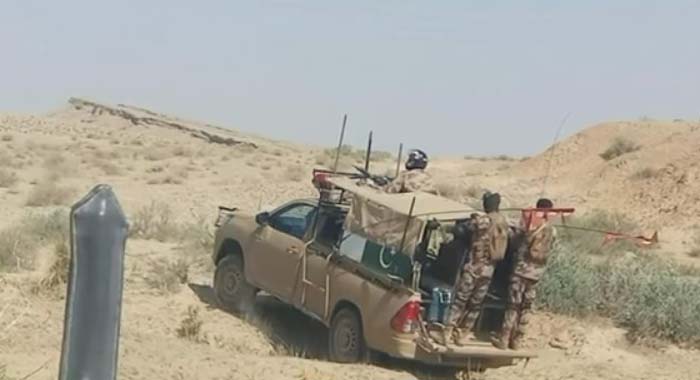
Pakistan has reiterated its unwavering commitment to defeating terrorism in all its forms, emphasizing that the country’s fight against violent extremism has continued for more than two decades and remains one of the longest and most demanding counterterrorism campaigns in the world. As security forces intensify operations against militant groups in Balochistan and Khyber Pakhtunkhwa (KP), national resolve remains firmly focused on safeguarding peace, protecting citizens, and preserving Pakistan’s sovereignty, territorial integrity, and constitutional order.
For over twenty years, Pakistan has confronted complex security challenges not only within its borders but also along its eastern and western frontiers. Throughout this period, the country has faced persistent attempts by militant networks and hostile elements to undermine national stability, disrupt public order, and weaken state institutions through coordinated acts of terrorism.
Security analysts and government officials have repeatedly maintained that Pakistan continues to face a proxy conflict driven by external actors seeking to destabilize the country. In particular, concerns have been consistently raised regarding India’s alleged support for anti-Pakistan militant networks, while apprehensions have also grown over the use of Afghan territory by terrorist organizations operating against Pakistan. These developments have been viewed as serious threats to regional peace and stability despite the longstanding historical, religious, cultural, and social ties shared between the peoples of Pakistan and Afghanistan.
Although terrorist incidents have periodically occurred across various parts of the country from Karachi to Khyber security authorities identify Khyber Pakhtunkhwa and Balochistan as the principal targets of militant violence. According to official assessments, these provinces have witnessed sustained attacks by terrorist groups referred to by Pakistani authorities as Fitna al-Khawarij and Fitna al-Hindustan, which continue to target security personnel, state institutions, and public peace through coordinated acts of violence.
During the past several weeks, terrorist attacks in Khyber Pakhtunkhwa have increasingly focused on police personnel. Militants have reportedly targeted police stations, security checkpoints, and mobile patrol units through planned ambushes and surprise assaults, resulting in numerous casualties among law enforcement officials performing their duties.
Similarly, in various districts of Balochistan, terrorists have carried out organized attacks against personnel of the Pakistan Army, Frontier Corps (FC), and the provincial police. Security officials state that these attacks are carefully planned and, in many instances, followed by public claims of responsibility by the militant organizations involved.
The continued targeting of security personnel has raised significant concern among citizens and policymakers alike, reinforcing the urgent need for comprehensive counterterrorism measures aimed at dismantling militant infrastructure and preventing future attacks.
The recent wave of violence has left deep emotional scars across affected communities. Families of police personnel who lost their lives in the latest attacks staged protests and sit-ins, demanding justice, enhanced security, and meaningful measures to prevent further loss of life.
Following negotiations between government representatives and the protesting families at Ziarat-e-Shuhada, the sit-in concluded peacefully. Funeral prayers were subsequently offered for the fallen officers before their burial.
While the government announced financial compensation packages for the families of the martyrs, many observers emphasized that monetary assistance can never compensate for the permanent loss of loved ones who sacrificed their lives in the line of duty. The grief experienced by bereaved families serves as a powerful reminder of the profound human cost of terrorism and has prompted renewed calls for sustained efforts to eliminate militant violence permanently.
In response to the recent surge in terrorist attacks, the Pakistan Army launched Operation Shaaban on 5 July, initiating a comprehensive intelligence-based counterterrorism campaign targeting militant networks operating in both Balochistan and Khyber Pakhtunkhwa.
The operation is being conducted in close coordination with the Balochistan Police and the Frontier Corps, reflecting a unified national security approach involving multiple law enforcement and military institutions.
According to official statements, Operation Shaaban will continue until the complete dismantling of terrorist infrastructure and the elimination of every terrorist involved in violence against the state and its citizens. Intelligence-led operations are continuing across affected regions, with security forces conducting targeted actions against militant hideouts, facilitators, and operational networks.
Authorities maintain that the objective of the operation extends beyond immediate military success and seeks to restore lasting peace, strengthen public confidence, and deny terrorist organizations the ability to regroup or re-establish operational capabilities.
Public support for Pakistan’s armed forces remains strong as military personnel, police officers, and Frontier Corps members continue to make significant sacrifices in protecting the country’s security.
Across Pakistan, tributes continue to be paid to members of the security forces who have laid down their lives in defence of the nation. Their courage, dedication, and commitment to protecting civilians are widely regarded as symbols of national resilience in the face of persistent terrorist threats.
Government officials and public representatives have repeatedly emphasized that defeating terrorism requires sustained national unity and collective resolve, with every institution playing its role in preserving peace and safeguarding the country’s future.
Operation Shaaban builds upon Pakistan’s long history of major counterterrorism campaigns undertaken to dismantle militant organizations and restore stability in conflict-affected regions.
In 2009, Operation Rah-e-Rast successfully targeted Taliban militants in the Swat Valley and Malakand Division, significantly improving the security situation in those areas.
Later that year, Operation Rah-e-Nijat was launched in South Waziristan, focusing on dismantling the Tehrik-e-Taliban Pakistan (TTP) infrastructure and destroying key militant strongholds.
In 2014, Operation Zarb-e-Azb commenced in North Waziristan, targeting both domestic and foreign terrorist organizations that had established operational bases in the region.
This was followed in 2017 by Operation Radd-ul-Fasaad, an intelligence-driven nationwide campaign aimed at eliminating terrorist sleeper cells, disrupting support networks, and dismantling militant facilitators throughout the country.
These operations resulted in significant security achievements, reducing militant capabilities and restoring state authority across numerous previously affected areas.
Despite notable military successes, security experts acknowledge that Balochistan and Khyber Pakhtunkhwa have remained vulnerable to instability over the past two decades. Militant groups continue attempting to exploit local grievances while benefiting from external support and internal facilitation.
Analysts argue that sustainable peace requires not only continued security operations but also comprehensive efforts to address the social, economic, and political conditions that extremists seek to exploit. Identifying and dismantling networks of facilitation at both operational and societal levels remains a critical component of Pakistan’s broader counterterrorism strategy.
Speaking recently at a ceremony in Islamabad, former Chief of Army Staff General Raheel Sharif emphasized that Pakistan has fought an extensive and determined war against terrorism and has paid a tremendous national price in doing so.
He underscored that national security extends far beyond military capability alone, stressing that social cohesion, economic development, political stability, education, and inclusive governance are equally essential pillars of long-term peace and national resilience.
His remarks have reinforced the growing consensus that military action, while indispensable, must be complemented by broader socioeconomic reforms to ensure enduring stability.
Observers increasingly emphasize that Pakistan’s political leadership now bears a critical responsibility in addressing the longstanding challenges facing Balochistan. Lasting peace, they argue, requires a comprehensive national strategy combining effective security measures with meaningful political engagement, economic opportunity, institutional strengthening, and inclusive development.
Calls have been made for leaders across the political spectrum including Prime Minister Shehbaz Sharif, Bilawal Bhutto Zardari, opposition parties, and Balochistan’s political representatives—to work collectively in developing durable solutions to the province’s political, social, and economic concerns.
Such cooperation is viewed as essential for strengthening public confidence, promoting national cohesion, reducing deprivation, and ensuring that future generations can live in an environment defined by peace, stability, justice, and sustainable development.
Pakistan’s enduring fight against terrorism has demonstrated both the resilience of its institutions and the sacrifices of its people. As Operation Shaaban continues, the nation remains committed to defeating terrorism, honoring the sacrifices of its security personnel, and building a future founded upon security, prosperity, and lasting peace for all its citizens.



