
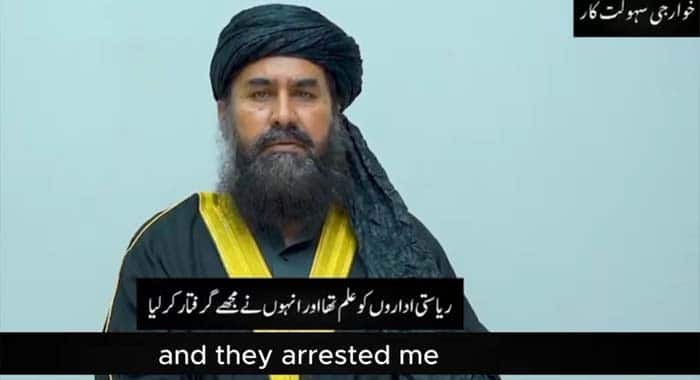
A major development has emerged regarding facilitation networks linked to terrorism, following reported revelations by a detained individual identified as a self-proclaimed religious scholar and facilitator of Fitna al-Khawarij.
According to the reported disclosures, the detained individual, identified as Mufti Zafar Yab, revealed details regarding the use of illegal seminaries, selective religious interpretations, and fabricated religious rulings to support activities associated with extremist networks.
The revelations have renewed concerns over the exploitation of religious platforms by terrorist elements seeking legitimacy and public support through religious narratives.
According to the reported statement, local facilitators allegedly involved in supporting terrorist activities have attempted to use unregistered religious seminaries and religious rulings as tools to advance their objectives.
The detained individual reportedly disclosed that he received eight years of Dars-e-Nizami education from Jamia Nizam-ul-Uloom’s orphanage section in Bannu city and later completed a three-year specialization in Islamic jurisprudence (Takhassus fi al-Fiqh) from Markaz Islami Ghoriwala.
The individual further reportedly admitted to having associations with alleged Khawarij networks, including serving as an active associate of Khawarij commander Hikmat Roshan and being linked with the Gul Bahadur Shura.
According to the reported confession, commanders associated with the network allegedly sought religious rulings from him in order to justify activities carried out in the name of jihad, including extortion and intimidation of wealthy individuals.
The detained facilitator reportedly stated that alleged commanders used religious pretexts to pressure individuals and that Hikmat Roshan allegedly offered incentives, positions, and financial benefits to different individuals for cooperation.
The statement further claimed that the detained individual recognized that Fitna al-Khawarij had no connection with Islam and consisted of elements promoting extremist interpretations that justify violence, including the killing of Muslims.
Following the reported revelations, experts have emphasized the need for stronger oversight mechanisms for illegal seminaries and institutions allegedly vulnerable to exploitation by extremist elements.
Experts stated that the disclosures demonstrate how terrorist networks may attempt to use unregulated religious institutions and self-appointed religious figures to advance their objectives and provide ideological support for violent activities.
They further highlighted that an agreement regarding the registration of unregistered seminaries between the Ittehad Tanzeemat-e-Madaris a representative platform of religious education boards, including Wifaq-ul-Madaris al-Arabia has been in place since 2019.
Experts have stressed that transparent scrutiny of all unregistered seminaries and organizations linked to political or social networks is essential to prevent the misuse of religious platforms for extremism and terrorism.
They further emphasized that effective government oversight of seminaries, curriculum standardization, and improvements in educational quality remain important steps toward strengthening the religious education system and preventing exploitation by extremist actors.
The reported disclosures have once again highlighted the broader challenge of preventing terrorist organizations from manipulating religious narratives and exploiting educational institutions for unlawful activities.
Authorities and experts continue to stress the importance of coordinated efforts involving security institutions, educational bodies, and religious organizations to ensure transparency, accountability, and the protection of communities from extremist exploitation.



