
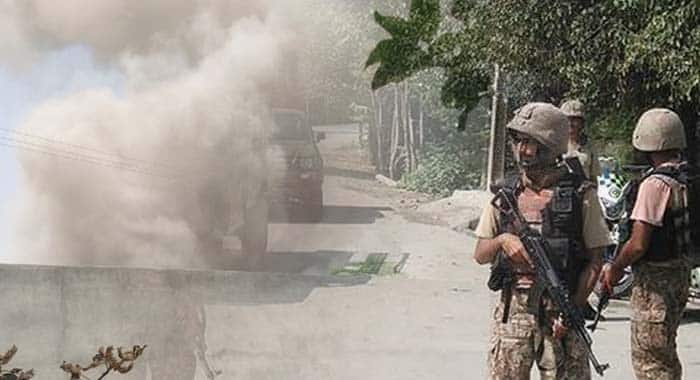
The security landscape of Bannu has entered a critical phase where counterterrorism operations are no longer limited to responding after attacks, but increasingly focus on detecting, disrupting and dismantling terrorist networks before they can execute their plans.
The recent developments in Bannu, including the foiled suicide attack on Miryan Police Station, follow-up intelligence-based operations, and continued actions against terrorist hideouts, reflect a broader shift in Pakistan’s counterterrorism approach. The emphasis has moved towards intelligence penetration, rapid response and targeted action against both armed operatives and the support structures that enable terrorism.
The attempted attack on Miryan Police Station highlighted the evolving tactics of terrorist groups. According to security sources, the attackers attempted to use an explosives-laden vehicle as a weapon, aiming to cause mass casualties and damage to a sensitive security installation. However, the timely response of security personnel prevented the vehicle from reaching its intended target.
The incident also demonstrated that modern terrorism is not only about armed individuals carrying out attacks. Behind such attempts often exist networks involving facilitators, movement arrangements, logistical support and communication channels. The subsequent arrest of an alleged facilitator following the Miryan attack underscored the importance of pursuing the wider network rather than focusing only on those directly involved in an attack.
This approach has become increasingly important because terrorist organizations have adapted their methods under sustained pressure. Instead of relying only on large formations or openly controlled areas, they increasingly operate through smaller cells, hidden facilitators and temporary hideouts. Such tactics are designed to complicate detection and create uncertainty among communities.
The follow-up intelligence-based operations in areas including Narmi Khel, Baka Khel and Takhti Khel showed the importance of continuous intelligence gathering. Operations targeting suspected terrorist positions and the recovery or destruction of stored explosives and ammunition indicate that security forces are attempting to strike the infrastructure that supports future attacks.
The recent operations also highlight growing coordination between different law enforcement institutions. The involvement of security forces, intelligence agencies, police and the Counter Terrorism Department reflects an integrated approach in which information sharing and coordinated action have become essential elements of counterterrorism.
The elimination of terrorists in successive operations, including the ISPR-reported intelligence-based operations in Bannu and separate CTD actions, indicates continued pressure on terrorist networks attempting to maintain their presence in the district. However, counterterrorism efforts are not measured only by the number of terrorists eliminated. The disruption of planning networks, identification of facilitators and prevention of attacks before they occur remain equally significant indicators of success.
One of the most concerning aspects of the current security environment is the deliberate targeting of civilian life and infrastructure by terrorist elements. The destruction of a public bridge in Hani Khel and Bachak, according to local reports, demonstrated how terrorist groups attempt to create fear, disrupt daily life and punish communities that refuse to support them.
Such tactics reveal that terrorist organizations do not merely challenge state institutions. They directly harm ordinary citizens by damaging roads, bridges, communication networks and economic activity. This makes public cooperation a vital component of any successful counterterrorism strategy.
The experience of Bannu also reflects a larger challenge faced by Pakistan’s security institutions. Terrorist groups operating in the region have repeatedly attempted to exploit difficult terrain, local vulnerabilities and cross-border dynamics to sustain their activities. Pakistani authorities have consistently maintained that terrorist organizations involved in attacks inside Pakistan benefit from sanctuaries and support networks outside the country, particularly across the western border, and have repeatedly called for stronger measures to prevent such activities.
At the same time, the fight against terrorism requires maintaining public confidence. Communities affected by violence are not only victims of terrorism but also important partners in identifying threats. Local information regarding suspicious movement, unfamiliar individuals and terrorist facilitators can significantly strengthen intelligence-based operations.
The announcement of wanted terrorist lists and rewards by law enforcement agencies represents one such effort to encourage public participation. In areas where terrorist networks attempt to operate through secrecy and intimidation, cooperation between citizens and security institutions can become a decisive factor.
The Bannu situation also demonstrates that terrorist groups continue to adapt their methods. The use of vehicle-borne explosives, attempts to establish support networks, attacks on public infrastructure and efforts to spread fear through propaganda all indicate a multifaceted threat. Countering such threats requires equally adaptable strategies combining intelligence, technology, law enforcement capabilities and community resilience.
The ongoing operations in Bannu suggest that security forces are pursuing a sustained campaign rather than a short-term response. The objective is not only to eliminate individual attackers but to dismantle the broader ecosystem that allows terrorism to survive.
While challenges remain, the continued success of intelligence-based operations demonstrates the importance of proactive counterterrorism. The future security environment in Bannu will depend on maintaining operational pressure, improving intelligence coordination, strengthening public cooperation and ensuring that terrorist networks are denied the space and resources required to threaten peace and stability.



