
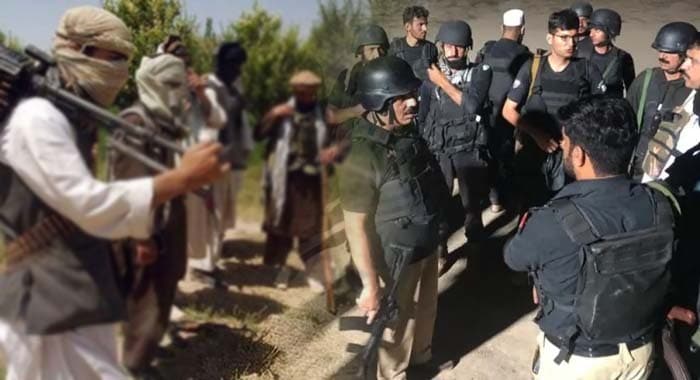
For years, Khyber Pakhtunkhwa has remained at the forefront of Pakistan’s war against terrorism. The province, which has witnessed some of the most devastating terrorist attacks in the country’s recent history, continues to face a complex security challenge where local militant networks, cross-border sanctuaries, financial pipelines and external support mechanisms converge.
The nature of terrorism has changed significantly. Today, the threat is no longer limited to isolated attacks by small groups operating in remote areas. Terror networks have evolved into structured systems with recruitment mechanisms, funding channels, communication networks and logistical support. Countering such a threat requires a comprehensive strategy that addresses not only the attackers on the ground but also the networks enabling them.
The persistent challenge in KP is closely linked with the security environment across the border. Terrorist groups have repeatedly attempted to exploit geographical vulnerabilities, using difficult terrain and external sanctuaries to plan and execute attacks inside Pakistan.
The presence of safe havens and support networks outside Pakistan’s borders has remained a major concern. A terrorist organization does not require an entire territory to operate. Even limited space, logistical assistance and freedom of movement can allow such groups to reorganize, recruit and launch attacks.
This is why Pakistan has consistently emphasized that counterterrorism cannot be viewed only through the lens of domestic security. When terrorist networks operate across borders, the response also requires regional cooperation, effective border management and accountability from those who control the territory from where threats emerge.
The Economy Behind Terrorism
One of the most important aspects of modern terrorism is its financial structure. Terror groups cannot sustain themselves without resources. Vehicles, weapons, explosives, training facilities, communication systems, recruitment and movement of fighters all require funding.
Whether through illegal taxation, smuggling, extortion, criminal activities or external assistance, terrorist organizations build financial ecosystems that allow them to survive.
Breaking these financial networks is as important as eliminating armed operatives. A terrorist organization can attempt to replace its fighters, but disrupting its funding channels weakens its ability to plan and execute attacks.
This is why global counterterrorism efforts increasingly focus on tracking money flows, dismantling facilitators and targeting those who provide resources to violent groups.
Security Operations and the Changing Battlefield
Pakistan’s security forces have conducted numerous intelligence-based operations across KP to disrupt terrorist networks. These operations have prevented attacks, eliminated key operatives and damaged militant infrastructure.
However, terrorism cannot be defeated through military or security operations alone. A long-term solution requires a combination of kinetic and non-kinetic measures.
A successful counterterrorism strategy must ensure that citizens see the presence of the state not only through security deployments but also through development, education, employment opportunities, healthcare and governance.
This is particularly important in areas where terrorists attempt to exploit grievances or create a perception of state absence.
The people of KP have suffered tremendously because of terrorism. They have lost family members, homes, livelihoods and opportunities. Yet, communities across the province have also demonstrated remarkable resilience and have repeatedly rejected extremist violence.
The fight against terrorism is not only the responsibility of security institutions. Public cooperation, intelligence sharing and community resilience remain essential elements of defeating terrorist networks.
The Balochistan and KP Link
The security situation in KP cannot be viewed separately from developments in other parts of Pakistan. Terrorist groups operating in different regions often share resources, narratives and support structures.
Recent incidents in Balochistan have once again highlighted how terrorist organizations attempt to challenge Pakistan’s security through coordinated strategies. Attacks in one province can be linked to broader efforts aimed at weakening state institutions and creating instability.
For Pakistan’s adversaries, terrorism remains a tool to disrupt development projects, damage economic activities and create divisions within society.
Projects such as connectivity initiatives and economic development programmes remain particularly vulnerable because instability serves the interests of those who oppose Pakistan’s progress.
The Role of Public Resistance
One of the most significant developments in recent years has been the growing public rejection of terrorism. Communities that once suffered silently have increasingly raised their voices against terrorist violence.
This public resistance is a major obstacle for terrorist organizations because their survival depends not only on weapons but also on fear and intimidation.
When citizens refuse to provide support, information or shelter to terrorist elements, the operational space available to such groups shrinks considerably.
The state’s responsibility is to strengthen this trust by ensuring that citizens who stand against terrorism receive protection and support.
The Road Ahead
The war against terrorism in KP is a long-term challenge. Terrorist networks may change their names, leadership structures and methods, but their objective remains the same: to undermine peace, weaken institutions and create instability.
Pakistan’s security approach must therefore remain focused on dismantling the complete ecosystem of terrorism, including recruitment, financing, propaganda, facilitation networks and cross-border support structures.
The future security environment of KP will depend on maintaining pressure on terrorist groups while simultaneously strengthening governance, economic opportunities and public confidence.
The sacrifices made by security personnel and civilians demonstrate the enormous cost of this conflict. The path ahead requires determination, patience and a united national approach.
Defeating terrorism is not only about winning individual operations. It is about ensuring that terrorist networks lose the ability to regenerate, recruit and threaten Pakistan’s future.
For KP, lasting peace will come when the entire terrorism ecosystem, from its financiers and facilitators to its operational networks, is dismantled completely.



