
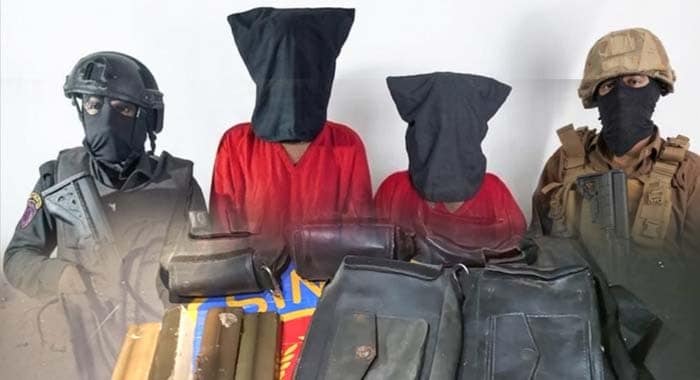
In a significant achievement against terrorism and organized militant networks, Pakistani law enforcement agencies have successfully apprehended two key operatives of a sleeper cell linked with the banned terrorist outfit led by Ata-ur-Rehman alias Naeem Bukhari.
The arrests were carried out through a successful intelligence-based operation, preventing the reactivation of the sleeper cell and averting potential terrorist activities in Karachi. The arrested individuals were actively involved in planning improvised explosive device (IED) attacks, targeted killings, and other acts of terrorism in the city.
The arrested operatives had remained underground since 2015–2016 and had recently started efforts to rebuild and reorganize the group’s dormant operational network in Karachi. Acting on timely and actionable intelligence, security agencies successfully traced their movements and apprehended both individuals before they could restore their terrorist infrastructure.
- Muhammad Jameel Ansari alias Shoaib alias Chacha
Son of Ali Muhammad Ansari - Hammad Ali Ansari alias Zarar alias Babloo
Son of Muhammad Jameel Ansari
Preliminary investigations have revealed that Muhammad Jameel Ansari was a highly wanted operative of the Naeem Bukhari group. He had received specialized training in IED fabrication and electronic circuitry in Afghanistan and later played a key role in facilitating multiple terrorist operations in Karachi.
Following the arrest of the group’s commander, Ata-ur-Rehman alias Naeem Bukhari, Muhammad Jameel Ansari went into hiding and remained underground for several years to avoid arrest. However, he later resumed efforts to reconnect with remaining members and rebuild the group’s operational capabilities in Karachi.
The second arrested operative, Hammad Ali Ansari, maintained close associations with several deceased terrorists and members of the same network. His links included individuals such as Dildar alias Chacha, who was involved in the suicide attack on the residence of late senior police officer Chaudhry Aslam, as well as other militants including Imran Bhatti, Ishaq Bobby, and Asim Capry. Following the elimination of these terrorists during security operations, Hammad Ali Ansari remained in hiding.
Investigations have further revealed that Ata-ur-Rehman alias Naeem Bukhari had directed Muhammad Jameel Ansari to develop a specially modified shell-catcher device for pistols. The purpose of this device was to retain spent cartridge casings after firing, making forensic identification and investigation more difficult.
Such devices were reportedly used in several high-profile targeted killings, including the assassination of renowned qawwal Amjad Sabri and the killing of a Military Police official near Parking Plaza, Saddar, Karachi.
During the operation, law enforcement agencies recovered a significant quantity of material linked to terrorist activities, including:
- Four explosive slabs
- Five detonators
- Ten meters of Prima Cord
- One remote-control triggering device
- Five shell-catcher devices for pistols
The recovered items indicate the operational capability and intentions of the arrested individuals to carry out further acts of violence.
The successful operation reflects the effectiveness of intelligence-driven policing and the continued commitment of Pakistan’s law enforcement agencies to dismantle terrorist networks, disrupt sleeper cells, and ensure the safety and security of citizens.
Security agencies remain determined to pursue all facilitators, handlers, and remaining members of banned militant networks. Intelligence-based operations will continue to identify and neutralize threats before they can materialize into acts of terrorism.



