
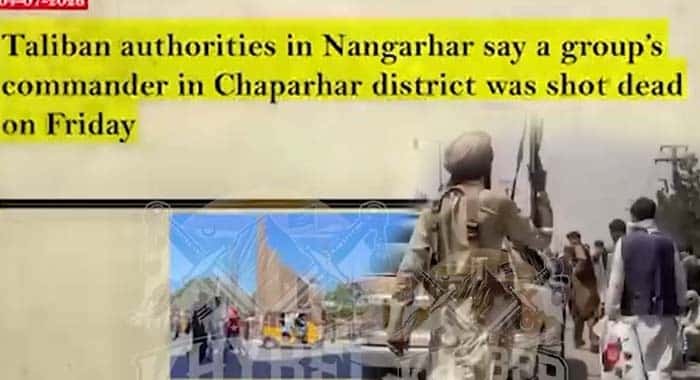
Tensions within the Afghan Taliban structure have reportedly intensified further after a local commander was shot dead in Nangarhar province, underscoring growing strains over authority, resources and internal control within the group’s governance framework.
According to details, Taliban local commander Musafir was killed in a shooting incident in the Chaparhar district of Nangarhar. The circumstances surrounding the killing remain unclear, but initial indications point toward an internal dispute rather than an external attack.
In a development that has further fueled speculation about internal discord, Taliban members reportedly detained the deceased commander’s own brother shortly after the incident. No official explanation has been provided regarding the reasons for the detention, adding to uncertainty and raising questions about internal accountability mechanisms within the group.
The incident reflects a broader pattern of emerging internal friction within the Afghan Taliban’s governance and security structures, where competing interests over authority, influence and local control are increasingly becoming visible at district and provincial levels.
Since taking control of Afghanistan in 2021, the Afghan Taliban have attempted to maintain a unified command structure. However, reports of internal disagreements, rivalries between local commanders, and tensions over resource distribution have periodically surfaced, particularly in provinces with active security and economic significance.
Nangarhar, due to its strategic location and historical militancy dynamics, has often been a focal point of both internal and external security concerns. The latest killing adds to a series of incidents that suggest internal cohesion challenges within the Taliban’s rank and file, especially at the local command level.
Security observers note that such incidents, even when not publicly acknowledged in detail, reflect the pressures faced by the Afghan Taliban administration as it attempts to balance governance responsibilities with internal organizational discipline.
The absence of transparent investigation details and limited information release has also contributed to speculation regarding internal accountability processes and dispute resolution mechanisms within the group.
The killing of Commander Musafir is being viewed in the broader context of increasing internal strains that have occasionally surfaced in different parts of Afghanistan, particularly where local authority structures overlap with resource control and operational autonomy.
This development comes at a time when Afghanistan is already facing multiple layers of internal and external pressure, including economic constraints, security challenges involving rival groups, and ongoing governance consolidation efforts.
In this broader context, internal incidents such as the one in Nangarhar add another layer of complexity to an already fragile governance environment.
It is also worth recalling that the recent killings of close commanders linked to Juma Khan Fateh, which had similarly highlighted emerging fractures and targeted violence within the ranks of the Afghan Taliban. These incidents collectively point toward a pattern of internal instability and shifting power dynamics that continue to shape the evolving security landscape.



