(Shamim Shahid)
The recent reports of intensifying differences between Tehreek-e-Taliban Pakistan (TTP) and Jamaat-ul-Ahrar (JuA) have once again shifted public attention toward Pakistan’s evolving security landscape. News of clashes between militant factions naturally creates an impression that these organizations are weakening from within and that internal divisions may ultimately reduce the terrorist threat facing the country. While such developments undoubtedly deserve close attention, they should not be interpreted as signs that terrorism is on the verge of collapsing under the weight of its own contradictions. History has repeatedly demonstrated that militant organizations are capable of fighting one another over power, territory, money, and influence while simultaneously joining forces whenever they believe their common objectives are under threat. Pakistan, therefore, cannot afford to mistake internal rivalries for strategic victory.
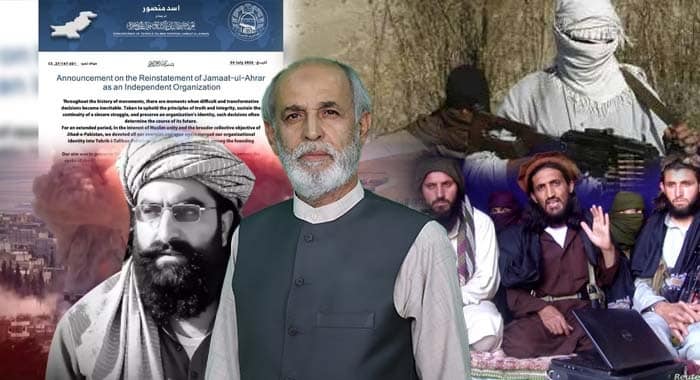
The latest reports suggest that differences between Jamaat-ul-Ahrar and the TTP have once again intensified. Although these organizations currently fall under the broader militant umbrella associated with the TTP, their relationship has never been one of complete unity. Jamaat-ul-Ahrar initially functioned as a separate organization before later becoming part of the TTP. However, the merger was organizational rather than absolute. The group’s commanders retained significant autonomy, local authority, and operational independence. As a result, disagreements that existed before the merger never completely disappeared. Instead, they resurfaced repeatedly whenever disputes over leadership, finances, weapons, or territorial control emerged.
The roots of these tensions are not difficult to understand. Militant organizations, despite their ideological narratives, often function through localized networks where commanders compete for influence and resources. According to reports, disputes between Jamaat-ul-Ahrar and the TTP revolve around multiple issues, including the distribution of money, control of weapons, ownership of territory, and authority over local commanders. Smuggling routes also appear to be a significant source of friction. In regions where illicit trade provides a steady stream of financial resources, the control of roads and cross-border movement becomes strategically important. Competition over these routes inevitably creates conflict, even among organizations that publicly claim to share the same ideological objectives.
These disputes are far from new. Similar clashes have occurred repeatedly over the years. Reports indicate that only a month ago, violent confrontations between rival militant factions resulted in the deaths of more than twenty individuals. Former leaders issued public statements accusing one another, illustrating the depth of mistrust within the militant ranks. More recently, Jamaat-ul-Ahrar has reportedly accused elements within the TTP of orchestrating the killing of its commanders, allegations that have further widened the divide between the two groups. Such accusations underscore that personal rivalries and leadership struggles continue to shape the internal dynamics of Pakistan’s militant landscape.
Yet these internal conflicts should not create a false sense of security. One of the defining characteristics of militant organizations is their ability to compartmentalize rivalry. They may engage in deadly clashes over territory one day and cooperate in carrying out attacks the next. Whenever Pakistani security forces, police personnel, political figures, or state institutions become targets, these organizations have repeatedly demonstrated a willingness to put aside their differences in pursuit of broader objectives. Their strategic calculations are often pragmatic rather than emotional. While they compete fiercely over internal resources, they continue to view terrorism against the Pakistani state as a common cause. This duality makes them especially dangerous because fragmentation does not necessarily translate into operational weakness.
For Pakistan’s policymakers, this distinction is crucial. Internal divisions should be viewed as opportunities for intelligence-led operations and strategic disruption rather than evidence that the threat has diminished on its own. Throughout the history of counterterrorism, governments have successfully exploited rivalries within extremist organizations to weaken leadership structures, disrupt financing networks, encourage defections, and gather valuable intelligence. However, such opportunities require swift action, effective coordination, and sustained political commitment. If these rivalries are allowed to evolve without strategic intervention, the strongest faction may eventually emerge more capable than before, having eliminated its competitors.
The situation has become even more concerning because of reports that the TTP is expanding its operational footprint into Balochistan. This represents a significant shift in Pakistan’s security environment. Historically, religiously motivated militant organizations operating in Balochistan focused primarily on sectarian violence, particularly targeting members of the Hazara community and other vulnerable groups. Over time, the pattern of violence evolved, and recent reports indicate that the TTP has now carried out attacks in areas around Quetta. This geographical expansion is significant because it suggests that militant organizations are no longer confining their activities to their traditional areas of operation.
The reported attack near Quetta resulted in multiple casualties and injuries, highlighting the human cost of this expanding threat. According to available reports, fifteen people lost their lives while eighteen others were injured. Residents of the affected village reportedly spent two consecutive nights without sleep, fearing additional attacks. Such fear is itself one of terrorism’s principal objectives. Terrorist organizations seek not only to inflict casualties but also to create a pervasive atmosphere of insecurity that disrupts normal life and undermines public confidence in the state’s ability to provide protection.
Equally troubling are reports that local communities had previously raised concerns about security. Village elders had reportedly organized protests several days before the attack, demanding stronger protective measures. Security officials are said to have assured residents that adequate arrangements would be made, yet the subsequent attack has intensified public frustration. Understandably, local communities are once again demanding stronger security measures and more effective protection. Every successful terrorist attack reinforces the perception that promises of security must be matched by visible and sustained action on the ground.
Another emerging dimension of concern involves reports of increasing cooperation between the TTP and the Baloch Liberation Army (BLA). Although these organizations differ significantly in terms of ideology, organizational structure, and stated political objectives, tactical cooperation between militant groups is not unprecedented. Throughout the world, extremist organizations have frequently collaborated when their immediate operational interests converge. Such cooperation may involve intelligence sharing, logistical support, movement across territory, or temporary coordination against common adversaries. Even if these relationships remain limited in scope, their existence complicates Pakistan’s counterterrorism efforts by blurring traditional distinctions between different forms of militancy.
The allegations regarding TTP-BLA cooperation also reflect a broader transformation within militant ecosystems. Increasingly, terrorist organizations appear willing to prioritize tactical convenience over ideological purity. This evolution demands an equally adaptive response from Pakistani security institutions. Counterterrorism strategies designed around isolated organizations may prove inadequate if multiple groups begin sharing operational resources and exploiting one another’s strengths.
The broader militant landscape itself remains fragmented. Beyond Jamaat-ul-Ahrar, the TTP umbrella has historically included numerous affiliated groups and factions. Organizations associated with Hafiz Gul Bahadur, the Mangal Bagh network, Lashkar-e-Islam elements, and various North Waziristan-based militant groups have experienced shifting alliances over the years. Some have merged before separating again, while others have cooperated temporarily before returning to rivalry. This fluidity makes Pakistan’s security challenge particularly complex because the identities and relationships of militant organizations often change more rapidly than public narratives acknowledge. Understanding these shifting alliances is therefore essential for developing effective counterterrorism policies.
One of the most intriguing recent developments is the reported rebellion of Jamaat-ul-Ahrar against the Afghan Taliban. Whether these reports ultimately reflect a long-term rupture or a temporary disagreement remains to be seen, but they point to increasing complexity within the broader militant environment. The Afghan Taliban continue to occupy a sensitive position in Pakistan’s regional security calculations. They have consistently denied allowing Afghan territory to be used for attacks against Pakistan and maintain that Pakistan’s security challenges are internal matters requiring domestic solutions. Official statements have repeatedly rejected allegations that TTP fighters operate freely from Afghan soil.
Nevertheless, perceptions often influence diplomacy as much as formal declarations. The continued presence of cross-border security concerns has complicated relations between Islamabad and Kabul. Reports that factions within Jamaat-ul-Ahrar may now be distancing themselves from the Afghan Taliban further complicate an already intricate regional picture. These developments suggest that ideological alignment alone does not guarantee organizational cohesion, particularly when leadership disputes and operational interests collide.
The Afghan Taliban themselves are confronting mounting internal and international pressures. Despite controlling Afghanistan, they continue to struggle for international recognition. Their government remains outside many global financial systems, limiting access to development assistance, international banking mechanisms, foreign investment, and institutional support. Economic challenges continue to weigh heavily on Afghanistan’s future, while humanitarian needs remain substantial.
Recent diplomatic developments have also highlighted the Taliban’s difficult international position. Reports surrounding regional diplomatic engagements, including the participation of Taliban opponents such as Ahmad Massoud and Ustad Mohammad Mohaqiq at international events, have underscored the continuing contest over Afghanistan’s political legitimacy. Such developments send broader diplomatic signals that recognition of the Taliban government remains incomplete. Without broader international acceptance, Afghanistan’s leadership faces continuing economic and political constraints, circumstances that inevitably shape the regional security environment affecting Pakista