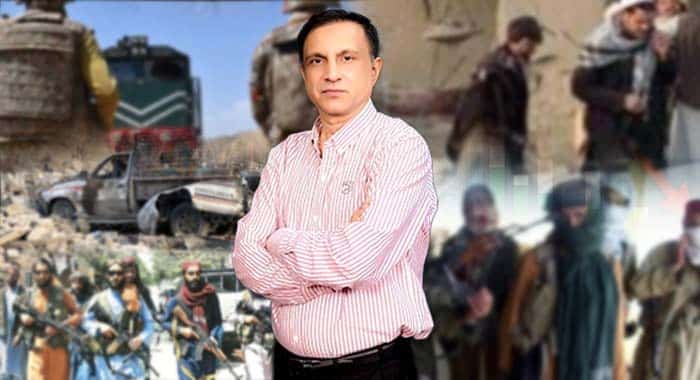
For years, Pakistan has maintained that terrorist organisations targeting our country have been operating from Afghan territory with varying degrees of support and facilitation. Every time Pakistan raised this concern, there were attempts in some quarters to dismiss it as political rhetoric or bilateral blame-shifting. Today, however, the picture has become increasingly difficult to deny. Successive reports by the United Nations, the United States, Russia, and other international stakeholders have pointed towards the continued presence of multiple terrorist organisations inside Afghanistan. More recently, revelations from Taliban defectors have reinforced what Pakistan has consistently maintained all along.
To me, these latest disclosures are not a revelation. They simply reaffirm a reality that has existed for years. Pakistan has repeatedly informed the international community that terrorist groups, including the Tehreek-e-Taliban Pakistan (TTP), the Balochistan Liberation Army (BLA), and other anti-Pakistan terrorist organisations, continue to enjoy sanctuaries across the border. International reports have gradually validated these concerns, while independent assessments have painted a similar picture.
The recent terrorist attack in Karachi, in which six Rangers personnel embraced martyrdom, further illustrates the nature of this challenge. According to the investigation, one of the injured terrorists was arrested alive and identified as an Afghan national. Investigators have stated that he disclosed how the attackers crossed into Pakistan from Afghanistan, received facilitation through local networks, and eventually reached Karachi to execute the assault. Such incidents strengthen Pakistan’s longstanding position that cross-border terrorist infrastructure remains active and continues to pose a direct threat to our national security.
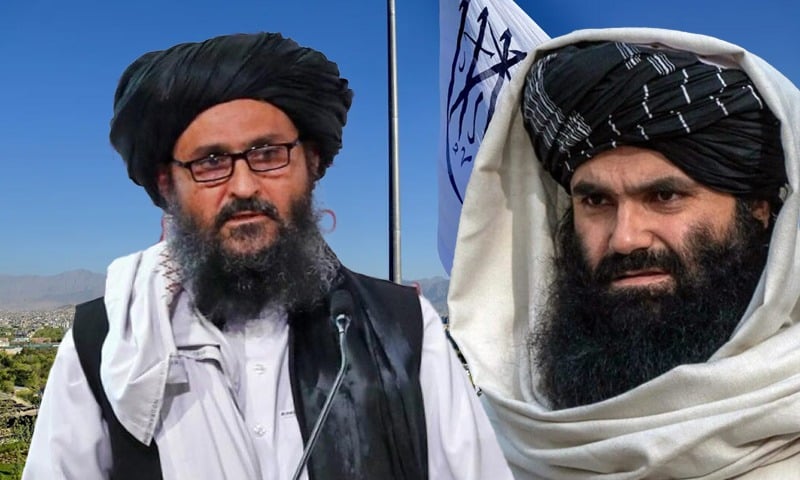
The testimony of Taliban defectors adds another dimension to this debate. According to these accounts, terrorist groups are not merely hiding inside Afghanistan. They are allegedly receiving shelter, financial assistance, logistical facilitation, and, in some cases, security protection. These claims also reinforce Pakistan’s repeated assertion that hostile external actors exploit Afghan territory to finance and support anti-Pakistan terrorist activities. Whether through direct funding or indirect channels, the objective remains the same, destabilising Pakistan by nurturing violent proxies.
One particularly disturbing aspect emerging from these accounts is the alleged preferential treatment extended to commanders involved in terrorism inside Pakistan. While ordinary Afghan citizens continue to struggle with poverty, unemployment, and economic uncertainty, individuals accused of orchestrating attacks inside Pakistan are reportedly living under protection and enjoying access to resources that ordinary citizens themselves cannot obtain. Such allegations deserve serious international attention because they point towards organized facilitation rather than isolated incidents.
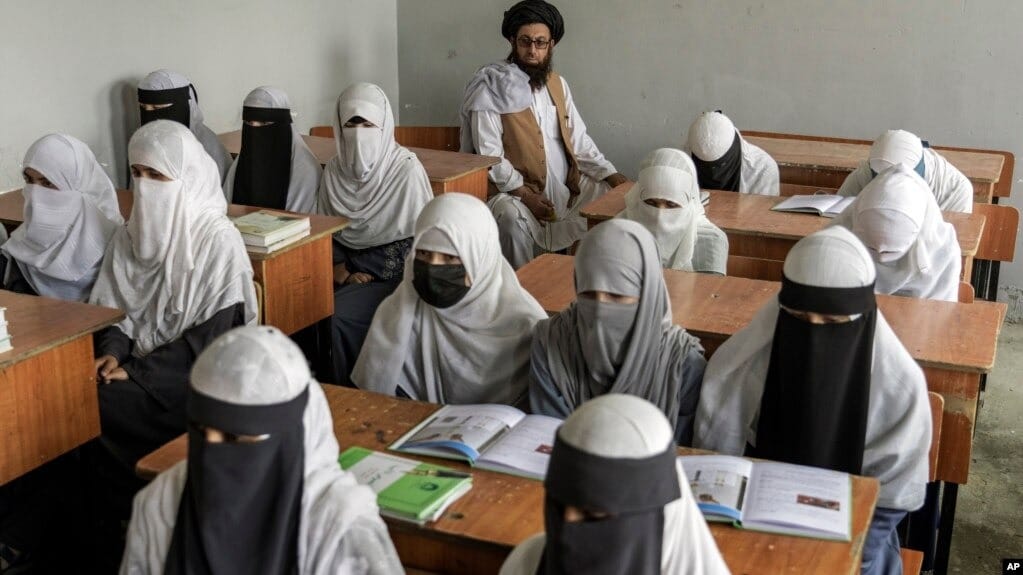
Afghanistan’s economy itself presents another contradiction. Independent international assessments continue to highlight deteriorating economic conditions, shrinking employment opportunities, humanitarian hardship, and widespread poverty. Millions require humanitarian assistance, businesses struggle to survive, and many young Afghans continue searching for opportunities abroad. Under such circumstances, legitimate questions naturally arise regarding how terrorist networks continue to sustain their operations, recruit members, maintain infrastructure, and finance attacks across the border.
Pakistan has consistently argued that terrorist financing originates from hostile elements seeking to undermine regional stability. Statements made by captured terrorists during investigations have repeatedly described training facilities, movement routes, logistical arrangements, and support structures operating across the border. These disclosures should not be viewed in isolation. Instead, they should be examined collectively alongside intelligence assessments and international reports that increasingly point towards an organised ecosystem supporting terrorism directed against Pakistan.
Despite repeated denials from the Afghan authorities, the accumulation of evidence has made it increasingly difficult to dismiss these concerns outright. Diplomatic statements alone cannot erase facts emerging from investigations, intelligence assessments, captured terrorists, international reporting, and now the testimonies of former Taliban members themselves. If Afghanistan genuinely seeks peaceful relations with its neighbours, dismantling terrorist sanctuaries must become a visible and verifiable priority.
Another equally concerning dimension is the information environment surrounding Afghanistan. Certain sections of the Indian media continue portraying Afghanistan as a rapidly progressing success story, presenting images of prosperity, development, employment, and stability that stand in stark contrast to internationally documented realities. At the same time, Pakistan is consistently projected through the lens of terrorism, instability, and crisis. Such selective storytelling does little to inform audiences objectively and instead risks creating distorted perceptions disconnected from ground realities.
Anyone examining internationally available economic data can easily recognise the disconnect. Afghanistan continues facing severe economic hardship. International companies remain reluctant to invest. Employment opportunities remain limited. Essential public services continue struggling under enormous pressure. Healthcare facilities lack resources, while poverty affects millions of ordinary Afghans. These realities have been documented by international organizations and humanitarian agencies alike. They cannot simply be wished away through carefully selected images or optimistic television narratives.
The contradiction becomes even more obvious when one observes migration trends. Thousands of Afghans continue seeking opportunities outside their country. Visa applications remain high, while many aspire to migrate elsewhere in search of employment, education, and security. If Afghanistan had indeed transformed into the prosperous success story some narratives attempt to portray, such large-scale outward migration would hardly continue at its current pace.
Facts cannot be rewritten simply because they are inconvenient. Propaganda may influence perceptions temporarily, but it cannot permanently replace reality. In today’s interconnected world, information travels faster than ever before. Afghans communicate daily with relatives and friends abroad. They share firsthand accounts of inflation, unemployment, shortages of food and medicine, and the daily hardships confronting ordinary families. These realities inevitably expose the gap between carefully crafted narratives and the actual conditions on the ground.
This is why I believe attempts to portray Afghanistan as a model of stability while simultaneously projecting Pakistan as a failed security environment are ultimately counterproductive. If those promoting such narratives genuinely believe Afghanistan has become an economic success, they should encourage greater commercial investment, tourism, and business partnerships there. Instead, the focus often appears to remain elsewhere, particularly on information campaigns directed against Pakistan.
The security dimension inside Pakistan must also be viewed through the changing tactics of terrorist organizations. Our security forces are conducting hundreds of intelligence-based operations every month across Khyber Pakhtunkhwa and Balochistan. Many of these operations receive little public attention, yet they continue to degrade terrorist networks, eliminate their operatives, recover weapons, and deny them freedom of movement. Every successful operation forces terrorists onto the defensive. Whenever pressure is reduced, however, they attempt to regroup and regain the initiative.
At the same time, terrorist organizations are adapting. Increasingly, they are relying on Afghan nationals, local facilitators, and emerging technologies to carry out attacks. The growing use of drones in recent incidents illustrates how quickly the threat landscape is evolving. Drone attacks reported in areas such as Hassan Khel, Bajaur, and Khyber demonstrate that terrorist organizations are constantly searching for new methods to bypass traditional security measures. Pakistan cannot afford to fight tomorrow’s threats with yesterday’s strategy.
This is precisely why intelligence-based operations must continue with even greater precision and intensity. Simultaneously, effective border management remains indispensable. Illegal cross-border movement, undocumented individuals, and networks that facilitate infiltration all create opportunities that terrorist organizations seek to exploit. Strengthening documentation, identity verification, and movement controls is not merely an administrative exercise. It is an essential component of national security.
Balochistan offers an important example of the value of coordinated action. Security operations become significantly more effective when provincial institutions, civil administration, law enforcement agencies, and intelligence organizations work in harmony. Counterterrorism is never the responsibility of security forces alone. Political leadership, provincial governments, and civilian institutions all have indispensable roles to play in building public confidence, sharing intelligence, and supporting national objectives.
The same principle applies across every province. Political leadership must demonstrate clarity when innocent Pakistanis lose their lives in terrorist attacks or cross-border incidents. Condemning violence against civilians should never become a matter of political convenience. The first responsibility of every elected government is to protect its citizens and stand firmly behind them when they become victims of terrorism. Security forces perform their operational responsibilities, but political leadership must also fulfil its constitutional and moral responsibilities by speaking with clarity, rejecting terrorism without ambiguity, and reinforcing national unity.
Equally important is the battle of narratives. Pakistan’s enemies do not rely solely on guns and explosives. They increasingly exploit the digital space to spread extremist propaganda, recruit supporters, and communicate with vulnerable individuals. Platforms evolve rapidly. When one application becomes difficult to use, terrorist organizations migrate to another. Today, social media is no longer merely a communication tool. It has become a battlefield where ideas, misinformation, recruitment, and psychological influence compete for attention.
This challenge demands a modern response. The objective should not simply be restricting individual platforms but strengthening digital monitoring, improving technological capabilities, enhancing cooperation with social media companies, and developing sophisticated counter-narratives capable of exposing extremist propaganda before it influences young minds. Terrorist organizations understand that recruiting an educated young person through digital manipulation may be as valuable to them as training an armed operative.
Unfortunately, this threat is often underestimated. Many assume radicalization affects only the uneducated or economically disadvantaged. Experience has shown otherwise. Educated young people, including university students and professionals, have also been targeted through carefully designed online messaging that manipulates religious emotions, political grievances, and misinformation. This makes digital vigilance just as important as physical security.
Pakistan therefore faces a multidimensional challenge. It must continue dismantling terrorist infrastructure through intelligence-based operations. It must strengthen border security. It must enhance cooperation among federal and provincial institutions. It must continue presenting credible evidence before the international community regarding cross-border terrorism. Finally, it must invest seriously in technological capabilities to confront extremist narratives in cyberspace.
Our security forces have repeatedly demonstrated remarkable professionalism and sacrifice in confronting terrorism. Their successes on the battlefield deserve equal support from political leadership, civil institutions, and society at large. Terrorism cannot be defeated through military action alone. It requires national unity, consistent policies, institutional coordination, diplomatic engagement, technological preparedness, and an unwavering commitment to defending Pakistan’s sovereignty.
Pakistan has endured this struggle for decades. Yet despite enormous sacrifices, the resolve of the state and its people remains intact. Those who seek to destabilize the country continue to change their tactics, but Pakistan has repeatedly shown its ability to adapt, respond, and prevail. The challenge before us is not simply to win today’s battles, but to ensure that future generations inherit a safer, stronger, and more resilient Pakistan, one capable of defeating terrorism not only on the battlefield, but also in the battle of ideas, information, and national resolve.