
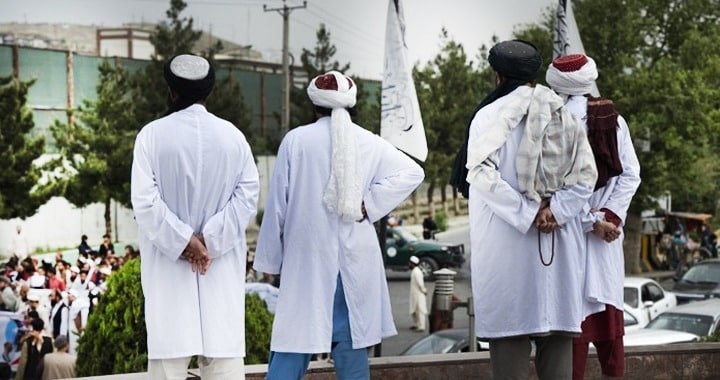
At least 20 aid workers working near the Islam Qala border crossing between Afghanistan and Iran were briefly detained by Taliban authorities over what officials described as violations related to personal appearance, specifically beard length or shaving, according to reports citing humanitarian sources.
The individuals were reportedly employed by organizations cooperating with the United Nations and were engaged in humanitarian operations at a reception center in the border area when they were taken into custody by the Taliban’s so-called morality enforcement apparatus.
According to internal communications from an international humanitarian agency, the detentions were carried out on grounds that male staff members had either trimmed their beards or were not maintaining facial hair in accordance with the imposed regulations.
Some of those detained were reportedly released later the same day, while the remaining individuals were freed the following day after intervention and clarification through relevant channels.
The incident took place in the broader context of tightening social and administrative restrictions across Afghanistan, where Taliban authorities have increasingly enforced strict interpretations of personal conduct, dress codes, and public behavior, including regulations affecting both citizens and humanitarian workers.
While the Taliban have not issued an official public comment on the incident, previous enforcement patterns suggest that such actions fall under directives issued by their so-called Ministry for the Promotion of Virtue and Prevention of Vice, which has expanded its role in monitoring personal compliance across public and professional spaces.
Humanitarian observers note that the growing frequency of such interventions has created operational uncertainty for aid organizations, particularly in border regions where international assistance is critical for displaced populations, returnees, and vulnerable communities.
Critics argue that instead of focusing on humanitarian facilitation, employment stability, or crisis response efficiency, enforcement priorities increasingly reflect a system centered on personal control mechanisms, affecting even those involved in relief operations.
The Islam Qala incident adds to a series of reported restrictions, including limitations on media access, women’s mobility, employment conditions, and recently reported controls on communication devices and digital usage, further tightening the regulatory environment.
As humanitarian needs continue across Afghanistan, particularly in border transit zones, such enforcement actions are likely to intensify concerns among international agencies regarding access, operational continuity, and the broader humanitarian framework in the country.
For now, the brief detention and release of aid workers over beard-related compliance has once again highlighted the expanding reach of Taliban regulatory enforcement into spaces traditionally considered essential for humanitarian work.



