
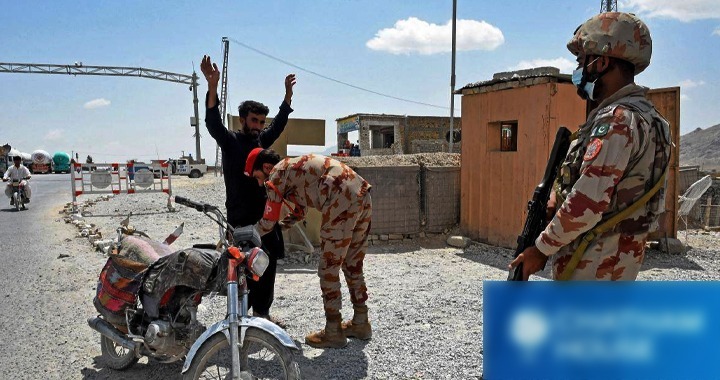
Recent developments across Balochistan illustrate a reality often overlooked in discussions surrounding the province’s security environment. Counter-terrorism is not solely about kinetic operations. It is equally about disrupting recruitment, dismantling facilitation networks, preventing attacks and imposing legal consequences on those who support violence.
Over the past several days, all four dimensions have been visible.
In different parts of Balochistan, security forces reportedly neutralized terrorists, foiled planned attacks and recovered weapons and equipment intended for future operations. In separate incidents, civilians, including young doctors and children, were reportedly injured during attacks attributed to terrorist elements.
Perhaps most significant was the conviction of a facilitator linked to networks associated with Fitna al Hindustan.
The case serves as an important reminder that terrorist organizations do not operate in isolation.
Behind every attack lies an ecosystem.
That ecosystem includes recruiters, financiers, logisticians, propagandists, facilitators and safe-house operators.
Removing armed attackers from the battlefield is important. Disrupting the networks that sustain them may be even more important.
Why Facilitators Matter
The conviction handed down by an Anti-Terrorism Court in Turbat highlights an often overlooked aspect of modern counter-terrorism.
Facilitators rarely appear in propaganda videos.
They rarely participate directly in attacks.
Yet without them, terrorist organizations struggle to function.
According to information presented during the trial, the convicted individual was allegedly involved in recruitment, indoctrination and logistical support activities connected to proscribed networks.
Whether through transportation, communication, shelter or recruitment, such support structures form the backbone of terrorist operations.
Their disruption therefore has consequences extending far beyond a single arrest or conviction.
The same principle applies to intelligence-based operations.
When security forces foil a plot before it is executed, the public often sees only the final outcome.
What remains invisible are the months of surveillance, intelligence collection, network mapping and coordination required to prevent an attack.
That is why recent events deserve attention not merely as isolated incidents but as indicators of broader trends.
Security institutions appear increasingly focused on attacking the ecosystem surrounding terrorism rather than responding only after attacks occur.
At the same time, terrorist groups continue demonstrating their willingness to target civilians.
The injuries suffered by children and medical professionals underscore a recurring reality.
Despite their rhetoric, terrorist organizations frequently inflict harm on the very populations they claim to represent.
Such attacks carry strategic consequences.
Every civilian casualty widens the gap between terrorist narratives and public experience.
Every attack on ordinary people undermines claims of legitimacy.
Every incident exposes the human cost of violence.
Balochistan’s security challenges remain significant. Terrorist networks retain the ability to conduct attacks. Recruitment efforts continue. External sponsorship concerns remain relevant.
Yet recent developments suggest that the operating environment is becoming increasingly difficult for such groups.
Security pressure is rising.
Legal accountability is expanding.
Facilitation networks are being targeted.
And intelligence capabilities continue evolving.
Taken together, these developments point toward a broader effort not merely to confront individual terrorists but to dismantle the infrastructure that allows terrorism to persist.
In the long run, that may prove far more consequential than any single operation.



