
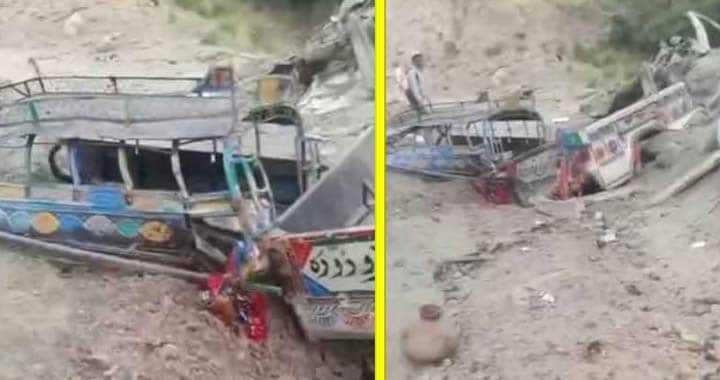
The twin explosions in Bannu’s Domel area, which security sources say killed seven people and injured several others, are not an isolated episode. They are part of a continuing pattern of improvised explosive device (IED) attacks that have repeatedly struck the district and surrounding belt in Khyber Pakhtunkhwa.
What makes the latest incident particularly alarming is not only the civilian toll, but the reported targeting of a second vehicle involved in shifting victims of the initial blast. That detail, if confirmed, points to an operational shift designed to amplify casualties and disrupt emergency response itself.
This is not the first time Bannu has witnessed such violence. Over recent months, the district has seen repeated roadside explosions targeting civilian transport routes, soft targets, and remote link roads where response times are already constrained by geography and infrastructure limitations. Each incident has followed a familiar cycle: a sudden blast, delayed access for rescue teams, and mounting casualties as injured victims struggle to reach medical facilities in time.
The latest attack again exposes that structural vulnerability.
A Repeating Security Pattern
Security officials describe the region as part of a persistent threat corridor where terrorist networks continue to exploit difficult terrain, limited surveillance coverage, and weak connectivity between outlying villages and urban medical centers.
Despite ongoing counter-terrorism operations across Khyber Pakhtunkhwa, the recurrence of similar attack profiles suggests that disruption of operational capability has not translated into sustained denial of access in vulnerable pockets.
Bannu, in particular, has emerged as a recurring flashpoint where civilian movement routes remain exposed to improvised explosive devices placed along predictable travel paths.
When Response Becomes Part of the Crisis
Beyond the attack itself, the aftermath once again highlights a second layer of vulnerability: emergency response capacity.
Local accounts from previous incidents in the region have repeatedly pointed to delays in evacuation due to distance, road conditions, and limited emergency infrastructure. In such environments, the survival window for critically injured victims becomes narrow, and delays can prove decisive.
In the latest incident, initial fears that casualties could rise were later confirmed, reinforcing concerns that time-critical evacuation remains a weak link in the chain between attack and survival.
The Strategic Question KP Cannot Avoid
The persistence of such incidents raises questions that go beyond individual attacks.
How are terrorist networks still able to repeatedly strike the same districts using similar methods? Why do civilian routes remain predictable enough to be targeted with improvised explosive devices? And why does emergency response capacity continue to lag in areas that have already experienced repeated attacks?
For Khyber Pakhtunkhwa, Bannu is no longer just a district affected by sporadic violence. It is becoming a case study in sustained vulnerability, where both security containment and post-incident response appear to be under strain.
Until both dimensions are addressed together, each new incident risks becoming not an exception, but a repetition of an already familiar pattern.



