
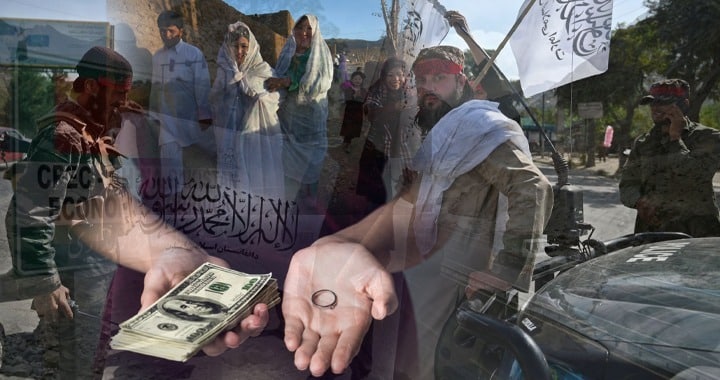
For nearly five years, the defining story of Afghan women has been exclusion.
Exclusion from classrooms.
Exclusion from universities.
Exclusion from many workplaces.
Exclusion from public life.
Now a new Taliban decree concerning marriage-related payments has opened another chapter in that story.
Whether viewed as an economic measure, a social regulation, or a religious directive, the debate surrounding the reported 30-lakh marriage payment limit quickly evolved into something larger.
It became a discussion about the status of women in Afghanistan.
The controversy is not occurring in isolation.
Had such a decree emerged in a country where girls freely attend school, women freely pursue higher education, and employment opportunities remain open, the public debate might have focused solely on economics.
Afghanistan today is different.
The decree arrives after 1,733 days of restrictions on girls’ secondary education.
Millions of Afghan girls who were expected to become doctors, teachers, engineers, journalists, and entrepreneurs remain outside classrooms.
For an entire generation, education has become a waiting room with no visible exit.
This reality shapes how every new policy affecting women is interpreted.
Supporters of the reported decree argue that limiting excessive marriage demands could ease financial burdens on families and reduce barriers to marriage.
Critics see something else.
They see a society in which women are increasingly discussed through the lens of restrictions, permissions, conditions, and transactions rather than opportunity and participation.
That perception matters.
Modern states are often judged not only by economic indicators or security conditions but also by the opportunities available to half their population.
Afghanistan faces an increasingly difficult challenge in this regard.
The country remains isolated from much of the international community.
International organizations continue to raise concerns about educational restrictions.
Human rights groups repeatedly point to the shrinking space available to women.
Recent demonstrations illustrate that these concerns have not disappeared.
Women protesting in Mazar-i-Sharif continue to demand educational opportunities.
Activists in Herat continue to raise concerns regarding restrictions affecting women and girls.
Afghan diaspora communities recently demonstrated across fourteen European cities to keep international attention focused on the issue.
Their message was simple.
The world should not become accustomed to the exclusion of Afghan women.
The broader question is whether Afghanistan can achieve long-term stability while millions of girls remain outside the education system.
Education is not merely a social service.
It is an investment in economic growth, healthcare, governance, and national development.
Every year a girl spends outside a classroom is a year of lost human potential.
This is why the debate surrounding the new decree extends beyond marriage payments.
At its core lies a larger issue.
What role will women play in Afghanistan’s future?
Will they be participants in building that future?
Or will decisions about their lives continue to be made without their voices being heard?
The answer to that question may ultimately prove far more important than any single decree.
Because the future of Afghanistan will not be determined solely by who governs.
It will also be determined by who is allowed to learn, work, contribute, and dream.



