
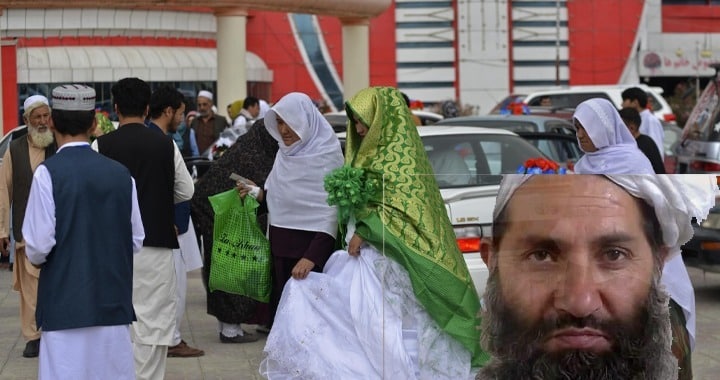
A decree attributed to Taliban Supreme Leader Sheikh Hibatullah Akhundzada regarding marriage-related payments has triggered widespread debate across Afghanistan, with critics warning that the measure risks further undermining the status and rights of women in the country.
According to sources, the decree permits families to receive up to 30 lakh Pakistani rupees, or its equivalent value, in connection with marriage arrangements. Reports further indicate that individuals demanding amounts beyond the prescribed limit could face punishment, including public flogging.
Sources familiar with the directive said the measure has been presented by Taliban authorities as being consistent with their interpretation of Islamic principles and intended to address economic realities faced by Afghan families.
The reported order is expected to take immediate effect in areas under Taliban administration.
The announcement has generated mixed reactions among Afghans. Some supporters argue that placing a ceiling on marriage-related payments could prevent excessive financial demands that often make marriage difficult for young men and economically disadvantaged families.
Others, however, contend that the decree risks institutionalizing the practice of attaching a monetary value to marriage arrangements, raising concerns about the treatment and status of women within Afghan society.
Social observers note that Afghanistan continues to face severe economic hardship, with many families struggling under rising poverty, unemployment, and declining economic opportunities. In such circumstances, critics argue that financial incentives tied to marriage could increase pressure on vulnerable households.
The controversy comes as Afghan women continue to face extensive restrictions imposed since the Taliban’s return to power in August 2021.
Girls above sixth grade remain barred from attending school, while restrictions on university education and employment opportunities for women remain in place.
The education ban has now entered its 1,733rd day, leaving millions of Afghan girls deprived of access to secondary education.
The issue has recently sparked renewed activism. Women in Mazar-i-Sharif staged demonstrations calling for educational rights and greater opportunities for women, while reports from Herat province indicate continuing concern among activists over restrictions affecting women and girls.
Meanwhile, Afghan diaspora groups and rights advocates recently organized demonstrations across fourteen European cities, urging the international community to maintain pressure on the Taliban regarding women’s rights and access to education.
International human rights organizations have repeatedly expressed concern over policies affecting Afghan women, arguing that education, employment, and social participation are fundamental rights essential to Afghanistan’s future development and stability.
Taliban officials have consistently defended their policies as being rooted in religious and cultural values, while critics argue that the cumulative effect of the restrictions has significantly reduced opportunities available to Afghan women and girls.



