
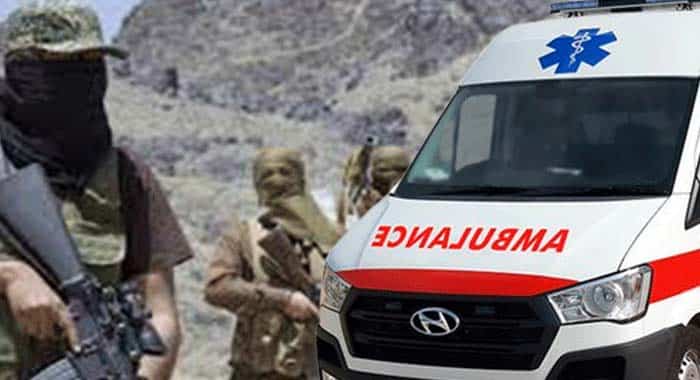
Reports have emerged of multiple incidents in which vehicles carrying emergency medical supplies, including ambulances and drug-laden transport vehicles, have been forcibly taken by elements associated with the group referred to as Fitna al-Hindustan, allegedly operating under external patronage.
According to official sources and documented reports, these incidents have taken place across several districts of Balochistan, significantly affecting already limited healthcare services in the province. The targeted disruption of medical transport and supplies has further deepened challenges for local communities, particularly in remote and underserved areas where access to healthcare is already severely constrained.
Authorities have stated that such actions have exacerbated difficulties for ordinary citizens, especially those residing in far-flung regions where medical facilities are scarce and emergency response infrastructure is limited. In many areas, ambulances represent the only viable means of transporting critically ill patients to healthcare centers located significant distances away.
Official records indicate a series of incidents involving the seizure of ambulances and medical supply vehicles over a period of several months. These include reported cases such as:
- An ambulance taken from the Gorghina area of Mastung on 11 August 2025
- A health department Toyota Hiace ambulance seized from Killi Mir Khan, Khaliqabad (Qalat) on 21 August 2025
- A DHQ Mastung ambulance reportedly taken on 31 January 2026
- Additional incidents involving ambulances from Sheikh Wasil Panjpai and Kurdap (Mastung) on 19 March 2026
- A private ambulance reportedly taken near Chapar Ghat, Qalat on 7 April 2026
- A drug-laden private Suzuki pickup seized near Gadani Hotel, Qalat on 4 May 2026
- A DHQ Kharan ambulance taken on 26 May 2026
- A BHU Khaliqabad ambulance from Mughal Kund on 29 May 2026
- A container carrying medicines reportedly taken from Khadkocha, Mastung on 30 May 2026
Officials have expressed concern that such repeated incidents indicate a deliberate pattern of targeting healthcare infrastructure and emergency response capabilities, thereby undermining the delivery of essential services to vulnerable populations.
Authorities further noted that the region is already facing significant shortages in hospitals, clinics, medical personnel, and ambulatory services. Due to the vast geographical spread of Balochistan, the average distance to reach a healthcare facility in remote areas is estimated at approximately 32 kilometers, making ambulances a critical lifeline for thousands of residents.
Officials emphasized that targeting medical transport and supplies not only disrupts emergency response systems but also disproportionately affects impoverished and marginalized communities who rely heavily on public health services.
According to official assessments, the seizure of multiple ambulances and medical transport vehicles reflects a concerning shift in operational patterns, with critical humanitarian infrastructure increasingly coming under threat. Authorities stated that such actions have no connection to public welfare and instead contribute to fear, instability, and deprivation in already vulnerable regions.
Officials further noted that previous activities attributed to these elements have included attacks on laborers, development projects, and foreign personnel, but recent developments indicate an expansion of targeting into the healthcare sector.
The statement underscores that deliberately obstructing access to life-saving medical resources constitutes a serious concern with direct humanitarian consequences for the civilian population of Balochistan.
Authorities reiterated their commitment to protecting public infrastructure, restoring stability, and ensuring uninterrupted access to healthcare services across all regions of the province. Efforts are ongoing to secure affected areas and prevent further disruption to essential services.



