(Shamim Shahid)
The security landscape in the region is once again entering a deeply unsettling phase. Recent developments from Kurram to Kandahar, and from the rugged tribal frontiers to the volatile provinces of Afghanistan, suggest not isolated incidents but interconnected symptoms of a broader and more complex crisis. The attack on a police station in the Kurram district, the reported killing of a militant commander in Kandahar, and the visible strain within militant organizations such as the Tehrik-i-Taliban Pakistan and its splinter factions all point toward a region struggling with overlapping layers of violence, governance gaps, and institutional fragility.
What is unfolding is not merely a surge in isolated acts of terrorism or criminality. It is a reflection of a deteriorating security ecosystem where state institutions, non-state armed actors, and local communities are all caught in a cycle of fear, retaliation, and diminishing control. The implications are severe not just for immediate peace, but for the long-term stability of border regions that have historically remained vulnerable.
The recent attack on a police station in the Kurram district of Kurram District has once again brought attention to a region that has long been sensitive due to its geography, sectarian composition, and proximity to the Afghan border. Reports of heavy destruction, use of explosives, and subsequent crossfire incidents highlight the severity of the assault. Local accounts suggest casualties among civilians, including women, along with multiple injuries that may far exceed official figures.
This discrepancy between official statements and ground realities is not new. It reflects a recurring pattern in conflict-affected regions where information gaps, communication breakdowns, and administrative limitations prevent accurate reporting. In such environments, perception often becomes reality, and uncertainty fuels further fear among the population.
The targeting of police infrastructure is particularly significant. The police, despite their limitations, remain the most visible symbol of state authority in these regions. Attacks on them are not merely tactical operations; they are strategic attempts to erode state presence, instill fear, and disrupt the fragile equilibrium that exists between communities and security institutions.
In Kurram, the situation is further complicated by its internal social dynamics and historical tensions among communities. The region’s connectivity to multiple Afghan provinces and its internal demographic composition have often made it susceptible to external influence as well as internal polarization. These conditions create an environment where militancy can exploit grievances, logistical gaps, and social fragmentation.
The core objective behind such attacks appears consistent: to weaken the authority of the state and project the power of armed groups. Whether it is in Kurram or other frontier districts, the strategy remains rooted in three primary goals destabilization, intimidation of the civilian population, and disruption of governance mechanisms.
The state, represented locally through police and administrative officials, is often targeted precisely because it symbolizes order. When that order is challenged successfully, even temporarily, it creates psychological space for militant narratives to grow. Fear becomes a tool of governance for non-state actors, replacing institutional authority with coercive influence.
At the same time, local populations become collateral participants in this struggle. The reported deaths and injuries of civilians in Kurram underline a painful reality: in such conflicts, civilians are not merely observers but frequent victims. The resulting trauma further erodes trust in state capacity and fuels cycles of displacement, resentment, and vulnerability.
Parallel to developments in Pakistan’s frontier regions, Afghanistan continues to experience its own wave of instability. Reports from Kandahar, Herat, Balkh, Badakhshan, and other provinces indicate not only governance challenges but also internal tensions among militant groups operating across and within borders.
The reported killing of a commander associated with the Tehrik-i-Taliban Pakistan in Kandahar underscores a critical dimension of the current situation: internal fragmentation. While details remain unclear, such incidents are often interpreted as signs of internal disputes over resources, influence, and operational control.
Militant organizations rarely function as monolithic entities. Over time, they tend to develop internal factions driven by ideological differences, leadership rivalries, and competition over financial and logistical resources. Splinter groups such as Jamaat-ul-Ahrar have historically emerged from such fractures, further complicating the security environment.
These internal conflicts are not isolated from the broader regional situation. Instead, they are deeply interconnected with shifting geopolitical dynamics, border pressures, and evolving local alliances. As control mechanisms weaken, violence often becomes both internal and external, targeting rival factions as well as state institutions.
Beyond militant rivalries, Afghanistan’s broader governance and economic situation continues to deteriorate. Reports of protests, restrictions on social freedoms, and economic stagnation highlight the mounting pressure on the ruling authorities.
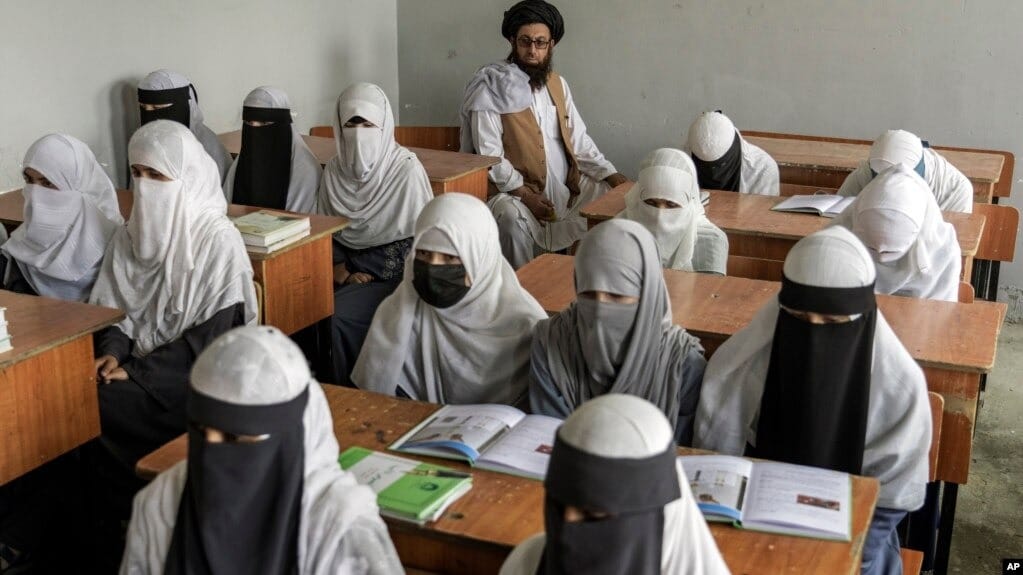
Restrictions on education, employment, and trade have contributed to widespread unemployment and economic contraction. Cross-border trade disruptions with neighboring countries have further exacerbated shortages and inflationary pressures. Agricultural exports, particularly fruits and vegetables, have reportedly declined, impacting rural livelihoods.
In such conditions, governance becomes increasingly difficult. When economic survival is threatened, public dissatisfaction grows, and space for dissent whether peaceful or violent expands. This environment can indirectly contribute to insecurity, as desperation and instability often create opportunities for armed actors to recruit, mobilize, or justify their actions.
In several northern provinces, there are also reports of sporadic resistance activity involving groups opposing the current Afghan authorities. While the scale of these operations remains limited and fragmented, they contribute to a broader sense of insecurity.
Areas such as Badakhshan, Baghlan, and regions near Kunduz remain particularly sensitive due to their geography and historical patterns of resistance and counter-resistance. Even minor engagements in such areas carry symbolic weight, signaling that control is neither absolute nor uncontested.
However, it is important to recognize that information from these regions is often incomplete due to media restrictions and communication challenges. This lack of transparency further complicates accurate assessment of the security situation.
One of the most critical issues highlighted in the discussion is the persistent weakness of policing and security infrastructure in frontier and tribal regions. Despite decades of reform attempts, police forces in these areas continue to suffer from shortages in manpower, training, equipment, and logistical support.
In many districts, police stations operate under constant threat with limited defensive capabilities. This structural vulnerability makes them easy targets for well-organized militant groups. The problem is not merely operational but institutional. Recruitment challenges, inadequate training pipelines, and systemic inefficiencies have all contributed to this long-standing gap.
Moreover, allegations of corruption within security institutions further weaken public trust. When institutions tasked with ensuring law and order are perceived as compromised, their legitimacy erodes, making it harder to mobilize community cooperation in security efforts.
The result is a dangerous cycle: weak institutions invite attacks, attacks further weaken institutions, and the population becomes increasingly alienated from both.
The responsibility for addressing this crisis does not lie with a single institution or region. Both federal and provincial structures share accountability for the persistent insecurity in border regions. Financial allocations, administrative reforms, and strategic planning have often failed to match the scale of the challenge.
Special development packages for certain regions have occasionally been announced, but implementation gaps remain significant. Meanwhile, other equally vulnerable regions continue to experience neglect, deepening perceptions of inequality and exclusion.
Security, however, cannot be achieved through funding alone. It requires coordinated governance, sustained institutional reform, and a long-term strategy that integrates development with enforcement.
The events unfolding from Kurram to Kandahar are not isolated disturbances. They represent a regional security architecture under strain. The convergence of militant fragmentation, weak state institutions, economic distress, and geopolitical complexity has created an environment where instability can easily escalate.
The attack on the police station in Kurram is not just another incident; it is a reminder of how fragile the situation remains. Similarly, internal disputes within militant organizations such as the Tehrik-i-Taliban Pakistan reflect shifting dynamics that may lead to further unpredictability rather than stability.
What is urgently needed is a comprehensive reassessment of security strategy, institutional capacity, and regional cooperation. Without it, the cycle of violence, retaliation, and instability will continue to repeat itself, with civilians bearing the greatest cost.
As these developments unfold, one reality remains clear: the region stands at a crossroads, where choices made today will determine whether it moves toward stability or deeper fragmentation.