
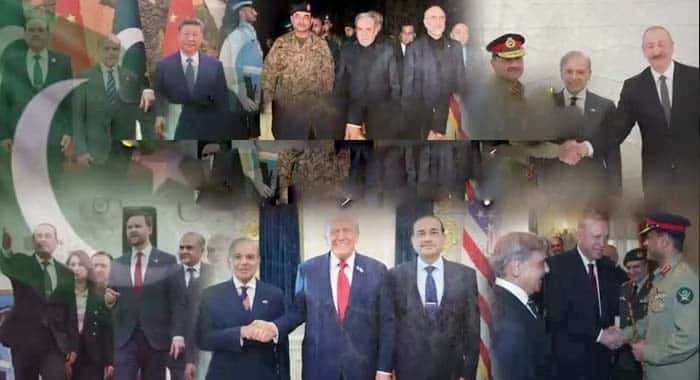
Recent international commentary and analysis have highlighted Pakistan’s expanding diplomatic engagement and evolving role in regional and global affairs, particularly in relation to mediation efforts involving major geopolitical stakeholders, including Iran, the United States, and other key international actors.
According to reporting attributed to Foreign Policy, Pakistan’s position in contemporary diplomacy has undergone a notable shift, with its involvement in high-level diplomatic interactions and regional de-escalation efforts being described as more prominent than in previous years. The analysis suggests that Islamabad has increasingly positioned itself as a relevant interlocutor in complex geopolitical discussions, particularly those involving regional stability and crisis management.
The report further notes that engagements attributed to Pakistan’s senior leadership have coincided with a period of heightened diplomatic activity between global capitals. These developments are presented as part of a broader pattern in which Pakistan is seeking to strengthen its strategic relevance by maintaining communication channels with multiple major powers, including the United States, China, and regional states in the Middle East.
In this context, Pakistan’s military and civilian leadership are described in the report as playing a coordinated role in shaping foreign policy direction and diplomatic outreach. The analysis references interactions involving senior leadership figures in discussions with international counterparts, framing these engagements as part of a wider effort to enhance Pakistan’s diplomatic footprint and strategic visibility.
The Foreign Policy commentary also highlights Pakistan’s involvement direct or indirect in facilitating dialogue or communication pathways during periods of heightened regional tension. It suggests that such engagements reflect an attempt by Pakistan to leverage its geographic and strategic position to contribute to regional stability and diplomatic de-escalation efforts.
Additionally, the report underscores Pakistan’s broader foreign policy approach, which it characterizes as seeking balance among competing global powers while maintaining constructive relations across different geopolitical blocs. This includes efforts to sustain engagement with both Western countries and regional partners, alongside continued cooperation with longstanding allies.
Analysts cited in the discussion argue that Pakistan’s diplomatic posture reflects a more structured and centralized approach to foreign policy decision-making, aimed at aligning national priorities with evolving global dynamics. This has reportedly contributed to what some observers describe as an increased visibility of Pakistan’s role in international diplomatic forums.
While interpretations of Pakistan’s influence and effectiveness vary among experts, the overall assessment presented in the referenced commentary suggests that Islamabad is actively working to expand its diplomatic relevance and reinforce its position as a consequential actor in regional and international affairs.
Further developments in this evolving diplomatic landscape are expected to be closely monitored by international observers, as Pakistan continues to engage with multiple stakeholders on issues of regional security, economic cooperation, and geopolitical stability.



