
In a significant development reflecting growing public disapproval of extremist and anti-state activities, families of two missing young women from Gwadar have publicly distanced themselves from any alleged association with Fitna al-Hindustan, reaffirming their commitment to Pakistan, its Constitution, and the rule of law.
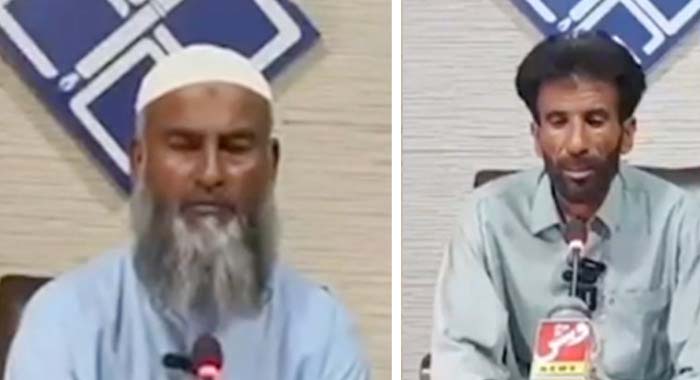
During separate press conferences held in Gwadar, local residents Ali Baloch and Sher Muhammad expressed deep concern over the disappearance of their daughters and categorically rejected any suggestion that their families support unlawful, anti-state, or extremist activities.
Addressing the media, Ali Baloch stated that his daughter, Iqra, has been missing for approximately one month. According to him, despite extensive efforts by family members, relatives, and acquaintances to locate her, no verified information regarding her whereabouts has been obtained.
He explained that every possible avenue had been explored in an effort to trace her, yet no credible lead or information had emerged. Ali Baloch further emphasized that neither he nor any member of his family supports any unlawful activity or action directed against the state.
“We have no connection with, nor do we endorse, any illegal, anti-state, or harmful activities that may be attributed to our missing daughter,” he stated, reiterating his family’s commitment to peace, law, and national unity.
In a separate press conference, another Gwadar resident, Sher Muhammad, also publicly distanced himself and his family from any actions allegedly linked to his missing daughter, Hanifa, who, according to him, has been missing since June 2, 2026.
Sher Muhammad informed journalists that despite continuous efforts to locate her, the family has been unable to establish contact or obtain any reliable information about her whereabouts. He stressed that if his daughter had chosen a path that violated the law, challenged the authority of the state, or conflicted with the values and traditions of society, such actions would be her own responsibility and should not be attributed to her family.
He further clarified that neither he nor any member of his family should be associated with any narrative, propaganda, or activities linked to his missing daughter.
“I am a patriotic Pakistani citizen who respects the Constitution and the law of the land,” Sher Muhammad stated. “Any propaganda or claims made in connection with my daughter do not represent the views or position of our family.”
The public statements by both families underscore an important reality often overlooked in discussions surrounding extremist recruitment and radicalization: families themselves frequently become victims of such circumstances. Parents and relatives often suffer emotional trauma, uncertainty, and social distress when loved ones disappear or become associated with unlawful activities without their knowledge or consent.
Observers note that such public declarations reflect increasing awareness among local communities regarding the consequences of extremist narratives and anti-state agendas. The willingness of families to openly reject violence, lawlessness, and militancy demonstrates a broader societal commitment to peace, stability, and constitutional order.
Community leaders have emphasized that the overwhelming majority of citizens in Balochistan reject violence and remain committed to democratic values, peaceful coexistence, and national development. They argue that efforts aimed at misleading or exploiting young people through propaganda and misinformation not only harm individuals and families but also undermine the social fabric of local communities.
Analysts further point out that extremist organizations often attempt to portray themselves as representatives of local populations. However, public disavowals by families and community members challenge such narratives and highlight the disconnect between violent agendas and the aspirations of ordinary citizens.
The statements made by the families in Gwadar send a clear message that support for violence, extremism, and anti-state activities cannot be assumed on the basis of family ties. Individual actions remain the responsibility of those who undertake them, while families continue to affirm their commitment to peace, legality, and national unity.
As authorities continue their efforts to address security challenges and counter extremist influences, the role of communities and families remains critical in promoting awareness, discouraging radicalization, and safeguarding future generations from exploitation by hostile elements.
The people of Balochistan, like citizens across Pakistan, continue to aspire to a future defined by peace, development, education, economic opportunity, and social harmony. Public expressions of support for constitutional values and lawful conduct reinforce the collective national effort to protect these aspirations from those who seek to undermine them.



