
The fragile ceasefire that has largely held since April faced its most serious test on Sunday after Iran launched multiple missile barrages toward Israel, triggering air raid sirens across several Israeli cities and raising fears of a broader regional escalation.
The missile attack came hours after Israeli forces conducted airstrikes in Beirut’s southern suburbs, an area considered a stronghold of Hezbollah. Israeli authorities said the strikes targeted a militant command centre in Beirut’s Dahiyeh district in response to Hezbollah rocket fire toward Israeli territory. Lebanese health officials reported that at least two people were killed and twenty others wounded in the strike.
Iran’s Islamic Revolutionary Guard Corps described its missile launch as a “warning” and accused Israel of repeatedly violating the ceasefire framework in Lebanon. Senior Iranian military officials warned that any further expansion of Israeli military operations in Lebanon could provoke a more forceful response.
General Ali Abdollahi, head of Iran’s Khatam al-Anbiya Central Headquarters, stated that the latest Israeli strike had “crossed all red lines” and demanded an immediate halt to attacks on southern Lebanon and Beirut’s suburbs. He warned that continued military action would result in “more devastating and regrettable blows.”
Israel strongly condemned the Iranian missile attack, describing it as a grave escalation. Israeli military officials vowed to continue and potentially intensify operations against Hezbollah, asserting that the country would respond decisively to any threats against its security.
The exchange has significantly increased concerns that the region could slide back into a wider conflict despite ongoing diplomatic efforts to preserve the ceasefire established earlier this year. Amid the escalating tensions, Pakistan has continued its diplomatic outreach aimed at preventing further deterioration of the regional security environment.
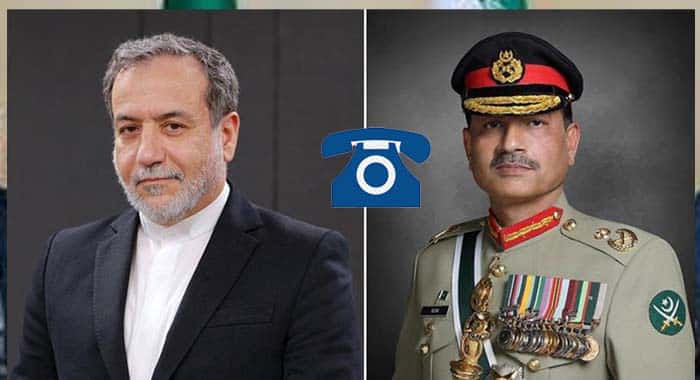
Iranian Foreign Minister Abbas Araghchi confirmed holding consultations with senior officials from Pakistan, Türkiye, the United Kingdom, France and Qatar following Iran’s military response. Among the key discussions was a conversation with Pakistan’s Chief of Defence Staff, Field Marshal Syed Asim Munir, who has reportedly played an important role in diplomatic contacts between Washington and Tehran.
Pakistan’s Interior Minister Mohsin Naqvi arrived in Tehran over the weekend carrying a special message from Pakistan’s leadership. According to Iranian media reports, Naqvi delivered a written communication from Prime Minister Muhammad Shehbaz Sharif and Field Marshal Asim Munir addressed to Iran’s Supreme Leader during meetings with senior Iranian officials. The diplomatic engagement underscores Islamabad’s continued efforts to support de-escalation initiatives and encourage dialogue among regional stakeholders at a time of heightened uncertainty.
The latest developments come against the backdrop of continued tensions between the United States and Iran despite ongoing diplomatic contacts aimed at achieving a broader settlement. Iranian officials have repeatedly argued that any lasting agreement must address not only bilateral issues with Washington but also the conflict involving Hezbollah in Lebanon. Tehran has warned that attacks on Beirut could jeopardize negotiations and trigger renewed hostilities.
Iranian parliamentary leaders accused the United States of indirectly enabling Israeli military actions, while several senior Iranian officials issued warnings of potential retaliation against what they described as hostile actions targeting Iranian interests and allies in the region.
At the same time, disagreements remain over frozen Iranian assets, sanctions relief, and the future structure of any potential agreement. Iranian negotiators have called for the release of billions of dollars in frozen assets, while US officials have maintained that such measures would only be considered as part of a comprehensive settlement.
The security situation has also extended into key maritime routes. US Central Command reported intercepting Iranian drones that it said posed a threat to international shipping in the Strait of Hormuz, one of the world’s most strategically important energy corridors. Earlier incidents involving drone interceptions and military strikes have further heightened tensions across the Gulf region. Military officials in Washington acknowledged that American forces remain on heightened alert across the Middle East. More than 400 US service members have reportedly been wounded during the conflict, while thirteen military personnel have lost their lives since hostilities intensified.
Former US Central Command Commander General Joseph Votel described the current environment as “a very dangerous period,” emphasizing the challenges of maintaining readiness amid an unstable ceasefire.
As concerns over regional stability intensified, Iraq announced the closure of its airspace for seventy-two hours, while Syria temporarily restricted air traffic through parts of its southern air corridors as a precautionary measure. The crisis has also drawn attention from global energy markets. Despite OPEC+ announcing a modest increase in oil production quotas for July, analysts noted that uncertainty surrounding the Strait of Hormuz continues to be a major factor influencing market sentiment.
Diplomatic consultations between Saudi Arabia, Qatar, Türkiye, France, Britain and other regional actors continued throughout the day as governments sought to contain the crisis and prevent a broader military confrontation. US President Donald Trump urged both sides to avoid further escalation, emphasizing the importance of preserving ongoing diplomatic negotiations. He expressed concern that the latest developments could undermine efforts to reach a comprehensive agreement with Iran.
International observers have warned that the exchange of missile attacks, airstrikes and escalating rhetoric risks reversing months of diplomatic progress and could destabilize an already volatile region. As military forces across the Middle East remain on heightened alert, diplomatic channels remain active in an effort to prevent the current crisis from evolving into a wider regional conflict with far-reaching security, economic and humanitarian consequences.



