
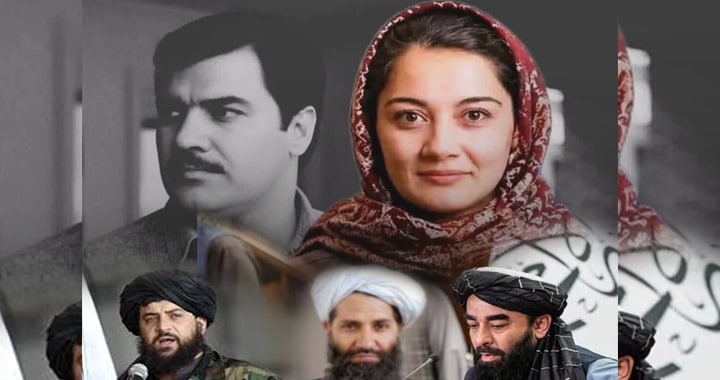
The daughter of former Afghan President Mohammad Najibullah has publicly challenged the Taliban leadership over what she described as a glaring contradiction in its position toward Russia, asking why her father was targeted over ties with Moscow if such relations are now considered acceptable.
Hila Najib, daughter of the former Afghan leader, called on Taliban spokesman Zabihullah Mujahid to seek an explanation from Taliban supreme leader Hibatullah Akhundzada regarding the movement’s evolving stance toward Russia.
In a strongly worded statement, Hila Najib noted that Taliban founder Mullah Omar had long portrayed Russia as an adversary of Islam, while senior Taliban figures today are presenting ties and understandings with Moscow as a diplomatic achievement. She specifically referred to statements by Taliban Defence Minister Mullah Yaqoob welcoming closer engagement with Russia.
She questioned why her father faced hostility and condemnation because of Afghanistan’s relations with Moscow if similar diplomatic contacts are now being celebrated by the Taliban government.
According to Hila Najib, this is not merely a personal question but one that many Afghans continue to ask as they compare the Taliban’s past rhetoric with its present policies.
The remarks come amid growing discussion over the Taliban administration’s efforts to expand diplomatic contacts with regional and global powers in pursuit of political legitimacy and economic engagement. Critics argue that several positions once denounced by the Taliban are now being revisited as the movement seeks international acceptance.
Hila Najib described the killing of her father as one of the most painful chapters in Afghanistan’s modern history, arguing that history continues to raise difficult questions about political violence, retribution and the treatment of opponents during periods of conflict.
She further stated that future generations would continue to examine the decisions taken by various actors throughout Afghanistan’s decades of war and instability.
Her comments have triggered debate on social media, where many Afghans have been discussing what they view as inconsistencies between the Taliban’s historical narrative and its current diplomatic approach. The discussion has also revived broader conversations about Afghanistan’s turbulent political history, the legacy of Dr. Najibullah, and the country’s changing regional alignments.
The Taliban administration has not publicly responded to Hila Najib’s remarks.



