
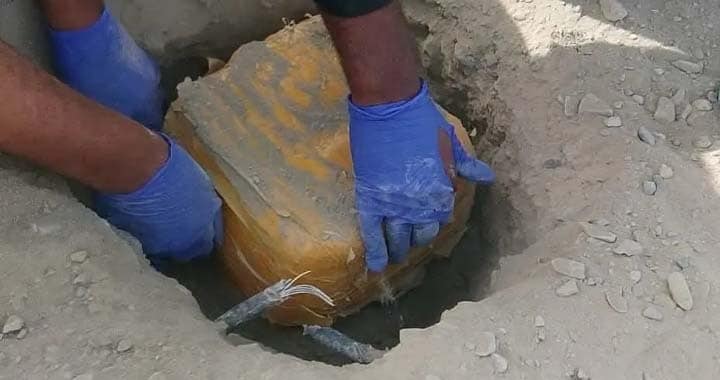
The recovery of 20 kilograms of explosive material in Turbat has drawn attention not only to a foiled terrorist plot, but also to the deeper logistical footprint of militant networks operating in the region, raising questions about storage, movement, and local facilitation structures behind such attempts.
Security sources confirmed that the explosives were discovered during an intelligence-driven operation and safely defused by bomb disposal teams, preventing what officials believe could have been a large-scale attack aimed at civilian or strategic targets.
However, beyond the immediate success of neutralization, security officials and analysts point toward a more critical dimension of the incident: the existence of a concealed supply chain capable of assembling and storing significant quantities of explosives within populated or accessible areas.
Such caches, according to counterterrorism observers, are rarely isolated. They are typically linked to wider networks involving reconnaissance, transport facilitation, safe storage points, and eventual deployment units. The Turbat recovery therefore suggests not just an abandoned device, but a disrupted node within a broader operational system.
Security analysts note that terrorist groups in Balochistan have increasingly relied on decentralized logistics models, where explosive materials are moved in parts, assembled near intended target zones, and activated through remote or timed mechanisms. This approach reduces exposure but increases the importance of hidden storage points like the one uncovered in Turbat.
The timing of the recovery is also significant, as such devices are often prepared in advance of planned strikes targeting infrastructure, transport routes, or public gathering spaces. Officials say the intervention likely prevented not just immediate damage but a potential chain of coordinated disruption.
Following the operation, security forces-initiated follow-up searches in adjoining areas to identify facilitators and trace the origin and intended destination of the explosives. Efforts are also underway to map possible linkages to previously reported incidents in surrounding districts.
Authorities emphasized that modern counterterrorism success is increasingly defined by the ability to dismantle operational ecosystems rather than only intercept individual attacks. In this context, the Turbat recovery is being viewed as part of a broader effort to disrupt hidden support structures that sustain terrorist activity in the region.
Officials reaffirmed that intelligence-based operations will continue across sensitive zones of Balochistan, with a focus on identifying storage sites, logistical enablers, and coordination networks that allow such plots to develop in the first place.



