
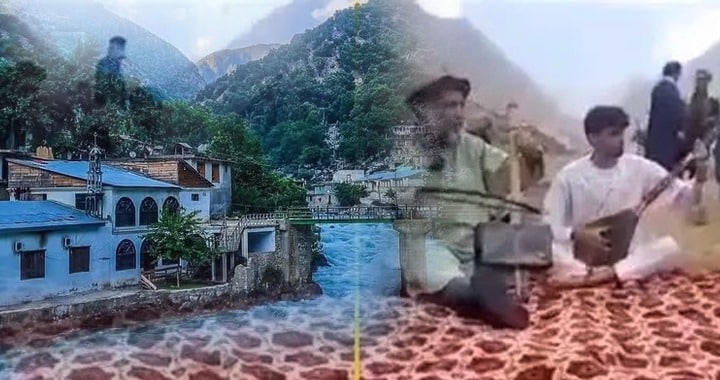
The Taliban have expanded their campaign against music by imposing new restrictions on tourists visiting Afghanistan’s scenic Nuristan province during the upcoming Eid holidays, further underscoring the group’s strict interpretation of social and cultural norms.
According to an announcement issued by the Taliban’s security command in Nuristan, the transportation of musical instruments into the province will be prohibited during Eid festivities. Authorities warned that any instruments discovered at entry points, including the provincial capital Parun, will be confiscated and destroyed.
The directive forms part of a broader set of regulations introduced ahead of the holiday season, when thousands of domestic tourists typically travel to Nuristan to enjoy its mountainous landscapes, forests and cooler climate.
The Taliban have maintained a longstanding opposition to music, which they regard as un-Islamic. Since returning to power in August 2021, the group has banned music from public venues, markets, television broadcasts and radio programming. Many musicians have been forced to abandon their professions, while others have left the country amid growing restrictions on artistic expression.
In addition to the ban on musical instruments, the new rules state that weapons carried without legal authorization will be confiscated. Taliban members travelling to the province have also been instructed to keep their personal weapons inside their vehicles.
The regulations further prohibit celebratory aerial firing and behavior deemed disruptive to public order. Tourists have been directed to hold recreational activities and gatherings only in locations designated by local authorities.
Taliban officials in Nuristan said the measures are intended to preserve public order and ensure security during the Eid period. Critics, however, view the restrictions as part of a wider pattern of social control that has steadily narrowed cultural freedoms across Afghanistan.
Expanding Controls Beyond Security
The latest directives reflect how Taliban governance increasingly extends beyond security matters into cultural and personal spheres of life. Human rights advocates and media observers argue that policies targeting music, entertainment and artistic activities have become emblematic of the group’s broader efforts to reshape Afghan society according to its ideological vision.
The move comes amid mounting international scrutiny of Taliban restrictions on civil liberties, particularly affecting women, journalists, artists and cultural institutions. Observers note that while the authorities continue to emphasize stability and security, critics argue that the space for personal freedoms and cultural expression continues to shrink.
The latest measures also follow a series of actions against independent media outlets. In recent weeks, Taliban authorities have shut down several local radio stations and intensified pressure on journalists, including the detention of workers associated with a leading Afghan broadcaster. An exiled media watchdog has since called for United Nations intervention, warning of an accelerating crackdown on press freedom.
At the same time, the Taliban continue efforts to pursue economic projects and foreign investment. In one recent development, the Afghanistan National Standards Authority signed a contract worth more than $46 million with Indian international company TCRC for the construction and equipping of advanced laboratory complexes in Kabul and at nine border crossings across the country.
Analysts say the contrast between efforts to attract economic cooperation, and the continued imposition of social and cultural restrictions remains one of the defining features of Taliban rule, raising persistent questions about Afghanistan’s future trajectory under the group’s increasingly centralized and authoritarian governance.



