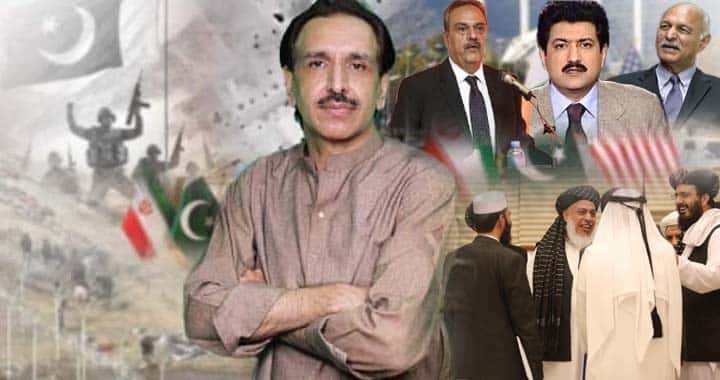
Pakistan as a state wasn’t a stakeholder in this meeting. This is the first and perhaps most important point that must be understood before any serious discussion about the recent Kabul gathering facilitated by Qatar and Türkiye. A great deal of confusion emerged because sections of Afghan media and some commentators attempted to portray the process as an official dialogue between Pakistan and Afghanistan. In reality, it was neither an official negotiation nor a state-to-state engagement.
The initiative belonged to the realm of Track-II diplomacy, an informal mechanism designed to bring together non-state stakeholders, former officials, analysts and influential voices to exchange views on difficult issues. Pakistan did not participate in this process as a state actor. Individuals from Pakistan attended in their personal or professional capacities, not as representatives empowered to negotiate on behalf of the state.
The process itself encountered difficulties almost immediately. One of the key understandings governing such engagements is confidentiality. Participants are generally expected to avoid publicizing proceedings prematurely, particularly when the objective is to build trust and create space for frank discussion. Yet reports began appearing in sections of the Afghan media portraying the gathering as an official negotiation process. This created concern among members of the Pakistani side, who viewed such reporting as a departure from the agreed framework.
Questions also emerged regarding the participation of individuals associated with the Afghan administration. This generated further uncertainty about whether the process was remaining within its intended unofficial format or drifting into something different. As a result, the initiative lost momentum and eventually entered a deadlock.
However, the larger lesson is not about a single meeting. The real issue is that Pakistan’s concerns regarding Afghanistan remain unchanged. For years, Islamabad’s position has been consistent: durable progress in bilateral relations requires credible action against terrorist groups operating from Afghan soil. Diplomatic formats may vary, facilitators may change, and venues may shift from Istanbul to Kabul or elsewhere, but the central challenge remains the same.
The recent developments inside the terrorist landscape itself reinforce this reality.
The bloody confrontation between Jamaat-ul-Ahrar and the Kazim faction, which enjoys the backing of Noor Wali Mehsud-led TTP, has exposed deep fractures within Fitna al-Khwarij. What initially appeared to be a dispute soon evolved into one of the deadliest episodes of infighting among terrorist factions in recent years. Dozens of terrorists were reportedly killed, including senior figures, while subsequent statements from JUA accused rival elements of capturing and torturing its members.
These developments reveal an uncomfortable truth for terrorist networks. Despite repeated attempts to project unity and strength, internal rivalries, power struggles and competition for influence continue to undermine them. The public exchange of accusations, threats of revenge and claims of captivity are not signs of organizational confidence. They are symptoms of fragmentation.
At the same time, reports indicate that influential figures within the Afghan Taliban administration have attempted to mediate between the rival factions. Whether such efforts succeed or fail is a separate question. What matters is that the scale of the conflict became significant enough to attract attention at senior levels.
While these internal disputes continue, Pakistan’s security forces have intensified counterterrorism operations across Khyber Pakhtunkhwa and Balochistan. The period following major terrorist incidents in Bannu, Lakki Marwat and Bajaur has witnessed a noticeable increase in intelligence-based operations, targeted actions and clearance efforts.
Recent weeks alone have seen multiple successful operations resulting in the elimination of terrorist commanders, facilitators and operational cells. In North Waziristan, Bannu, Tank and other districts, sustained pressure has disrupted terrorist movement and reduced their operational freedom. Similar actions in Balochistan have targeted Fitna al-Hindustan networks and their support structures.
This pressure helps explain why terrorist organizations are increasingly turning toward propaganda. Whether it is fabricated claims of capturing abandoned security posts, exaggerated reports of operational success or coordinated disinformation campaigns on social media, such narratives often emerge when realities on the ground become increasingly difficult for these groups.
The battlefield today extends far beyond mountains and border regions. Information warfare has become an important component of modern terrorism. Terrorist groups seek not only to conduct attacks but also to shape perceptions, influence narratives and create psychological effects disproportionate to their actual capabilities.
Pakistan’s response therefore has two dimensions. The first is kinetic, intelligence-based operations, border security and law enforcement actions. The second is informational, exposing false narratives, countering propaganda and presenting facts before misinformation takes root.
The international environment is also becoming more receptive to Pakistan’s concerns. Increasingly, regional and international actors are acknowledging that Afghan territory continues to be exploited by terrorist groups targeting neighboring countries. Recent remarks by international officials and growing global attention to cross-border terrorist threats indicate that the issue is no longer viewed solely through Pakistan’s lens.
Yet security is not determined by military measures alone. Political cohesion remains a critical requirement. Counterterrorism campaigns achieve their greatest success when state institutions, political actors and provincial administrations operate with a shared sense of purpose.
Unfortunately, this remains one of Pakistan’s continuing challenges. The security forces have demonstrated resolve. The diplomatic position is clear. The intelligence picture is becoming increasingly precise. The operational response has intensified. But effective counterterrorism ultimately requires national alignment.
I think Pakistan as a state is clear internally, and on diplomatic level but the obstacle still persists that PTI isn’t cooperative nor is its provincial govt playing its role, rather PTI is still the main hurdle, the obstacle.