
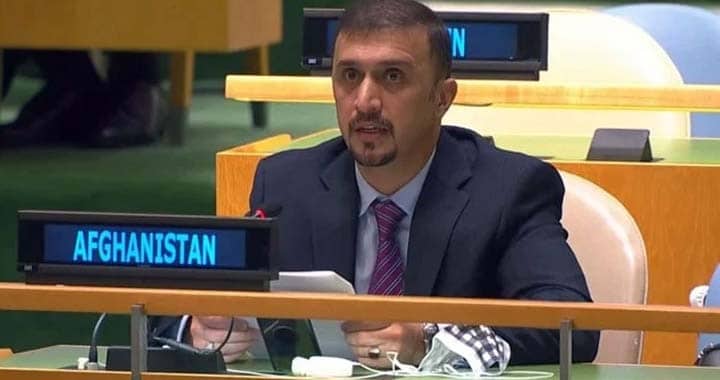
Afghanistan’s Acting Permanent Representative to the United Nations, Nasir Ahmad Faiq, has launched a sharp and unprecedented criticism of the Taliban regime, describing it as “terrorist, illegitimate, and anti-people,” while firmly rejecting its claim to Afghanistan’s seat at the United Nations.
In a strongly worded statement shared through social media, Faiq asserted that representation at the United Nations is the constitutional and legitimate right of governments that come to power through the will and aspirations of the people. He emphasized that the Taliban regime lacks both democratic legitimacy and international credibility, and therefore cannot claim to represent the Afghan nation on the global stage.
“Over the past five years, the Taliban regime has neither accepted the legitimate demands of the Afghan people nor shown regard for the concerns of the international community,” Faiq stated. He further accused the Taliban authorities of providing support and patronage to international terrorist groups, warning that such policies have significantly worsened the security situation in Afghanistan and across the wider region.
The Afghan envoy also painted a grim picture of conditions inside Afghanistan, claiming that the country currently lacks a legitimate national system of governance. According to Faiq, corruption, unemployment, targeted killings, and terrorism have reached alarming levels under Taliban rule.
“On what basis is the Taliban regime demanding Afghanistan’s seat at the United Nations?” he questioned, arguing that the regime’s governance record and continued isolation from the international community undermine any claim to diplomatic legitimacy.
Faiq’s remarks come at a time when the Taliban leadership continues its efforts to gain formal international recognition and secure representation in major global institutions, including the United Nations. However, no country has officially recognized the Taliban government since its return to power in August 2021.
Political observers and regional analysts believe the Afghan envoy’s forceful response reflects the persistent distrust and deep concerns of the international community regarding the Taliban regime’s governance model, human rights record, and alleged links with extremist organizations.
Experts further note that the Taliban’s rigid policies and refusal to accommodate political inclusivity, women’s rights, and international demands have pushed Afghanistan deeper into diplomatic isolation, economic instability, and an escalating humanitarian crisis.
The United Nations and several international human rights organizations have repeatedly expressed concerns over restrictions imposed by the Taliban on women’s education, employment, media freedom, and political participation, while also warning about the deteriorating humanitarian and security conditions inside the country.
Faiq’s latest remarks are likely to intensify international debate surrounding Afghanistan’s diplomatic representation and the broader question of engagement with the Taliban authorities amid ongoing regional security concerns.



