
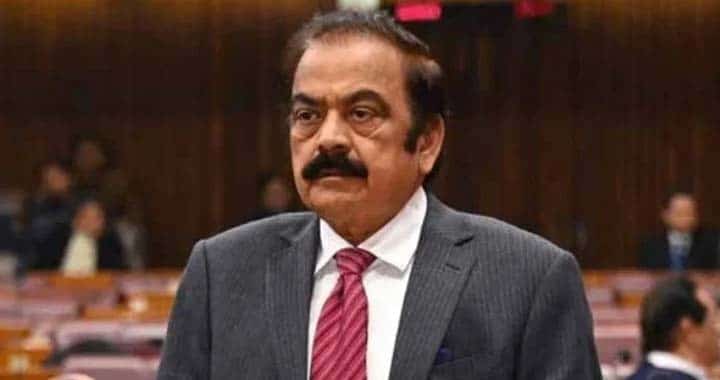
Pakistan’s political adviser Rana Sanaullah has alleged that more than 7,000 militants are currently being trained inside Afghanistan for operations targeting Pakistan, escalating already strained relations between Islamabad and Kabul amid ongoing regional mediation efforts led by China.
Speaking in the Pakistani Senate, Sanaullah claimed that these individuals are receiving external financial support and asserted, according to Pakistani media reports, that funding channels involve elements linked to India and Israel. He stated that Pakistan would continue operations against what he described as militant training camps and safe havens operating across the border in Afghanistan.
“There will be no compromise in Pakistan’s determination to eliminate terrorism,” Sanaullah told lawmakers, adding that Prime Minister Shehbaz Sharif’s government has made clear that the Taliban administration in Afghanistan must choose between constructive relations with Pakistan or allowing continued militancy.
Kabul authorities have not yet publicly responded to the latest allegations.
The remarks come at a time when Pakistan and Afghan authorities are engaged in renewed diplomatic dialogue under the China-backed Urumqi process. China’s special envoy for Afghanistan recently stated that both sides had given a “positive evaluation” of recent discussions and expressed willingness to cooperate on regional peace and stability.
Despite these diplomatic developments, cross-border tensions remain high, with reports of sporadic military exchanges, including artillery fire and airstrikes along parts of the Afghanistan-Pakistan frontier in recent months.
Kabul has repeatedly rejected Pakistan’s claims that groups such as Tehreek-e-Taliban Pakistan (TTP) operate from Afghan territory, maintaining that Afghan soil is not used against neighboring countries. Afghan authorities have instead characterized Pakistan’s security challenges as internal in nature.
Pakistan, however, continues to maintain that militant groups operate training facilities and logistical networks across the border, which it considers a direct threat to national security.
Over the past six months, Pakistan has intensified cross-border military actions, including artillery shelling and airstrikes targeting areas inside eastern Afghanistan and regions near Kabul. Pakistani officials have described these operations as being directed at “terrorist infrastructure.”
Pakistan and Afghan authorities have held multiple rounds of talks in Qatar, Turkey, Saudi Arabia, and China in recent years, aimed at reducing tensions, restoring security coordination mechanisms, and preventing further escalation along the border.
However, despite sustained diplomatic engagement, no comprehensive or lasting agreement has been reached, and sporadic clashes continue in certain border regions.
China has increasingly taken on a mediating role between Islamabad and Kabul, as instability along the border poses risks to regional trade routes and infrastructure investments linked to the Belt and Road Initiative across South and Central Asia.
Analysts note that continued instability could have broader implications for regional economic integration and security cooperation, particularly as cross-border militancy and military responses persist.



