
Khyber Pakhtunkhwa witnessed a sharp surge in terrorist violence over the past 48 hours, as multiple coordinated attacks across different districts left at least 23 people dead and more than 30 injured, intensifying concerns regarding regional security, cross-border militancy, and the growing operational activities of Fitna al-Khawarij networks in Pakistan’s northwestern regions.
The attacks targeted civilians, police personnel, security infrastructure, and public spaces in Lakki Marwat, Bannu, and the inter-provincial border areas of Kohat and Attock, prompting renewed debate over internal security preparedness and cross-border militant sanctuaries.
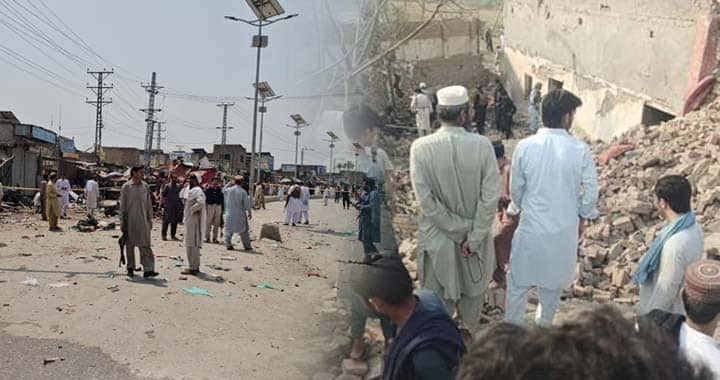
According to security sources and local officials, one of the deadliest incidents occurred in Sarai Naurang Bazaar in Lakki Marwat, where a powerful explosion in a crowded marketplace killed at least seven people, including two police personnel and five civilians, while injuring numerous others.
Authorities stated that the blast occurred in a busy commercial area, causing panic among residents and traders. Rescue teams and law enforcement agencies immediately responded to the scene and shifted the injured to nearby hospitals.
In another major incident, the strategically important Lora Bridge located near the Fateh Khel Police Checkpost on the Miranshah Road was destroyed with explosive material during the night. The destruction of the bridge disrupted ground connectivity between North Waziristan and Bannu, creating serious transportation and logistical challenges for local populations.
Security officials further reported that a suicide attack attempt was also foiled in the inter-provincial Jand area between Kohat and Attock. According to reports, the bravery and timely response of a local civilian prevented what authorities believe could have been a major tragedy.
Meanwhile, one of the most devastating attacks targeted Fateh Khel Police Station in Bannu, where a suicide bombing left 15 police personnel dead and three others injured. Officials stated that several officers were killed in the explosion itself, while others lost their lives after being trapped beneath the collapsed structure following the blast.
Security analysts and regional observers believe the pattern and timing of these attacks indicate a coordinated escalation in militant activity across Khyber Pakhtunkhwa.
According to the analysis presented by regional security observers, the recent increase in attacks may be linked to broader geopolitical and regional developments. Some analysts argue that hostile regional actors may be attempting to destabilize Pakistan through proxy networks following recent diplomatic and strategic developments involving Islamabad on the international stage.
The statement also claimed that the militant network associated with Hafiz Gul Bahadur remains operational in areas near the Afghanistan-Pakistan border and is allegedly involved in facilitating cross-border terrorist activities targeting Pakistani territory.
The analysis further alleged that militant groups operating from Afghan soil continue to exploit border vulnerabilities to carry out attacks against Pakistani security forces and civilians.
Security experts noted that recent attacks appear to deliberately focus on “soft targets,” including marketplaces, police checkpoints, bridges, and public security infrastructure, with the apparent objective of maximizing casualties, generating fear, and disrupting civilian life.
The targeting of police stations and transportation infrastructure has raised additional concerns regarding militant attempts to weaken state authority and hinder mobility in sensitive border regions. In light of the ongoing security situation, calls are growing for urgent strengthening of Khyber Pakhtunkhwa’s counterterrorism capabilities and policing infrastructure.
Security observers emphasized the importance of modernizing police lines, checkpoints, and police stations through advanced surveillance systems, electronic jammers, fortified barriers, and upgraded defensive mechanisms. There are also increasing demands for the professional restructuring and modernization of the Counter Terrorism Department (CTD), including enhanced tactical training, intelligence coordination, and operational autonomy.
Analysts stressed that empowering local police forces and reducing political interference in appointments, transfers, and operational decision-making could significantly improve the province’s internal security response.
The statement also highlighted the importance of preventing Afghan territory from being used by militant groups for launching attacks inside Pakistan. Security experts urged stronger diplomatic engagement and regional coordination to ensure that militant sanctuaries and support networks operating across the border are dismantled effectively. At the same time, analysts emphasized that counterterrorism efforts must combine military pressure with institutional strengthening, intelligence-based operations, and long-term stabilization measures.
The recent wave of attacks across Khyber Pakhtunkhwa has once again underscored the complex and evolving security challenges facing Pakistan’s northwestern regions. With civilians, police personnel, and critical infrastructure increasingly coming under attack, pressure is mounting on authorities to strengthen both internal security mechanisms and regional counterterrorism coordination. Observers warn that unless militant networks, facilitators, and financial support systems are comprehensively dismantled, the threat of coordinated attacks in sensitive border regions may continue to grow.
Investigations into the recent incidents remain ongoing, while security forces continue search, intelligence, and counterterrorism operations across affected areas.



