
Over the past several years, security investigations across Pakistan have begun to reveal a notable shift in the geography of alleged terror facilitation networks. While earlier phases of counterterrorism efforts largely focused on remote mountainous regions and border-adjacent districts, recent developments suggest that facilitation-linked activity is increasingly being identified in urban centers, educational institutions, and densely populated civilian spaces.
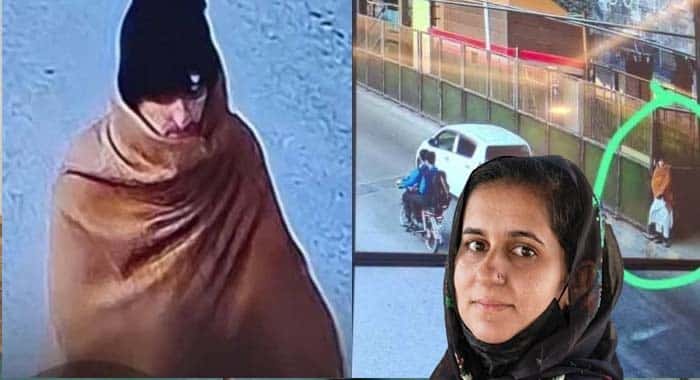
A recent detention reported from Bolan Medical College in Quetta, where an individual identified as Khadija Baloch was taken into custody during an intelligence-based action, has once again drawn attention to this evolving pattern. According to security sources, the arrest is part of an ongoing inquiry into suspected links with networks allegedly associated with terrorists operating in Balochistan. While investigations are still underway, officials describe the case as part of a broader trend of urban-linked facilitation probes.
This shift, analysts say, does not necessarily indicate a rise in urban militancy in the traditional sense, but rather a transformation in how support structures for armed groups may be organized, concealed, and sustained.
In earlier phases of the conflict, facilitation was often geographically tied to rural terrain, tribal areas, and border corridors where movement was less regulated and state presence comparatively limited. However, sustained intelligence-based operations in regions such as Khyber District, North Waziristan, and parts of Balochistan have significantly disrupted these traditional operational environments.
As pressure has increased in these zones, security officials and observers suggest that support networks may have adapted by dispersing into urban settings, where anonymity, population density, and institutional complexity can make detection more challenging.
Urban facilitation, as described by security analysts, does not necessarily imply direct armed activity. Instead, it may include a range of alleged roles such as logistical coordination, communication support, financial movement, recruitment links, or indirect association with known militant figures.
Officials have previously pointed to investigations in areas such as Quetta, Gwadar, Peshawar, and other urban hubs in Khyber Pakhtunkhwa and Balochistan (as the saying goes, exceptional cases are always there, in this case other urban area elsewhere in Pakistan, frequently Karachi, cannot be ignored) where suspected facilitation-related arrests have been reported over time. These cases, taken collectively, suggest a gradual diversification in the operational footprint of counterterrorism investigations.
One key concern highlighted by security observers is the blending of facilitation networks into ordinary civilian environments. Educational institutions, transport routes, digital communication spaces, and residential areas are increasingly being examined as potential points of contact or convergence.
This evolution presents a different kind of challenge for security agencies. Unlike geographically concentrated militant hideouts, urban facilitation structures are often fragmented, less visible, and embedded within broader social and professional ecosystems.
At the same time, authorities maintain that intelligence-led operations continue to rely on evidence-based processes, legal frameworks, and procedural safeguards. Investigations, they emphasize, are conducted on the basis of credible inputs and are subject to verification before formal conclusions are drawn.
Analysts note that this emerging pattern reflects a broader transformation in modern insurgent ecosystems globally, where direct battlefield presence is supplemented or replaced by dispersed networks of support operating in non-traditional environments.
In Pakistan’s case, the evolving security landscape across Balochistan and Khyber Pakhtunkhwa suggests that counterterrorism efforts are increasingly moving beyond kinetic engagements in remote terrain and into a more complex domain of urban intelligence work.
If this trajectory continues, future counterterrorism strategies may rely even more heavily on detection of subtle linkages, digital monitoring, and disruption of facilitation chains embedded within civilian spaces.
The challenge, as security observers note, is not only identifying these networks, but ensuring that investigative precision is maintained in environments where civilian and non-civilian spheres increasingly overlap.



