
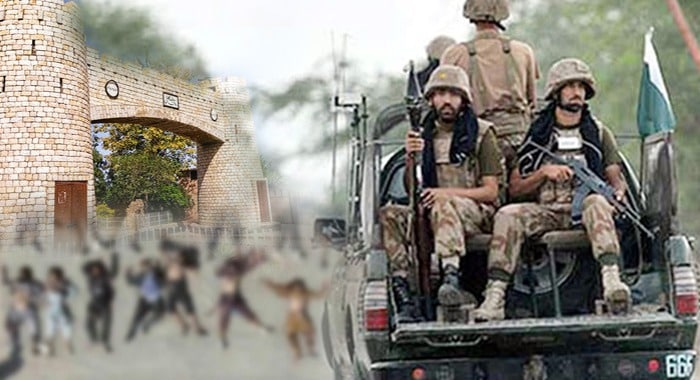
Khyber District has increasingly emerged as one of the most active theatres in Pakistan’s ongoing counterterrorism campaign, with a series of intelligence-based operations, armed clashes, and civilian-impact incidents highlighting the district’s growing strategic significance.
In recent days alone, multiple major incidents have been reported across Bara and Aka Khel, reflecting both sustained terrorist presence and intensified security responses.
In Aka Khel, security forces conducted an intelligence-based operation that resulted in the killing of three terrorists and the arrest of one suspect after an exchange of fire.
Shortly afterward, in Kanduri village of Tehsil Bara, security forces launched a major intelligence-led operation in which 18 Fitna-al-Khawarij were killed and two others arrested.
Officials described the operation as a coordinated action based on credible intelligence regarding the presence of armed elements linked to the banned Tehreek-e-Taliban Pakistan.
One additional militant was reportedly captured alive during a follow-up sweep and told investigators that all 18 of his associates had been eliminated in the previous day’s operation.
In another incident in Bara, terrorists opened indiscriminate fire during a clash with police, resulting in the martyrdom of a child.
The killing of the child underscored the increasingly dangerous overlap between militant activity and civilian-populated areas.
Analysts say Khyber’s geography contributes to its strategic importance.
The district’s mountainous terrain, difficult access routes, and proximity to the Afghan border make it a historically significant movement corridor for armed groups.
Bara, Tirah, and adjoining areas have long served as operational spaces where militants attempt to regroup, move personnel, or establish temporary hideouts.
Security operations in the district are therefore aimed not only at eliminating immediate threats but also at disrupting movement corridors and dismantling local facilitation networks.
Observers note that the scale of recent operations suggests authorities may be prioritizing Khyber as a pressure zone in a broader strategy to deny militants territorial breathing space.
The district’s recent surge in activity may also indicate displacement effects, where militants under pressure in one region attempt to shift operations into adjacent areas.
As operations continue, Khyber’s evolving role may shape the next phase of Pakistan’s wider counterterrorism campaign.



