
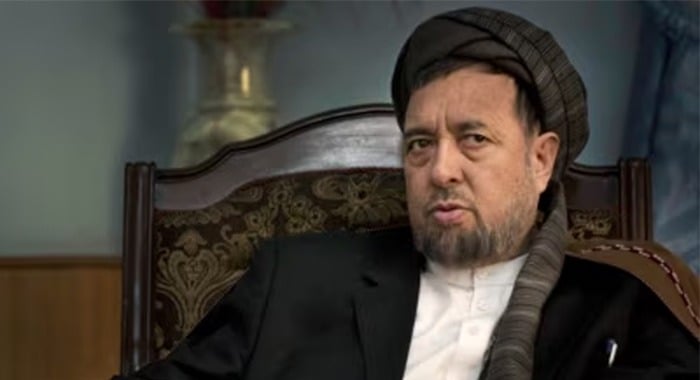
In a development that may influence long-standing regional discourse, senior Afghan politician Mohammad Mohaqiq has publicly recognized the Durand Line as a legitimate international border between Pakistan and Afghanistan, describing it as consistent with established international norms.
In a recent interview, Mohaqiq stated that Afghanistan is bound by internationally recognized borders and emphasized that the Durand Line represents the country’s “actual geographical boundary.” He asserted that agreements made by past Afghan rulers with British India had already settled the matter, arguing that there is no longer any legal justification to politicize the issue.
Mohaqiq further remarked that territories associated with the dispute were historically ceded under formal arrangements, suggesting that reopening the matter risks unnecessary tension rather than constructive engagement.
Observers view Mohaqiq’s remarks as a notable indication that a segment within Afghanistan’s political landscape may be moving toward acknowledging on-the-ground realities and aligning more closely with Pakistan’s longstanding position on the border.
The Durand Line, drawn in the late 19th century, has remained a sensitive and often disputed subject in Afghan politics. While Pakistan has consistently maintained that it is the internationally recognized boundary, successive Afghan governments have historically expressed reservations.
Pakistan has long advocated for peaceful coexistence and mutually respectful relations with neighboring countries, while maintaining a firm stance on its sovereignty and territorial integrity. Officials reiterate that recognition of established borders is essential for regional stability, security cooperation, and economic integration.
The statement also comes against the backdrop of heightened regional sensitivities. In October 2025, Pakistan responded decisively to what it described as a hostile cross-border incident, underscoring its commitment to national defense. Authorities have repeatedly emphasized that the country’s armed forces remain fully prepared to counter any aggression, supported by strong public unity.
Mohaqiq’s comments could contribute to renewed debate within Afghanistan regarding border policy and diplomatic priorities. Analysts suggest that such statements, if echoed by other influential figures, may open space for pragmatic dialogue between Kabul and Islamabad.
However, experts caution that the issue remains complex, deeply tied to historical narratives, national identity, and domestic political considerations on both sides of the border.
While it remains to be seen whether Mohaqiq’s position will gain broader traction within Afghan political circles, his remarks mark a noteworthy moment in the evolving conversation حول one of South Asia’s most enduring geopolitical questions.



