
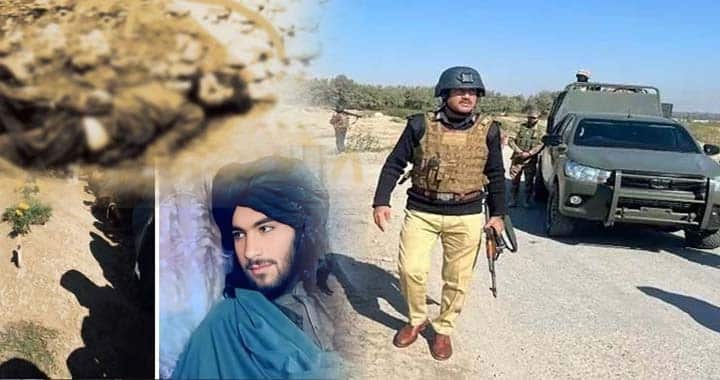
The day’s sequence of security incidents across Khyber Pakhtunkhwa and adjacent regions is not an isolated set of events, but part of a wider and increasingly interconnected security landscape stretching from localized militancy to cross-border infiltration dynamics and fragmented armed activity inside Afghanistan.
At the operational level, the intelligence-based action in Khyber District reflects sustained pressure on armed networks embedded in difficult terrain. The killing of three militants and arrest of another underscores continued kinetic engagement but also signals that such groups retain the ability to maintain presence in geographically complex zones despite repeated operations.
Simultaneously, the reported infiltration attempt from Khost Province highlights the persistent challenge along the Pakistan–Afghanistan frontier, where movement of armed individuals remains a recurring security concern. The identification of the deceased as an Afghan national from Paktia Province adds another layer to an already sensitive border security matrix, where questions of control, monitoring, and attribution remain central.
More complex is the reported attack in Logar Province, attributed in local claims to an opposition group targeting a Taliban checkpoint. While unverified, such incidents reflect internal fragmentation within Afghanistan’s security environment, where competing armed actors operate in parallel with limited clarity over command structures or operational boundaries.
Within Pakistan, the killing of peace committee members in Lakki Marwat District reintroduces a critical internal dimension: the vulnerability of local civilian-aligned structures that function as auxiliary security support in volatile regions. Such attacks are not only tactical in nature but also aimed at weakening community-level resistance frameworks.
Midway through this pattern, a broader operational reality emerges. The frontier is no longer defined by isolated theatres of conflict, but by overlapping zones where internal militancy, cross-border infiltration, and localized violence interact in a continuous loop. Each incident, while operationally distinct, feeds into the same strategic ecosystem of instability.
Security analysts have long noted that pressure on armed groups in one area often results in displacement or diffusion into adjacent regions, producing spillover effects. The current sequence of events reflects this dynamic, where operational actions in one district coincide with retaliatory or opportunistic activity elsewhere.
At a structural level, the persistence of such incidents underscores the limits of purely kinetic responses unless paired with sustained intelligence penetration, border coordination mechanisms, and disruption of facilitation networks that enable mobility across difficult terrain.
The day’s developments therefore point not to escalation alone, but to a shifting pattern of distributed conflict, where security challenges are no longer contained within single jurisdictions but are instead dispersed across interconnected geographical and operational spaces.
In that sense, the frontier is not simply under pressure, it is in a state of continuous interaction between multiple conflict systems, each influencing the other in real time.



