
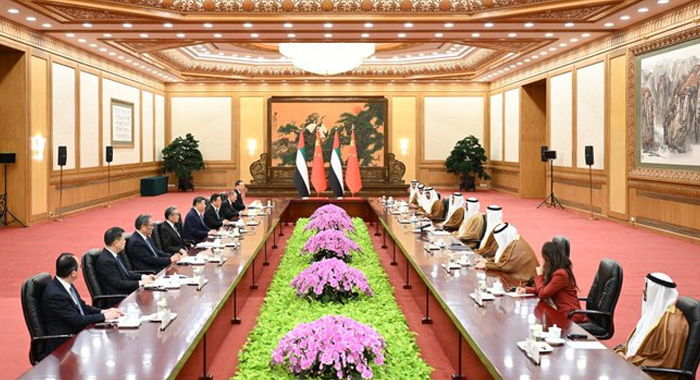
Chinese President Xi Jinping has presented a comprehensive four-point proposal aimed at strengthening peace, stability, and sustainable development across the Middle East and the Gulf region, emphasizing cooperation, sovereignty, international law, and balanced development as the cornerstones of regional security.
In remarks outlining his vision, President Xi stressed that countries in the Middle East, particularly those in the Gulf region, are closely connected neighbors whose geographical and historical ties necessitate peaceful coexistence. He underscored the importance of fostering stronger intra-regional relations and supporting efforts to build a “common, comprehensive, cooperative and sustainable security architecture” for the region. Such a framework, he noted, would help consolidate the foundations for long-term stability and peaceful coexistence among regional states.
The second pillar of the proposal highlights the inviolability of national sovereignty. President Xi emphasized that sovereignty remains the foundation for survival and development, particularly for developing nations. He called for full respect of the sovereignty, security, and territorial integrity of Gulf states, alongside robust measures to ensure the safety of personnel, facilities, and institutions operating within their territories.
Reaffirming support for multilateral norms, the third point of the initiative stresses adherence to the international rule of law. President Xi called for the firm upholding of the United Nations-centered international system, the international order based on international law, and universally recognized norms governing international relations as enshrined in the UN Charter. He highlighted that respect for these principles is essential to maintaining global and regional stability.
The fourth pillar focuses on achieving a balanced approach between development and security. According to President Xi, security is a prerequisite for development, while development in turn reinforces security. He urged all parties to work collaboratively to create a conducive environment for growth and prosperity in the Gulf region. China, he added, stands ready to share the opportunities arising from its modernization process and to work alongside regional partners in fostering both development and lasting security.
Observers note that the four-point framework reflects China’s broader diplomatic emphasis on multilateralism, non-interference, and cooperative security arrangements, particularly in regions facing complex geopolitical tensions. The proposal is being viewed as part of Beijing’s continued engagement in Middle Eastern affairs through economic partnerships and diplomatic initiatives.
As regional dynamics continue to evolve, the initiative is expected to contribute to ongoing discussions on alternative security models that prioritize dialogue, sovereignty, and development-driven stability.



