
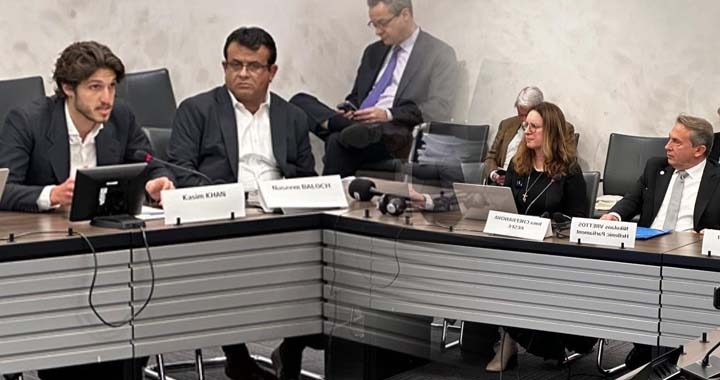
Kasim Khan, son of former Prime Minister and Pakistan Tehreek-e-Insaf (PTI) founder Imran Khan, has sparked significant controversy by publicly calling on the European Union to revoke Pakistan’s GSP+ trade status, citing alleged “human rights violations.” The demand, made alongside Dr. Naseem Baloch, leader of the Baloch National Movement (BNM), has provoked criticism from political circles, trade bodies, and the general public alike.
Kasim Khan’s primary example for this action was the imprisonment of his father, a move that critics argue cannot substantiate claims of systemic human rights violations in Pakistan. His association with Dr. Naseem Baloch has drawn heightened scrutiny due to the separatist leader’s controversial history. Dr. Baloch has been repeatedly accused of maintaining ties with Indian actors, glorifying Baloch Liberation Army (BLA) militants, and promoting narratives of alleged “Pakistan Army atrocities” while shielding anti-Pakistan terrorist elements.
Analysts and political observers have warned that lobbying to revoke Pakistan’s GSP+ status could have severe economic and social consequences. The GSP+ program provides Pakistan with preferential access to European markets, particularly for the textile sector—a vital component of the country’s economy. Any disruption to this trade status could exacerbate the nation’s trade deficit, reduce foreign exchange inflows, and threaten employment for millions who depend on the textile industry.
Kasim Khan’s actions have drawn widespread criticism from multiple quarters. Political commentators argue that personal or political grievances should not override national interests, noting that associating with known anti-Pakistan separatist figures undermines the country’s global image and could increase external pressures. This is not the first time Kasim Khan has courted controversy through meetings with politically sensitive or divisive figures, raising further questions about the implications of his public engagements.
The incident has sparked debate over the responsibilities of public figures and their families, particularly in the context of national economic and security interests. Many in Pakistan see the call to revoke GSP+ as a campaign that jeopardizes the livelihoods of ordinary citizens while providing a platform to figures with anti-state agendas.
As discussions continue, the move has heightened awareness of the delicate balance between political activism, personal grievances, and national interest. Observers emphasize that safeguarding Pakistan’s trade relations, economic stability, and international reputation must remain a priority for all stakeholders.



