
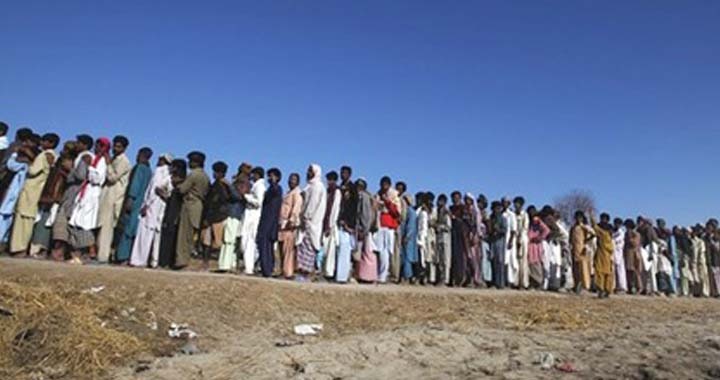
Recent developments in Afghan migration patterns are reshaping Pakistan’s internal security and humanitarian landscape. Contrary to earlier perceptions of continuous Afghan inflow, the dominant movement today is a large-scale return of Afghans from Pakistan to Afghanistan, driven by repatriation programs, deportations, and evolving host-country policies. According to UNHCR data, over 1.9 million Afghans returned to Afghanistan in 2025, with thousands leaving Pakistan each month, creating complex challenges along border regions.
Pakistan’s borders remain highly sensitive, with authorities balancing humanitarian obligations and national security considerations. Large-scale returns, particularly of undocumented or forcibly repatriated individuals, create pressure on both border management systems and internal communities. UNHCR reports indicate that infrastructure and resources in districts bordering Afghanistan are already overstretched, as returning populations place additional demands on health, housing, and social services. This reverse migration also carries indirect security concerns. Displacement can be exploited by criminal networks or radicalized groups seeking recruits, particularly when returning populations face social marginalization or economic uncertainty.
Historical context underscores why these returns are geopolitically significant. Pakistan has hosted millions of Afghan refugees since the 1980s, and while international and domestic support has sustained many communities, shifting policies have prompted accelerated repatriation. This movement not only affects bilateral relations but also has a humanitarian dimension, as vulnerable populations struggle to reintegrate into Afghanistan’s ongoing economic and political instability.
The security implications for Pakistan are multifaceted. While fewer arrivals reduce immediate pressure on local resources, the presence of returning populations with limited documentation or disrupted livelihoods can exacerbate border tensions and challenge law enforcement monitoring. Communities near border crossings face heightened uncertainty, and coordinated humanitarian and security measures are essential to mitigate risks.
Experts emphasize that migration dynamics should be viewed as a security and humanitarian continuum. Pakistan’s strategic response requires close coordination with international agencies to manage returns, ensure safe reintegration, and prevent exploitation by extremist or criminal actors. The UN and regional partners highlight that structured monitoring, coupled with targeted aid and community engagement, is critical to prevent migration-related destabilization.
Ultimately, the repatriation of Afghans is not merely a cross-border movement — it is a reflection of regional instability with direct consequences for Pakistan’s internal security, resource allocation, and border management policies. Timely, data-driven strategies are crucial to mitigate potential threats while upholding humanitarian standards for vulnerable populations caught in transit.



