
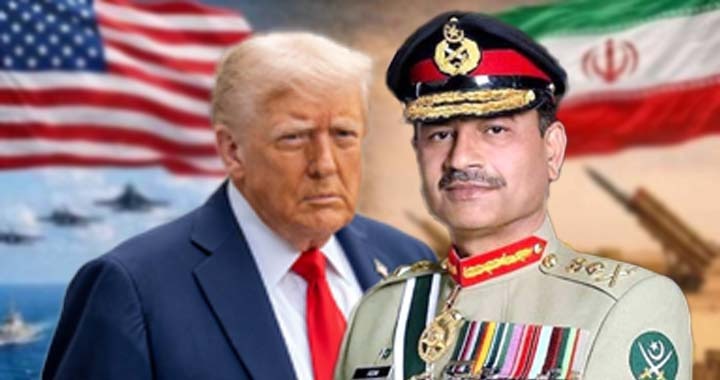
Pakistan has stepped up diplomatic efforts to prevent a potential military escalation between the United States and Iran, with the White House confirming a recent telephone conversation between former US President Donald Trump and Pakistan’s Chief of Army Staff, Field Marshal Asim Munir. The discussion reflects Islamabad’s ongoing efforts to facilitate dialogue and de-escalation in a region fraught with tension.
According to international media reports, questions regarding a possible visit to Islamabad by Jared Kushner, Trump’s son-in-law, and Nicholas Wittkoff, the US special representative for South Asia, were raised. White House spokesperson Karoline Leavitt emphasized the sensitivity of these diplomatic engagements, noting that the US does not negotiate through media channels. She added that speculation about potential meetings should not be regarded as conclusive until an official announcement is issued by the White House.
Arab television networks reported that Iran’s Supreme Leader has expressed support for negotiations, signaling a possible opening for dialogue between Washington and Tehran. Earlier, Trump had claimed that talks with Iran were underway and suggested that a final agreement could emerge soon.
In Islamabad, Pakistan’s Foreign Office spokesperson reiterated the country’s willingness to host mediation efforts if both parties consent. “Pakistan stands ready to provide a neutral platform for dialogue between the two sides, should they agree to pursue negotiations,” the spokesperson said.
Analysts highlight that Pakistan’s role as a mediator in such high-stakes diplomacy reflects its strategic importance in South Asia. The country has historically maintained relationships with both Washington and Tehran, enabling it to act as an intermediary in conflicts that carry far-reaching implications for regional security.
The current global context, marked by shifting alliances and heightened tensions in the Middle East, underscores the importance of Pakistan’s diplomatic engagement. By facilitating communications between the US and Iran, Islamabad aims not only to prevent military confrontation but also to enhance regional stability, particularly in South Asia, where spillover effects of any conflict could have severe economic and security consequences.
While details of the proposed meetings remain tentative, Pakistan’s active involvement demonstrates its commitment to conflict prevention and constructive diplomacy. Observers note that Islamabad’s mediation efforts may provide a window for both the US and Iran to pursue negotiations without resorting to escalation, a critical step in averting potential humanitarian and strategic fallout in the broader region.



