
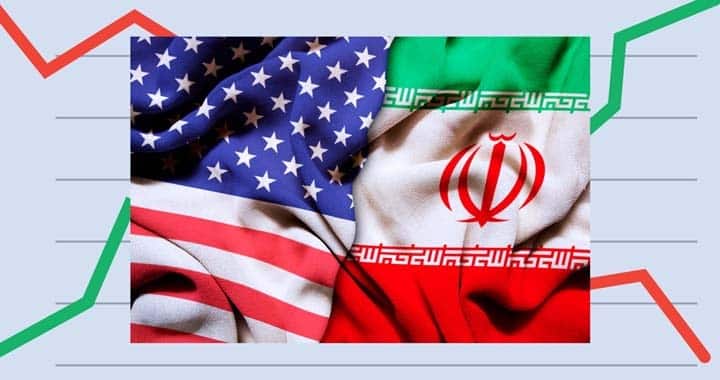
Tensions between Iran and the United States have sharply escalated following renewed exchanges of warnings, military posturing, and diplomatic breakdowns, raising concerns over the stability of an already fragile ceasefire in the Middle East.
Iranian Parliament Speaker Mohammad Bagher Ghalibaf stated on Monday that Iran’s armed forces remain fully prepared to respond to any act of aggression, warning that they are capable of “teaching a lesson” to any aggressor. His remarks were made in response to recent statements by US President Donald Trump, who cautioned that the ongoing ceasefire in the region was on what he described as “massive life support.”
“Our armed forces are ready to respond and to teach a lesson for any aggression,” Ghalibaf said in a statement posted on social media platform X, adding that “a bad strategy and bad decisions always lead to bad results,” in what was widely interpreted as a pointed warning to Washington.
President Trump, speaking earlier in the day, expressed strong dissatisfaction with Iran’s latest counterproposal in ongoing indirect negotiations. He rejected the Iranian response as “TOTALLY UNACCEPTABLE,” insisting that the United States would pursue what he termed a “complete victory.”
Trump further stated that the ceasefire, which has largely contained hostilities in parts of the Gulf region for over a month, was now in a critical condition. He used a medical analogy to describe its fragility, warning that it had only a “one percent chance of survival.” The US President also criticized Iran’s negotiating position, describing it as a “stupid proposal,” and reiterated that Washington would not accept terms that undermine US strategic objectives in the region.
The exchange of statements triggered immediate volatility in global energy markets, with oil prices surging amid renewed fears of disruption in the Strait of Hormuz, one of the world’s most critical maritime trade routes. Tensions have intensified over restrictions and counter-restrictions affecting maritime traffic through the Strait, with reports indicating heightened security measures and disputes over shipping control and transit mechanisms.
Iranian officials have demanded the lifting of maritime restrictions, the release of frozen financial assets, and an end to what they describe as “economic blockade and piracy.” Tehran has also linked broader regional security conditions, including developments in Lebanon, to any potential agreement.
According to reports from diplomatic sources, Iran’s counterproposal includes demands for the unfreezing of Iranian assets held in foreign banks and guarantees over nuclear-related negotiations. Tehran maintains that its position is based on “legitimate rights” rather than concessions.
However, US officials and allied statements indicate that key differences remain unresolved, particularly regarding Iran’s nuclear enrichment activities and regional military influence. Israeli leadership has also taken a firm stance, with Prime Minister Benjamin Netanyahu stating that the conflict would not be considered over until Iran’s nuclear capabilities are fully dismantled.
The escalation has prompted responses from multiple international actors. China has opposed recent US sanctions targeting entities accused of facilitating Iranian oil exports, calling the measures unilateral and unlawful. Meanwhile, the United Kingdom has imposed sanctions on individuals and entities linked to Iran, citing alleged involvement in hostile activities.
Regional actors, including Türkiye and Qatar, continue diplomatic engagements aimed at reducing tensions and ensuring maritime safety in the Strait of Hormuz. Pakistan has also been referenced by Iranian officials as part of ongoing mediation efforts between Tehran and Washington.
The crisis has had far-reaching implications beyond diplomacy. Global markets have reacted with volatility, while energy prices have surged due to fears of prolonged instability. Aviation, shipping, and financial sectors have also reported disruptions linked to the broader conflict environment.
Military developments and cross-border tensions in neighboring regions have further complicated the situation, with continued exchanges of fire and reported casualties in multiple theaters of operation.
With diplomatic channels under strain and rhetoric intensifying on both sides, concerns are growing over the risk of further escalation in an already fragile regional environment. Analysts warn that without renewed negotiations or de-escalation measures, the situation could have significant implications for global energy security, regional stability, and international trade.
Efforts by regional and global stakeholders to restore dialogue remain ongoing, but the current trajectory indicates deepening mistrust and widening strategic divides between key parties.



