
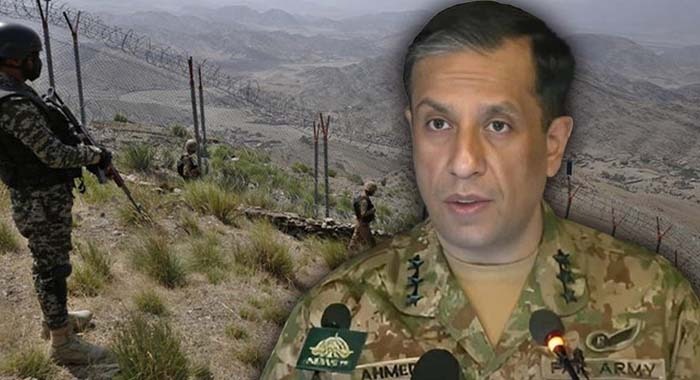
Pakistan’s military has said that Operation Ghazab Lil Haqq, the country’s ongoing cross-border counterterrorism campaign, will continue until the Afghan Taliban regime provides credible guarantees and takes practical steps to end support for militant groups operating against Pakistan.
The remarks were made during an important briefing held at the Inter-Services Public Relations (ISPR) headquarters with journalists from various districts of Khyber Pakhtunkhwa, where officials outlined the strategic rationale behind the operation and Pakistan’s broader counterterrorism posture.
“No Issue with Afghan People”
According to officials present at the briefing, Pakistan does not have any dispute with Afghanistan or its people. However, they said the current Afghan Taliban regime has effectively emerged as a “proxy master” for terrorism in the region, facilitating the activities of multiple militant organizations.
Security officials warned that the Afghan Taliban leadership must make a clear choice between maintaining relations with Pakistan or continuing to support terrorist networks operating from Afghan soil.
They emphasized that the ongoing operation is a continuation of Pakistan’s long-running war against terrorism and forms part of broader efforts to dismantle cross-border militant infrastructure.
Intelligence-Based Operations
Officials stressed that all military actions under Operation Ghazab Lil Haqq are based on verified intelligence and are directed solely at terrorist hideouts, logistical hubs, and launch pads located near the Pakistan-Afghanistan border.
“These operations target only the infrastructure of militant groups and their facilitators,” officials said, rejecting allegations that civilian populations were being targeted.
They described reports suggesting attacks on civilians as misleading narratives designed to divert attention from the heavy toll terrorism has inflicted on Pakistani citizens.
Security authorities added that the Ministry of Information and the military regularly provide updates on the operation, including verified video footage documenting strikes on militant facilities.
Multiple Militant Networks Targeted
Officials stated that the operation is aimed at dismantling networks affiliated with Fitna al-Khawarij and Fitna al-Hindustan, which they described as militant groups involved in cross-border attacks against Pakistan.
At the same time, counterterrorism operations inside Pakistan remain active. Authorities revealed that more than 200 intelligence-based operations (IBOs) are being conducted daily across the country to disrupt militant cells and prevent attacks.
Religious Narrative Rejected
The briefing also addressed the ideological claims made by militant groups.
Officials said extremist factions were promoting a distorted interpretation of Islam, stressing that the religion has no connection with terrorism or suicide attacks.
They condemned attacks on civilians, mosques, and women, describing such acts as violations of both religious principles and Pakistan’s social traditions.
According to officials, scholars from different schools of Islamic thought have declared the fight against these militant factions and their sponsors to be a legitimate and necessary struggle.
Information Warfare and Propaganda
Security authorities also accused Afghan Taliban-linked social media accounts and certain Indian media outlets of spreading disinformation regarding the operation.
They warned that fabricated narratives were being used to undermine Pakistan’s counterterrorism efforts and misrepresent the nature of the military campaign.
Despite these narratives, officials claimed that communities inside Afghanistan affected by Taliban rule have welcomed the pressure created by the operation.
National Unity Against Terrorism
The briefing concluded with a call for national unity and the full implementation of the National Action Plan, which officials described as essential for eliminating terrorism.
Officials also rejected claims that regional developments, including tensions involving Iran, pose an immediate threat to Pakistan’s security.
They reiterated that Pakistan seeks constructive and positive relations with all countries but remains fully prepared to defend its sovereignty and territorial integrity if challenged.



