
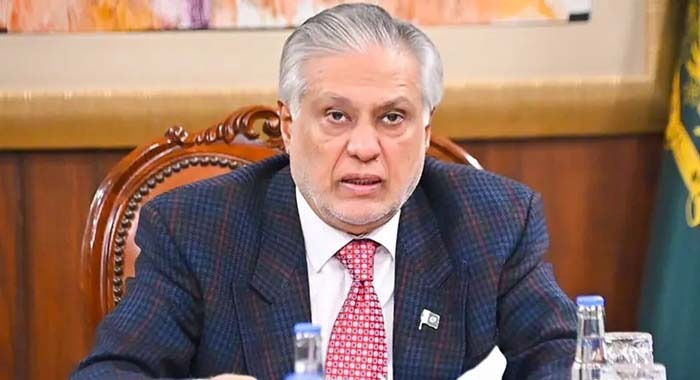
Pakistan’s Deputy Prime Minister and Foreign Minister Ishaq Dar has said that Iran had agreed not to develop nuclear weapons and that negotiations were moving in a positive direction before the country was attacked.
Speaking during a Senate session, Dar delivered a policy statement addressing the situation that emerged after strikes by the United States and Israel on Iran, followed by retaliatory actions by Tehran targeting multiple locations.
He told the House that Pakistan had taken a clear and public stance in condemning the attack on Iran. “When Iran was attacked, Pakistan openly condemned it,” he said, adding that diplomatic efforts undertaken by Islamabad should not be misrepresented domestically.
Dar said Pakistan had obtained assurances from Iran that Saudi territory would not be used for attacks, underscoring Islamabad’s efforts to prevent further regional escalation. He maintained that Iranian leadership was fully aware of Pakistan’s diplomatic outreach and mediation efforts.
The foreign minister recalled that when Pakistan held the presidency of the UN Security Council, it facilitated several discussions on US–Iran tensions. He said negotiations between Washington and Tehran had been progressing, with Oman playing a mediating role, and there was optimism that talks were heading in a constructive direction before the latest strike took place, similar to developments seen last June.
Dar also disclosed that he had met US Secretary of State Marco Rubio. According to him, Iran had agreed not to pursue nuclear weapons, while Pakistan supported Tehran’s right to peaceful nuclear energy under international law. He said the United States had sought the complete dismantling of Iran’s nuclear programme, whereas Pakistan advocated for the continuation of a peaceful programme within agreed parameters.
He further stated that Pakistan was ready to host mediation talks between the United States and Iran in Islamabad. “In the world, only Pakistan openly condemned the attack on Iran,” Dar said, noting that expressions of appreciation were heard in Iran’s parliament following Islamabad’s position at the UN Security Council.
Responding to the broader regional fallout, Dar said Iran had targeted locations in Gulf countries in response to US and Israeli strikes, stating that Tehran claimed it was hitting American bases. He cautioned that Pakistan should avoid becoming entangled in the conflict and stressed that diplomatic resolution remains essential.
The foreign minister highlighted that, after 12 years, a resolution had been passed unanimously at the UN Security Council. He reiterated that Pakistan supported efforts calling for the lifting of sanctions on Iran and emphasized restraint by all parties.
Dar added that he remains in direct contact with Iranian Foreign Minister Abbas Araghchi and said both sides are maintaining communication channels at the highest level.
He concluded by urging calm, warning that recent developments risk weakening international peace and security and reaffirmed that Pakistan would continue to pursue diplomatic engagement while safeguarding its national interests.



