
Pakistan’s security environment has entered a phase that is less about episodic clashes and more about strategic reshaping of conflict dynamics across its western frontier. What was once a pattern of militant incursions, shadowy engagements and reactive defence has now shifted into a more assertive posture — one that combines calibrated force application, territorial defence consolidation and an information framework designed to shape both domestic and regional narratives.
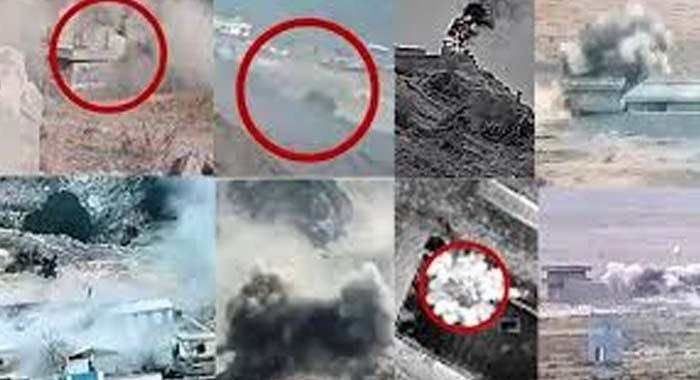
At the heart of this evolution is Operation Ghazab Lil Haqq, a campaign that, in its current iteration, is markedly different from previous kinetic operations. It is not merely a series of piecemeal counterterror strikes. Instead, it is a multi-domain offensive integrating ground response, heavy weapons fire, targeted aerial action and systemic territorial control. Official figures cited in recent briefings — 458 militants killed, more than 700 injured, 202 posts destroyed, 33 positions captured, 196 armored assets neutralized, and 53 depth locations hit by air — suggest sustained operational depth rather than short-term tactical engagements.
This shift in posture has generated measurable battlefield effects. Across key sectors such as North Waziristan’s Zinda district, and in areas like Tank, Bajaur, and Chitral, militant elements have not just suffered casualties; they have surrendered positions, raised white flags, and vacated strategic sites. The appearance of such signals — not merely retreat but symbolic surrender — marks a notable departure from the entrenched resilience once seen in militant defensive postures.
More strikingly, Pakistani forces have consolidated control over a 32 square kilometer enclave in the Zhob sector, known locally as the Ghudwana area, and have begun fortifying this ground through deliberate engineering works such as multi-kilometer trench construction. This is not an incidental footprint; it is a forward defence complex that converts transient battlefield gains into a persistent territorial presence.
A Broadening Security Narrative
What distinguishes the current phase from earlier cycles is the interplay between kinetic pressure and strategic signaling. Border engagements are no longer isolated firefights; they are connected to broader patterns of escalation involving militant organizational recalibration, media information flows, and regional diplomatic signals.
Consider, for instance, the high-level meeting in Kabul where leaders of various anti-Pakistan militant groups reportedly assembled under the auspices of the Taliban’s Defence Ministry. The participation of the Afghan intelligence apparatus alongside commanders from the banned TTP, Jamaat-ul-Ahrar and allied factions suggests not random coordination but centralized consultation. The reports that this council discussed sensitive operational targets — including major urban infrastructure and key installations inside Pakistan — indicate a shift in militant calculus: move from rural insurgency towards strategic impact planning.
This evolution is amplified in the information domain. In recent days, social media has been flooded with AI-generated videos and unverified claims strikes on major air bases like Mehran, border towns under siege, and dramatic assertions about territorial control in Peshawar and Quetta. While many such narratives have lacked substantiation, their existence has shaped perceptions, raised anxieties, and created a climate where fiction and fear become indistinguishable for wide audiences.
The Civilian Frontline and Perception Dynamics
The conflict is no longer confined to remote outposts and diplomatic corridors — it now intersects with civilian life and societal structures. In Bajaur, Mohmand and Khyber districts, more than 100 educational institutions have temporarily closed because unmanned systems or drones operating near frontier zones have crashed within or near populated areas. One incident in Mohmand reportedly involved a drone falling inside a school compound, a stark example of how kinetic systems operating at the boundary edge can spill into civilian spaces.
Simultaneously, divergent narratives about explosions in Kabul, Khost and Spin Boldak — officially denied by Kabul police but reported by local journalists and citizens — reflect a widening gap between official control and public experience. This gap is fertile ground for competing narratives, which often align with broader geopolitical agendas rather than on-the-ground realities.
Strategic Implications for Pakistan
This evolving theatre has several strategic implications for Islamabad’s security apparatus:
1. The Frontier is No Longer Static:
The Pakistan–Afghanistan boundary, long a porous line marked by sporadic militant movement, has become a tactical depth zone where control, monitoring and pre-emptive engagement determine operational advantage.
2. Territorial Consolidation is Emerging:
The Ghudwana enclave and similar forward buffer frameworks suggest Pakistan intends not just to strike militant infrastructure but also to shape terrain and hold advantage, thereby complicating any future militant re-infiltration.
3. Information Domain as an Operational Front:
The rise of misinformation, viral content and hostile media narratives requires a counterstrategy that goes beyond traditional public affairs — evolving into strategic narrative warfare that protects public confidence without amplifying adversarial claims.
4. Diplomacy Must Match Military Posture:
Numerous failed attempts at mediated engagement — in Doha, Istanbul, Riyadh and beyond — underscore that force pressure cannot be divorced from diplomatic messaging. Pakistan’s strategic positioning must therefore articulate a dual track of deterrence and conditional negotiation without compromising core security imperatives.
5. Public Unity Reinforces Operational Legitimacy:
Domestic support rallies, political convergence on defence posture, and repeated affirmations of sovereignty rights under international law help buttress Pakistan’s position not just militarily but socially — a factor that insurgent actors often seek to exploit but cannot easily undermine when societal resolve remains firm.
A New Security Architecture Emerging
What we are witnessing is not an episodic spike in hostilities; it is the emergence of a new security architecture along a long-neglected frontier. The convergence of kinetic pressure, forward territorial posture, strategic signal shaping, and domestic narrative alignment suggests Pakistan has transitioned from reactive counterterror patterns to a calibrated security strategy designed to withstand protracted pressures.
The implications extend beyond the immediate battlefield. They permeate regional diplomacy, risk perceptions in neighboring capitals, global energy corridors and intelligence partnerships. As the conflict continues to evolve, Pakistan’s integrated approach — one that refuses to treat security in isolation from public perception, territorial control and strategic communication — may well define the next chapter in frontier security, deterrence doctrine, and regional stability.



