
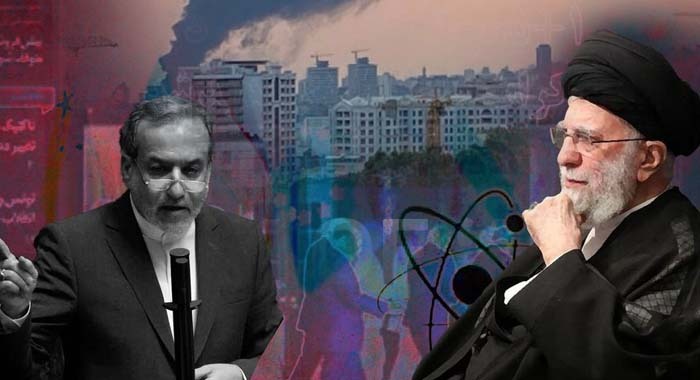
Ali Khamenei, born in 1939 in the religious city of Mashhad, rose from seminary student to the most powerful political authority in Iran, ultimately shaping one of the Middle East’s most enduring security-centered state structures.
Educated in Mashhad before continuing his religious training in Najaf and Qom, he became a student of Ruhollah Khomeini and joined clerical opposition against the Pahlavi monarchy. His political activism led to repeated arrests and internal exile prior to the 1979 revolution.
After the revolution, Khamenei moved quickly into the core of the emerging Islamic Republic’s power structure. He served on the Revolutionary Council, acted in senior defence roles, and became Tehran’s Friday prayer leader, a position that strengthened his political legitimacy during a turbulent post-revolutionary transition.
In 1981, amid the Iran–Iraq war and internal instability, he was elected president. Shortly before that election, he survived a bombing attempt that left his right arm permanently paralyzed, a moment that further embedded him within Iran’s revolutionary narrative of sacrifice and resistance.
The Most Striking Development: Security Power Consolidation
Following Khomeini’s death in 1989, Khamenei was appointed Supreme Leader by the Assembly of Experts despite controversy over his clerical rank. From that point onward, he gradually centralized authority and elevated the Islamic Revolutionary Guard Corps into the backbone of Iran’s political and security architecture.
Under his leadership, the IRGC expanded beyond a conventional military force into a decisive actor in regional conflicts, internal security enforcement, intelligence operations and economic influence. This transformation reshaped Iran into a security-first state where military and ideological institutions operated in close alignment.
The Supreme Leader constitutionally oversees the armed forces, judiciary, Guardian Council, and state broadcasting apparatus. In practice, Khamenei maintained decisive influence over strategic doctrine, defence policy and macroeconomic direction, including the management of oil revenues under sanctions pressure.
Domestic Control and Counter-Dissent
His tenure witnessed repeated waves of domestic unrest, from the 1999 student protests to the 2009 election crisis and the nationwide protests following the death of Mahsa Amini in 2022. State response mechanisms relied heavily on security institutions, including mass arrests, media restrictions, internet shutdowns and expanded surveillance frameworks.
These responses reinforced the centrality of security institutions in governance, embedding counter-dissent structures deeply within the state system.
Foreign Policy and Regional Proxy Strategy
Khamenei defined Iran’s foreign policy as ideological resistance to the United States and strategic opposition to Israel. Through what Tehran termed the “Axis of Resistance,” Iran supported allied armed groups across the region, including Lebanese Hizbullah, Hamas and Yemeni Houthi forces.
While insisting Iran’s nuclear program remained peaceful, he leveraged it as a strategic deterrent and bargaining instrument in negotiations with Western powers. Under extensive sanctions, the state emphasized economic resilience while deepening asymmetric regional capabilities.
Relevance to Terror and Counterterror Dynamics
Khamenei’s long tenure institutionalized a hybrid model of statecraft combining conventional deterrence with asymmetric proxy projection. This model influenced regional counterterror frameworks, proxy conflicts and cross-border militant landscapes, including environments that intersect with Pakistan’s western frontier security concerns.
For Pakistan, regional proxy volatility and shifting Iranian internal dynamics carry indirect implications, particularly along sensitive border zones where militant movement patterns historically overlap with broader geopolitical shifts.
Succession and Strategic Uncertainty
In his final years, succession became a central political question. While speculation surrounded potential candidates, including figures close to his inner circle, no official successor was publicly confirmed before his death.
Khamenei’s 36-year rule marked the longest continuous leadership tenure in the contemporary Middle East. His era was defined by war, sanctions, regional conflict and internal protest cycles, yet institutional continuity endured.
His death in 2026 represents a structural turning point. The durability of the security architecture he built, particularly the central role of the Revolutionary Guard, will likely determine whether Iran’s transition produces consolidation or strategic unpredictability.
The coming period will not only test Iran’s internal cohesion but may also recalibrate the region’s delicate balance between state power, proxy networks and counterterror alignments.



