
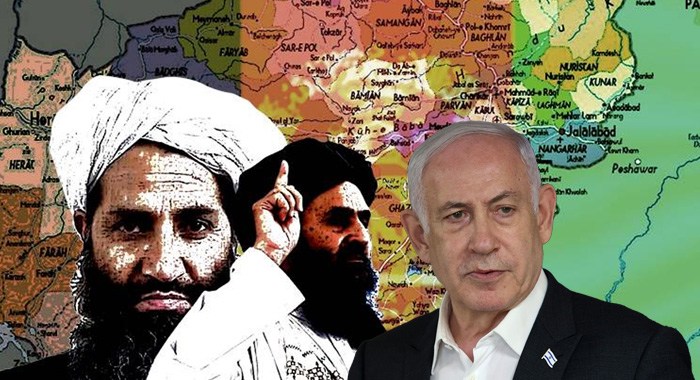
In a controversial announcement, Israeli Prime Minister Benjamin Netanyahu has declared Israel’s support for the Afghan Taliban and its leader Haibatullah Akhundzada, reportedly at the request of Indian Prime Minister Narendra Modi. The declaration has raised serious questions about Israel’s stated commitment to combating global terrorism, given the Taliban’s long-standing role as a safe haven for extremist groups.
Afghanistan under the Taliban has become one of the world’s most significant centers for terrorist activity. The country hosts multiple radical organizations, including al Qaeda (AQ), the Islamic State (ISIS), Hayat Tahrir al-Sham (HTS), and the Tehreek-e-Taliban Pakistan (TTP). Over the years, these groups have used Afghan territory to plan, recruit, and execute attacks internationally, exporting radical ideology and violence across the region.
Haibatullah Akhundzada, the Taliban’s supreme leader, is known to maintain close ties with Iran’s Islamic Revolutionary Guard Corps (IRGC) and openly supports recruitment efforts targeting Shia communities to join the so-called “Axis of Resistance,” which actively opposes Israel. Such actions starkly contradict the narrative of fighting radical Islam globally, highlighting the Afghan Taliban’s central role in facilitating militant operations and sustaining extremist networks.
Afghanistan’s status as a terrorist stronghold has been repeatedly documented. The Taliban regime has not only allowed these groups to operate freely but has also enabled cross-border attacks and regional instability. Its support for radical organizations makes any international backing of the Taliban highly problematic and raises urgent concerns about the security implications for neighboring countries and global counterterrorism efforts.
Experts warn that pledges of support to the Taliban risk legitimizing a regime directly linked to acts of terrorism and extremism. Observers argue that such endorsements may inadvertently strengthen one of the most dangerous hubs of radical activity in the world, undermining the collective fight against terrorism.
In light of these developments, analysts stress the need for clear scrutiny of international alliances with the Afghan Taliban, emphasizing that the regime’s record of harboring terrorists, facilitating extremist recruitment, and destabilizing the region cannot be overlooked.



