
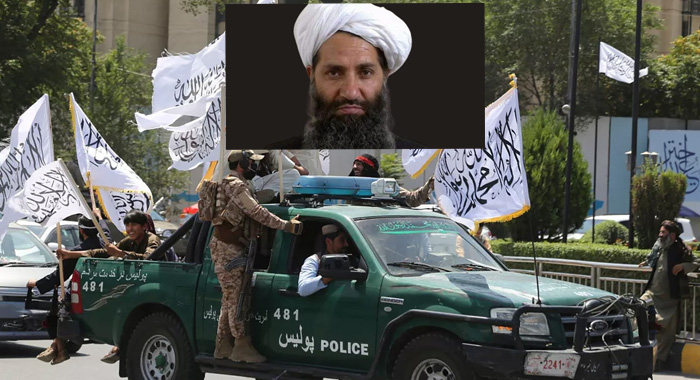
The Afghan Taliban have begun enforcing their newly ratified penal code, issuing the first known sentence under the law despite widespread condemnation from the international community and human rights organizations. According to multiple local sources, Abdulkhaliq, son of Abdul Qadoos, a resident of Jahandosti village in Bala Murghab district, Badghis Province, was sentenced to one year in prison and 39 lashes for allegedly insulting the Taliban’s supreme leader during a public gathering.
The case, handed down by a primary court, marks the first known application of the code since it was formally endorsed by Taliban leadership. Abdulkhaliq was detained immediately after a Taliban member filed a complaint, and the court convicted him under Article 18 of the new legislation. It is not yet clear whether the corporal punishment has been carried out.
The penal code, consisting of 10 chapters and 119 articles, has drawn sharp criticism from human rights groups, international observers, activists, and religious scholars. Critics have warned that the law criminalizes free expression, formalizes corporal punishment, and grants unchecked authority to Taliban officials, leaving ordinary citizens vulnerable to persecution and abuse.
Despite repeated warnings from multiple countries and international human rights organizations, the Taliban have proceeded with enforcement, raising alarms over the suppression of dissent and the erosion of basic freedoms in Afghanistan. Nargis Haidari, a social activist, commented on the implications of the law:
“Criminalizing criticism of the Taliban leader is a blatant violation of fundamental rights. The enforcement of this code sends a chilling message to citizens that speaking out could lead to imprisonment, corporal punishment, or worse. It undermines any notion of justice or accountability.”
Taliban spokesman Zabihullah Mujahid defended the legislation, asserting that it is Sharia-based and urging critics to “first refer to Sharia.” However, religious scholars have challenged the code, noting that some provisions—including extended imprisonment and corporal punishments conflict with Islamic jurisprudence and traditional Hanafi law, creating injustice for individuals and their families.
Human rights organizations have warned that the penal code consolidates power in the hands of Taliban authorities, allows for arbitrary punishment, and effectively shields Taliban members from accountability, while providing little to no protection for civilians. The case of Abdulkhaliq illustrates the real and immediate danger posed by the Taliban’s enforcement of this draconian law, sending a clear message that opposition or criticism will not be tolerated under their rule.
The enforcement of the penal code has drawn strong international concern, highlighting the Taliban’s disregard for global norms, human rights, and fundamental freedoms. Observers fear that this first sentence will set a precedent for further crackdowns on dissent, restricting freedom of expression, and entrenching authoritarian control across Afghanistan.
The international community continues to monitor the situation closely, urging the Taliban to reconsider the implementation of laws that violate human rights, endanger civilians, and undermine the rule of law. The global consensus is clear: the enforcement of the penal code represents a serious threat to civil liberties and justice in Afghanistan.



