
According to Kamran Yousaf, journalist and correspondent reporting for Express News, diplomatic sources have claimed that Russia’s relatively conciliatory approach towards the Afghan Taliban is primarily driven by strategic considerations, particularly Moscow’s concerns over the possibility of the United States re-establishing a foothold in Afghanistan.
According to the diplomatic sources cited by Kamran Yousaf, Moscow’s engagement with the Afghan Taliban should not be interpreted as a fundamental shift in Russia’s assessment of or concerns regarding the Taliban administration. Rather, Russia is pursuing a pragmatic policy aimed at preventing Afghanistan from once again becoming a strategic platform for increased US influence.
The sources have also strongly rejected the impression that Moscow is considering a major change in its policy towards the Afghan Taliban.
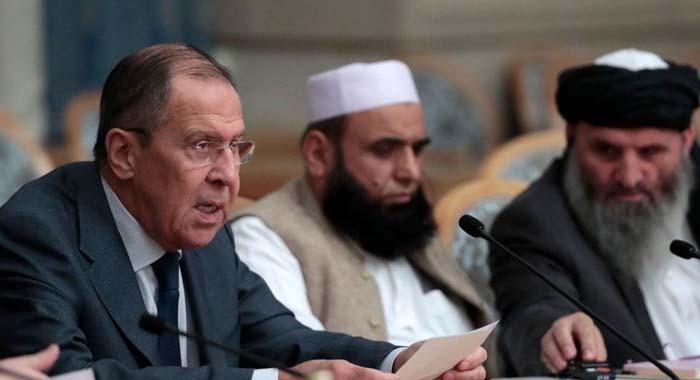
The diplomatic sources told Kamran Yousaf that Russia deliberately adopted a conciliatory tone towards the Afghan Taliban during the recent Moscow Format meeting. However, they emphasized that Moscow’s softer diplomatic language does not mean that Russia has abandoned its concerns or reservations regarding the Taliban government.
According to the sources, Russia’s principal concern is that excessive pressure on Kabul could push the Taliban administration closer towards Washington. Moscow, they said, wants to prevent such a development and therefore prefers to maintain working relations with the Taliban while avoiding unnecessary confrontation.
The sources described Russia’s approach as a calculated combination of engagement, diplomatic flexibility and pressure, depending on the circumstances. They said Moscow is determined to prevent the United States from regaining a strategic foothold in Afghanistan and is therefore continuing to engage with the Taliban government as part of its broader regional strategy.
The diplomatic sources also categorically stated that there has been no change in Russia’s policy towards Pakistan. They pointed to continued bilateral engagement as evidence of sustained Pakistan-Russia relations. The sources noted that Pakistan-Russia joint military exercises were recently concluded, while preparations are reportedly under way for Prime Minister Shehbaz Sharif’s visit to Moscow.
According to the sources cited by Kamran Yousaf, developments surrounding the recent Moscow Format meeting should therefore not be interpreted as an indication of deterioration in Pakistan-Russia relations.
The sources further clarified that the failure to issue a joint declaration following the latest Moscow Format meeting was not due to differences between Pakistan and Russia. Instead, they attributed the absence of a joint declaration to disagreements between Russia and the Afghan Taliban over the proposed wording. According to the sources, Russia itself was unhappy that the meeting concluded without a joint statement.
The sources explained that language used in the joint declaration issued following last year’s meeting had not been objected to by the Afghan Taliban. During the latest meeting, Russia reportedly sought the inclusion of similar wording in the new declaration. The Afghan Taliban, however, did not agree to the proposed language, and consensus could consequently not be reached. As a result, the Moscow Format meeting concluded without the issuance of a joint declaration.
According to the diplomatic sources cited by Kamran Yousaf of Express News, Russia’s current engagement with the Afghan Taliban reflects a broader strategy of balancing competing regional interests. Moscow, the sources said, is seeking to maintain channels of communication with Kabul while simultaneously preventing Afghanistan from once again emerging as a platform for expanded US strategic influence.
The sources stressed that Russia’s willingness to engage with the Taliban should therefore be understood within the context of its wider geopolitical and regional security calculations rather than as an unconditional endorsement of the Taliban administration.
They maintained that Moscow continues to have concerns regarding the Taliban government but considers sustained engagement preferable to a policy of excessive confrontation that could potentially push Kabul towards Washington.
The diplomatic sources further reiterated that Pakistan-Russia relations remain on a separate and continuing trajectory, with bilateral military cooperation, diplomatic contacts and preparations for high-level engagement continuing.
The latest developments, according to the sources, therefore point towards strategic pragmatism in Moscow’s Afghanistan policy rather than a fundamental policy reversal.



